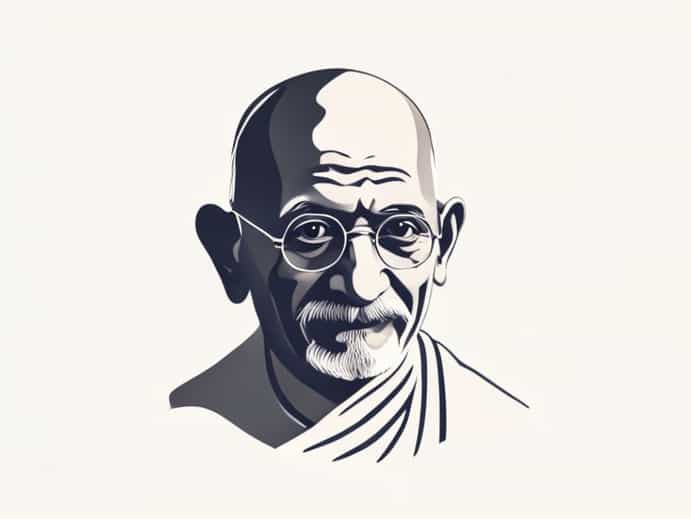
Mahatma Gandhi is widely celebrated for his unwavering commitment to nonviolence, a principle that guided his life and political activism. His approach to social and political change was revolutionary not because it relied on force or aggression, but because it demonstrated the immense power of peaceful resistance. Gandhi’s philosophy of nonviolence, known as ahimsa, was deeply rooted in ethical, spiritual, and practical considerations, emphasizing respect for all life and the pursuit of justice without inflicting harm. Understanding how Gandhi practiced nonviolence provides valuable insights into the effectiveness of peaceful protest and the moral foundations of leadership.
Foundations of Gandhi’s Nonviolence
Gandhi’s nonviolent philosophy was influenced by various religious, ethical, and cultural sources. He was inspired by Hindu teachings, particularly the concept of ahimsa, which stresses non-harming of living beings. Additionally, Jainism’s emphasis on compassion and respect for life, as well as Christian teachings about love and forgiveness, shaped his worldview. Gandhi combined these spiritual principles with practical strategies to address political oppression and social injustice, making nonviolence both a moral imperative and a tactical approach.
The Principle of Ahimsa
Ahimsa, or non-harming, was central to Gandhi’s understanding of nonviolence. This principle extended beyond the mere avoidance of physical violence; it included abstaining from verbal aggression, exploitation, and coercion. Gandhi believed that true nonviolence required inner discipline, self-control, and empathy for others. By cultivating a mindset that rejects harm in all forms, individuals could confront injustice without perpetuating cycles of violence.
Satyagraha Truth and Firmness
Gandhi’s method of satyagraha, meaning truth-force or soul-force, operationalized nonviolence in social and political contexts. Satyagraha involved resisting injustice through nonviolent means while maintaining moral integrity. It emphasized persistence, courage, and civil disobedience rather than retaliation. By appealing to the conscience of oppressors and mobilizing collective moral pressure, satyagraha aimed to achieve justice without physical confrontation.
Nonviolent Strategies in Action
Gandhi applied nonviolence in various campaigns throughout his life, demonstrating that peaceful resistance could be both strategic and transformative. His campaigns in South Africa and India provide clear examples of how nonviolence functioned as a practical tool for social and political change.
Early Activism in South Africa
During his time in South Africa, Gandhi experienced racial discrimination firsthand, which prompted him to organize the Indian community against unjust laws. He led campaigns that included petitions, protests, and passive resistance against discriminatory policies. By refusing to comply with unjust laws while maintaining nonviolent discipline, Gandhi demonstrated that resistance could be assertive without resorting to aggression. These early experiences shaped his approach to larger movements in India.
Indian Independence Movement
Gandhi’s nonviolent leadership was most prominently displayed in India’s struggle for independence from British colonial rule. Key campaigns included the Salt March, boycotts of British goods, and noncooperation with colonial authorities. Each campaign relied on disciplined mass participation, emphasizing peaceful protest, civil disobedience, and economic self-reliance. By mobilizing millions of Indians through nonviolent means, Gandhi effectively challenged the legitimacy of British authority without triggering widespread violence.
Principles That Enabled Nonviolence
Gandhi’s nonviolence was not passive; it was an active engagement grounded in ethical and strategic principles. Several factors contributed to the effectiveness of his approach.
Moral Authority
Gandhi’s commitment to nonviolence earned him moral authority both domestically and internationally. His personal integrity, simple lifestyle, and willingness to endure suffering for a cause inspired followers and lent credibility to his methods. By embodying the principles he preached, Gandhi strengthened the impact of nonviolent resistance.
Discipline and Training
Nonviolence required rigorous discipline. Gandhi trained his followers to remain calm in the face of provocation and to avoid retaliatory violence. This discipline ensured that protests remained peaceful, enhancing their legitimacy and public support. Participants learned to manage fear, anger, and frustration, reinforcing the power of collective nonviolent action.
Strategic Planning
Nonviolence was also a calculated strategy. Gandhi carefully selected targets, timing, and methods to maximize political impact while minimizing harm. By maintaining nonviolent discipline, campaigns attracted sympathy from broader audiences, including international observers, and increased pressure on authorities to negotiate or reform. Nonviolence became both a moral stance and a tactical advantage.
Impact and Legacy
Gandhi’s nonviolent approach had a profound impact on the Indian independence movement and inspired social justice movements worldwide. Leaders such as Martin Luther King Jr., Nelson Mandela, and Aung San Suu Kyi drew on Gandhi’s methods to challenge oppression in their own contexts. His emphasis on ethical resistance, moral courage, and disciplined action demonstrated that change could be achieved without resorting to physical violence.
Global Influence
The success of Gandhi’s nonviolent campaigns highlighted the effectiveness of peaceful protest on the international stage. Nonviolence became a recognized strategy for civil rights movements, anti-colonial struggles, and social reform campaigns. Gandhi’s legacy continues to influence activists and policymakers who seek to address injustice through moral authority and ethical action rather than force.
Enduring Lessons
Gandhi’s example teaches that nonviolence is both a principle and a practice. It requires courage, discipline, and a commitment to truth. By demonstrating that peaceful resistance can confront systemic injustice, Gandhi offered a blueprint for ethical leadership and social transformation. His life shows that nonviolence is not weakness, but a deliberate and powerful form of action that can create lasting change.
Mahatma Gandhi was nonviolent in both philosophy and practice, adhering to the principles of ahimsa and satyagraha to guide his actions. He demonstrated that resistance to injustice does not require aggression, and that moral authority, disciplined action, and strategic planning can achieve profound social and political change. From his early activism in South Africa to leading India’s independence movement, Gandhi’s commitment to nonviolence inspired millions and continues to serve as a model for ethical and effective activism worldwide. Understanding how Gandhi was nonviolent provides insights not only into historical movements but also into contemporary struggles for justice, showing that compassion, patience, and principled action remain powerful tools for change.