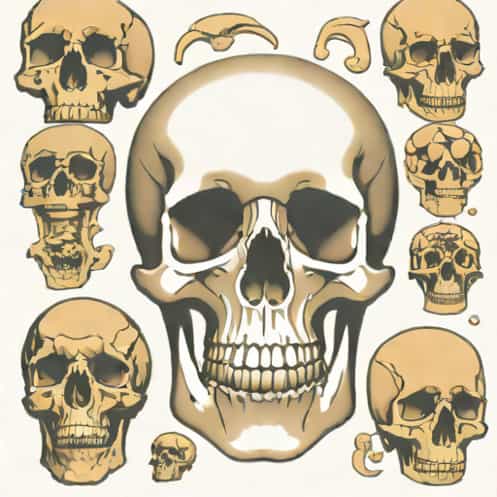
Human osteology and funerary archaeology are interrelated fields that provide invaluable insights into past populations, their health, lifestyles, cultural practices, and social structures. By studying human skeletal remains within archaeological contexts, researchers can reconstruct aspects of daily life, understand patterns of disease, and explore mortuary practices that reveal the beliefs and rituals of ancient communities. The combination of osteological analysis and funerary archaeology allows for a holistic understanding of human history, linking biological data with cultural interpretation in ways that illuminate both the physical and social aspects of past populations.
Understanding Human Osteology
Human osteology is the scientific study of human bones. It focuses on the anatomy, development, and pathology of the skeleton, providing essential information about age, sex, stature, and health. Osteologists are trained to identify skeletal features, examine markers of trauma or disease, and determine biological profiles for both modern and ancient populations. This knowledge forms the foundation for interpreting skeletal remains in a variety of contexts, from forensic investigations to archaeological excavations.
Key Components of Osteological Analysis
Osteologists examine several aspects of skeletal remains to gather information about individuals and populations. Some of the key components include
- Age EstimationDetermining the age at death based on growth patterns, dental development, and bone fusion.
- Sex DeterminationIdentifying sex through pelvic morphology, cranial features, and other skeletal markers.
- Stature ReconstructionEstimating height using long bone measurements and regression formulas.
- Health and Disease IndicatorsAnalyzing evidence of pathologies such as arthritis, infections, and nutritional deficiencies.
- Trauma and Injury AnalysisIdentifying healed fractures, blunt force trauma, and other injuries that provide insight into accidents or violence.
The Role of Funerary Archaeology
Funerary archaeology focuses on burial practices and mortuary contexts to understand how past societies treated their dead. This field investigates grave goods, body positioning, burial structures, and cemetery layouts to interpret cultural and social aspects of death and commemoration. Funerary archaeology provides context for skeletal remains, allowing researchers to link biological data with cultural behaviors, social hierarchies, and ritual practices.
Types of Burial Practices
Different cultures have employed a wide range of burial practices throughout history. Understanding these practices helps archaeologists interpret the meaning behind funerary sites
- InhumationBurial of the body in the ground, often accompanied by grave goods and specific positioning of the body.
- ExcarnationExposure of the body to natural elements or scavengers, sometimes followed by secondary burial.
- CremationBurning of the body, with ashes placed in urns or scattered.
- Monumental BurialConstruction of tombs, mounds, or mausoleums to honor the deceased and signify social status.
Integrating Osteology and Funerary Archaeology
The integration of human osteology and funerary archaeology allows for a comprehensive analysis of past populations. Osteological data provides biological information about individuals, while funerary context reveals cultural, social, and ritual aspects of death. Together, these disciplines help reconstruct past lifeways, offering insights into health, diet, social stratification, and belief systems.
Case Studies and Applications
Several case studies demonstrate the value of combining osteology and funerary archaeology. For example, analysis of skeletal remains from ancient cemeteries can reveal demographic patterns, such as life expectancy, infant mortality, and sex ratios. Examination of trauma patterns alongside grave goods can indicate social roles, occupational hazards, or evidence of conflict. Additionally, isotopic analysis of bones can provide information about diet and migration, complementing archaeological interpretations of burial practices.
Techniques and Methods
Researchers in human osteology and funerary archaeology employ a variety of techniques to analyze remains and contexts. These methods range from traditional observational approaches to advanced technological tools
Osteological Techniques
- Macroscopic analysis of bone structure and morphology.
- Metric measurements for age, sex, and stature estimation.
- Pathology assessment for disease and trauma identification.
- Isotopic and chemical analysis for diet, migration, and environmental studies.
- DNA extraction and analysis for genetic relationships and population studies.
Archaeological Techniques
- Careful excavation and documentation of burial sites.
- Analysis of grave orientation, body positioning, and burial depth.
- Study of associated artifacts, grave goods, and architectural features.
- Contextual analysis to interpret social hierarchy, ritual practices, and cultural beliefs.
- Use of geophysical survey methods to locate unexcavated burial sites.
Ethical Considerations
Human osteology and funerary archaeology require careful ethical considerations due to the sensitive nature of studying human remains. Researchers must respect the descendants, cultural practices, and legal frameworks associated with burials. Collaboration with local communities and adherence to ethical guidelines are essential to ensure that research is conducted responsibly, with dignity for the individuals whose remains are studied.
Respect for Cultural Heritage
Respecting cultural heritage involves consulting with descendant communities, following legal protocols for excavation and analysis, and ensuring that findings are reported accurately and sensitively. Ethical research practices foster trust, preserve cultural knowledge, and prevent the exploitation of human remains for purely academic or commercial purposes.
Human osteology and funerary archaeology together offer a powerful lens through which we can understand the biological, social, and cultural aspects of past populations. By analyzing skeletal remains within their burial contexts, researchers can reconstruct health patterns, social structures, and ritual practices. These disciplines not only provide insight into individual lives but also illuminate broader cultural and historical trends. The integration of osteological data with funerary archaeology enriches our understanding of human history, connecting biological evidence with cultural meaning and preserving knowledge of past societies for future generations.