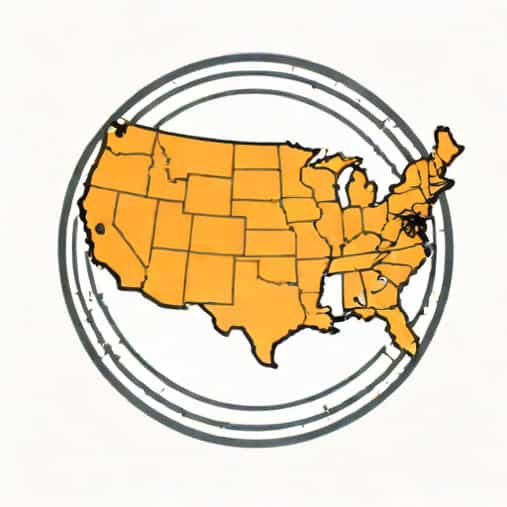
The United States is one of the most geographically and culturally diverse countries in the world, spanning a vast area of North America. When discussing its location, a common question arises in which hemisphere is the United States? Understanding the hemispheric location of the United States is important not only for geography enthusiasts but also for students, travelers, and anyone seeking to contextualize global relationships and climate patterns. The hemisphere in which a country lies determines many aspects of its climate, time zones, and its relationship to other nations around the world. The United States is uniquely positioned, and examining its hemispheric classification reveals much about its global positioning and environmental characteristics.
Definition of Hemispheres
To understand where the United States is located, it is essential first to define what a hemisphere is. The Earth is divided into hemispheres, which are half-spheres determined by imaginary lines that bisect the planet. There are two main types of hemispheres the Northern and Southern Hemispheres, divided by the Equator, and the Eastern and Western Hemispheres, divided by the Prime Meridian and the 180th meridian. Each hemisphere encompasses unique geographic, cultural, and climatic characteristics that influence the countries within it.
Northern vs. Southern Hemisphere
- The Northern Hemisphere lies north of the Equator and contains the majority of the world’s landmass and population.
- The Southern Hemisphere lies south of the Equator and includes parts of South America, Africa, Oceania, and Antarctica.
- Countries in the Northern Hemisphere generally experience seasons opposite to those in the Southern Hemisphere, such as summer in July and winter in December.
Eastern vs. Western Hemisphere
- The Eastern Hemisphere is east of the Prime Meridian and includes most of Europe, Africa, Asia, and Australia.
- The Western Hemisphere is west of the Prime Meridian and includes the Americas and parts of western Europe and Africa.
- The division affects global time zones, navigation, and international mapping conventions.
Geographic Location of the United States
The United States is located on the continent of North America, bordered by Canada to the north, Mexico to the south, the Atlantic Ocean to the east, and the Pacific Ocean to the west. Alaska, a U.S. state, extends into the far north, near the Arctic Circle, while Hawaii stretches into the central Pacific Ocean. This wide geographic spread affects the country’s climate, ecology, and regional diversity, but its hemispheric location is clearly defined.
United States in the Northern Hemisphere
The United States is entirely located north of the Equator, placing it firmly in the Northern Hemisphere. Being in the Northern Hemisphere has several implications
- Seasonal patterns follow the Northern Hemisphere calendar, with winter typically from December to February and summer from June to August.
- Daylight hours fluctuate with the seasons, affecting agriculture, energy consumption, and lifestyle.
- The country’s flora, fauna, and ecosystems are adapted to Northern Hemisphere climates.
United States in the Western Hemisphere
In addition to being in the Northern Hemisphere, the United States is also in the Western Hemisphere. This classification is determined by its location west of the Prime Meridian. The Western Hemisphere encompasses North and South America, making the United States a significant country in terms of geography, politics, and economics within this hemisphere.
- Being in the Western Hemisphere affects international time zones, trade, and communication with countries primarily located in the Eastern Hemisphere.
- The United States shares the Western Hemisphere with Canada, Mexico, Central American nations, and South American countries.
- This positioning also historically influenced exploration, colonization, and cultural development during the Age of Discovery.
Implications of Hemispheric Location
The hemispheric location of the United States has broad implications beyond simple geography. Its position in the Northern and Western Hemispheres influences climate, weather patterns, global trade, and diplomatic relations. Understanding these implications helps contextualize the country’s role in global politics and its interactions with other nations.
Climate and Seasons
The Northern Hemisphere location means that the United States experiences four distinct seasons in most regions, although variations occur due to latitude and altitude. For example, northern states such as Minnesota or North Dakota experience harsh winters, while southern states such as Florida and Texas have milder winters. Hawaii and southern California enjoy subtropical or tropical climates year-round.
Time Zones
Spanning multiple longitudes, the United States has six primary time zones, from Eastern to Pacific, including Alaska and Hawaii-Aleutian zones. Its Western Hemisphere location means it operates many hours behind countries in the Eastern Hemisphere, which affects international business, travel, and communication.
Trade and Global Relations
Being in the Western Hemisphere positions the United States close to key trading partners in North and South America. The country’s location facilitated the establishment of trade routes, economic partnerships, and diplomatic relationships, particularly with Canada, Mexico, and countries in the Caribbean. The hemispheric position has historically influenced military strategy, trade policy, and cultural exchanges.
Comparison with Other Countries
Comparing the United States’ hemispheric location with other countries helps clarify its global context. Most European, African, and Asian countries lie in the Eastern Hemisphere, while North and South America fall in the Western Hemisphere. Similarly, the United States’ Northern Hemisphere location is shared with Canada, Europe, and parts of Asia, contrasting with countries like Brazil or Australia in the Southern Hemisphere.
- Eastern Hemisphere countries are geographically on the opposite side of the globe, affecting communication and travel.
- Southern Hemisphere countries experience opposite seasons, which impacts agriculture and lifestyle.
- The U.S. position allows it to act as a bridge between Europe and Asia in trade and diplomacy.
Significance in Education and Geography
Teaching the hemispheric location of the United States is fundamental in education, helping students understand maps, climate zones, and global positioning. It also provides context for studying history, economics, and environmental science. Recognizing the United States as part of the Northern and Western Hemispheres allows students and researchers to analyze weather patterns, migration trends, and geopolitical strategies with accuracy.
Educational Applications
- Geography classes use hemispheric knowledge to teach map reading and spatial awareness.
- History lessons examine how geographic location influenced exploration and colonization.
- Science courses analyze climate, daylight, and environmental systems relative to hemispheric location.
- Global studies explore trade, time zones, and international relations impacted by hemispheres.
the United States is located in the Northern Hemisphere and the Western Hemisphere. This positioning north of the Equator and west of the Prime Meridian has profound implications for its climate, seasons, time zones, trade, and international relations. Its hemispheric location helps define its cultural, economic, and environmental characteristics while situating it geographically among other nations in the Americas and globally. Understanding the hemisphere of the United States is crucial for geography education, travel planning, international relations, and environmental studies. The country’s unique location continues to influence its global interactions, domestic policies, and regional diversity, making hemispheric awareness an essential aspect of understanding the United States in a global context.