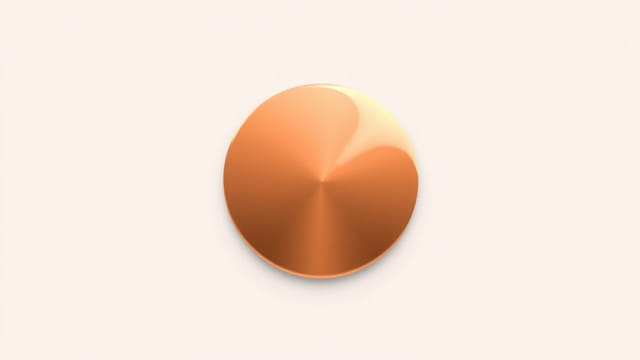
In English, there are many words that may seem unusual at first glance, especially when they are used to describe colors, textures, or visual qualities. One such word is‘coppery’. You may have heard someone say, ‘Her hair had a coppery shine,’ or ‘The sky turned a coppery hue at sunset.’ This raises the question: is ‘coppery’ a real word? If so, what does it mean, how is it used, and what type of word is it? In this topic, we’ll explore the definition, usage, and grammar of the word ‘coppery’ in detail, along with examples and tips on how to use it properly in everyday English.
What Does ‘Coppery’ Mean?
The word ‘coppery’ is indeed a real word in the English language. It is commonly used to describe a color or appearance that resembles copper. Copper, a reddish-brown metal, has a distinct warm tone, and ‘coppery’ is used to refer to things that share this tone or sheen. It can also describe something that has the look or qualities of copper in terms of color, glow, or metallic reflection.
Definition of ‘Coppery’
According to English dictionaries, ‘coppery’ is defined as:
- Having the reddish-brown color of copper
- Having a metallic shine or quality similar to copper
So, when someone uses the word ‘coppery,’ they are generally referring to something that resembles the appearance or quality of copper, especially in terms of color.
What Part of Speech Is ‘Coppery’?
‘Coppery’ is anadjective. This means it is used to describe or modify nouns. Adjectives provide more information about a person, place, thing, or idea. In this case, ‘coppery’ tells us more about the look or tone of the noun it is describing.
Examples of ‘Coppery’ as an Adjective
- She wore acopperydress that shimmered in the sunlight.
- The leaves turned a beautifulcopperycolor in autumn.
- He had acopperytan after spending weeks at the beach.
In all these examples, ‘coppery’ gives descriptive detail about a physical characteristic, such as the appearance of a dress, leaves, or skin tone.
Is ‘Coppery’ a Common Word?
While not used in everyday conversation as often as some adjectives, ‘coppery’ is still recognized and understood by most native English speakers. It is more likely to be used in creative writing, literature, descriptions of color, or fashion. Writers and artists often use ‘coppery’ to paint vivid visual scenes or to create poetic descriptions.
Where You Might See ‘Coppery’
The word ‘coppery’ often appears in:
- Descriptions of hair color (e.g., ‘coppery red hair’)
- Nature writing (e.g., ‘coppery sky at dusk’)
- Fashion and cosmetics (e.g., ‘coppery eyeshadow’ or ‘coppery lipstick’)
- Literary novels and poetry
Synonyms and Related Words
To enrich your vocabulary and avoid repetition, here are some synonyms and words that can be used similarly to ‘coppery’ depending on the context:
- Reddish-brown
- Bronze
- Rust-colored
- Auburn (especially for hair)
- Burnished
- Metallic
These words may be used instead of or alongside ‘coppery’ when describing shades of color, metal-like finishes, or warm tones.
Examples of ‘Coppery’ in Sentences
To better understand how ‘coppery’ fits into real-life sentences, here are more examples across different contexts:
Describing People
- His coppery beard gave him a rugged, weathered look.
- She dyed her hair a rich coppery tone that shimmered under the lights.
Describing Nature
- The coppery glow of the setting sun lit up the horizon.
- A coppery beetle crawled along the edge of the leaf.
Describing Objects or Materials
- The metal had a coppery finish that gave it a vintage feel.
- The walls were painted in a warm, coppery shade.
Is ‘Coppery’ Used in Scientific or Technical Fields?
In scientific writing, ‘coppery’ is less commonly used because it is considered a subjective description. Scientists and engineers tend to use more specific terms such as ‘oxidized copper,’ ‘Cu(II) compound,’ or ‘metallic reddish-brown.’ However, in informal scientific communication, especially in fields like geology or entomology (the study of insects), ‘coppery’ may still be used to describe coloration in minerals or species.
How to Use ‘Coppery’ Correctly
To use ‘coppery’ effectively in your writing or speech, keep the following tips in mind:
- Use it as an adjective, not as a noun or verb.
- Place it before the noun it describes (e.g., ‘coppery light’).
- Use it for visual descriptions involving color, shine, or texture.
- Pair it with nouns that make sense contextually, like ‘sky,’ ‘hair,’ ‘metal,’ or ‘eyes.’
Incorrect: The coppery of the sky was beautiful.
Correct: The coppery sky was beautiful.
Words That Look Similar but Have Different Meanings
Some learners might confuse ‘coppery’ with other similar-looking or sounding words. Here’s a brief look at related terms:
- Copper: The actual metal or the reddish-brown color.
- Coppertone: A specific shade of tan or a brand name.
- Copperhead: A type of venomous snake.
Each of these words has its own meaning and should not be used interchangeably with ‘coppery.’
Is ‘Coppery’ in the Dictionary?
Yes, ‘coppery’ is listed in major English dictionaries including Merriam-Webster, Oxford, and Cambridge. This confirms its status as a legitimate English word. It has been in use for many years and continues to be relevant, especially in descriptive writing.
To sum up, ‘coppery’ is a valid English word that functions as an adjective. It is used to describe things that resemble the color or shine of copper. Whether referring to a sunset, a dress, or someone’s hair, ‘coppery’ adds warmth and detail to your language. While not used in technical jargon, it remains a powerful word for creative and descriptive writing. If you want to express the beauty of something reddish-brown or metallic, ‘coppery’ is a perfect choice. So yes, ‘coppery’ is a word and it’s a useful one for painting vivid pictures in the minds of your readers or listeners.