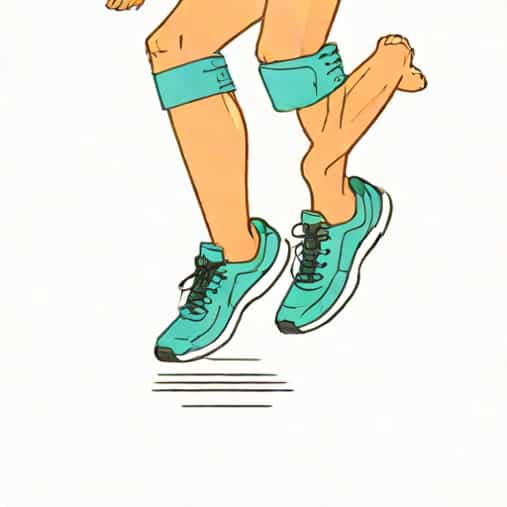
Many runners start questioning their running form when they experience knee pain or want to prevent future injuries. One topic that often comes up is whether changing foot strike can make a difference. This leads to a common question is forefoot running better for your knees? Forefoot running, where the ball of the foot lands before the heel, has gained attention in recent years as an alternative to the traditional heel-strike pattern. Understanding how this running style affects the knees can help runners make more informed decisions about their training and long-term joint health.
Understanding Forefoot Running
Forefoot running refers to a running style where the front part of the foot touches the ground first, followed by the heel either lightly touching down or not touching at all. This is different from heel striking, where the heel lands first and absorbs most of the impact.
This running pattern is often seen in sprinting and barefoot running. Some runners naturally use a forefoot strike, while others adopt it intentionally to reduce joint stress or improve efficiency.
How Knee Stress Occurs During Running
Running places repetitive stress on the knees due to impact forces and body weight. Each step sends force through the foot, ankle, knee, and hip. How these forces are distributed depends on running form, speed, footwear, and surface.
Knee pain often develops when the joint absorbs more force than it can handle over time. This is why runners are interested in techniques that might reduce knee loading.
Is Forefoot Running Better for Your Knees?
The idea behind forefoot running is that it may reduce the impact force transmitted to the knees. When landing on the forefoot, the ankle and calf muscles absorb more shock, potentially decreasing the load on the knee joint.
Some biomechanical studies suggest that forefoot running can reduce peak forces at the knee compared to heel striking. This has led to the belief that forefoot running may be better for knee health, especially for runners prone to knee pain.
Impact Distribution in Forefoot Running
In forefoot running, impact forces are shifted away from the knee and toward the ankle and foot. The calf muscles, Achilles tendon, and arches of the foot play a larger role in absorbing shock.
This redistribution may help reduce stress on the knee, but it does not eliminate impact entirely. Instead, it changes where the body experiences that stress.
Potential Benefits for Knee Health
Reduced Knee Loading
One possible benefit of forefoot running is lower stress on the knee joint during landing. This can be appealing to runners with conditions like runner’s knee or patellofemoral pain syndrome.
Smoother Ground Contact
Forefoot runners often experience a smoother transition from landing to push-off. This may reduce abrupt braking forces that are commonly seen with heel striking.
Improved Running Awareness
Switching to forefoot running often makes runners more aware of their posture and cadence. Better body alignment can indirectly support knee health.
Potential Downsides of Forefoot Running
While forefoot running may offer knee-related benefits, it is not without risks. Shifting stress away from the knees means other parts of the body take on more load.
Increased Stress on Calves and Ankles
The calves and Achilles tendon work harder during forefoot running. Runners who switch too quickly may experience soreness, tightness, or injury in these areas.
Foot Injuries
Forefoot running increases pressure on the front of the foot. This can raise the risk of metatarsal stress fractures or plantar discomfort if not managed carefully.
Not Suitable for Everyone
Runners with limited ankle mobility, existing foot issues, or certain biomechanical patterns may not benefit from forefoot running.
Heel Striking and Knee Pain
Heel striking is often blamed for knee pain, but it is not always the direct cause. Many runners heel strike without ever experiencing knee problems. Factors such as overtraining, weak muscles, poor footwear, and lack of recovery also play major roles.
This means that switching to forefoot running is not a guaranteed solution for knee pain.
Transitioning Safely to Forefoot Running
If you are considering forefoot running to protect your knees, a gradual transition is essential. Sudden changes in running form can lead to injury.
- Start with short distances and low intensity
- Include calf strengthening and stretching exercises
- Focus on maintaining a high cadence
- Pay attention to pain or discomfort signals
- Allow time for adaptation
Many runners benefit from mixing running styles during the transition period.
The Role of Running Shoes
Footwear plays a significant role in how forefoot running feels and functions. Minimalist or low-drop shoes often encourage a forefoot strike, while heavily cushioned shoes promote heel striking.
However, wearing minimalist shoes does not automatically improve knee health. Proper fit, comfort, and gradual adaptation are more important than shoe type alone.
Strength and Mobility Considerations
Strong hips, glutes, and core muscles help stabilize the knees regardless of foot strike. Many knee problems are linked to muscle imbalances rather than foot landing patterns.
Improving overall strength and mobility can sometimes provide more knee relief than changing running form.
What Research Suggests
Research on forefoot running and knee health shows mixed results. Some studies support reduced knee forces, while others highlight increased injury risk in the lower leg.
This suggests that forefoot running may help some runners but not all. Individual biomechanics and training habits play a major role.
Listening to Your Body
The most important factor in deciding whether forefoot running is better for your knees is how your body responds. Pain, fatigue, and performance should guide your choice.
If knee pain improves while other areas remain healthy, forefoot running may be beneficial. If new pains develop, adjustments may be needed.
Alternative Ways to Protect Your Knees
Forefoot running is not the only way to reduce knee stress. Other strategies can also support knee health.
- Gradual training progression
- Strength training for lower body muscles
- Improving running cadence
- Maintaining healthy body weight
- Allowing adequate recovery time
These methods often work well regardless of running style.
Forefoot Running and Knee Health
So, is forefoot running better for your knees? For some runners, it may reduce knee stress by shifting impact forces to the foot and ankle. For others, it may create new challenges without solving the original problem.
Forefoot running is a tool, not a universal solution. Understanding your body, progressing gradually, and focusing on overall strength and technique are key to protecting your knees and enjoying running long term.