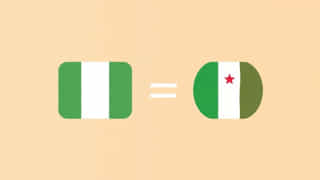
In West Africa, both the Nigerian naira (NGN) and the Guinean franc (GNF) serve as vital currencies for their respective nations. Nigeria, the region’s most populous country and largest economy, uses the naira, while Guinea, a francophone country rich in natural resources, relies on the Guinean franc. For individuals, businesses, or travelers operating across these two countries, understanding the exchange rate between the naira and the Guinean franc is essential. Whether it’s for trade, remittances, or travel expenses, the NGN to GNF conversion is a practical aspect of daily financial life in the region. This topic will explore the relationship between these two currencies, what affects their value, how to convert between them, and what you should keep in mind when dealing with Naira to Guinean Franc transactions.
Understanding the Currencies
The Nigerian Naira
The Nigerian naira is the official currency of Nigeria and is issued by the Central Bank of Nigeria. Introduced in 1973 to replace the Nigerian pound, the naira has faced multiple challenges, including inflation, foreign exchange pressure, and devaluation. The currency is subdivided into 100 kobo, though lower denominations have become practically obsolete due to inflation.
Key characteristics of the naira include:
- Symbol: â¦
- Code: NGN
- Common denominations: â¦50, â¦100, â¦200, â¦500, â¦1000
- Managed by: Central Bank of Nigeria (CBN)
The Guinean Franc
The Guinean franc is the legal tender of Guinea and is issued by the Central Bank of the Republic of Guinea. It has been the official currency since 1959. Like the naira, the Guinean franc has seen significant inflation over time, reducing the purchasing power of the currency.
Key characteristics of the Guinean franc include:
- Symbol: FG or GFr
- Code: GNF
- Common denominations: 500, 1,000, 5,000, 10,000 GNF
- Managed by: Banque Centrale de la République de Guinée
Exchange Rate Overview
The exchange rate between the naira and the Guinean franc fluctuates regularly, influenced by various economic factors. Typically, the Guinean franc holds a lower unit value than the naira. For instance, as of recent market trends, 1 Nigerian naira may convert to several Guinean francs, often in the range of 15-25 GNF depending on the prevailing rate.
However, it is crucial to understand that these rates are not fixed. They are influenced by:
- Supply and demand in the currency markets
- Inflation rates in both Nigeria and Guinea
- Government monetary policy
- Political stability and economic conditions
Where to Check the Naira to Guinean Franc Rate
If you’re looking to convert NGN to GNF, you have several options for checking the most recent rates:
- Commercial banks operating in West Africa
- Currency exchange bureaus, particularly near border regions
- Online financial platforms and forex tools
- Mobile money and digital remittance services
Note that there may be a difference between official exchange rates and black market rates, especially in Nigeria, where currency controls often create a gap between the official and parallel market values.
How to Convert Naira to Guinean Franc
Manual Calculation
To manually convert naira to Guinean francs, you simply multiply the amount in naira by the current exchange rate. For example, if 1 NGN equals 20 GNF:
â¦1000 à 20 = 20,000 GNF
This calculation gives you an approximate value, but it’s always wise to check with a local exchange provider for the actual rate you’ll receive after fees or commissions.
Using Exchange Services
In practical terms, converting currency often involves using a service provider. Depending on your location, you can do this at:
- Local banks that offer forex exchange
- Currency exchange agents or kiosks
- Mobile money services such as Orange Money or MTN Mobile
- Online money transfer platforms
Rates may vary slightly between providers, and some may charge a conversion fee, especially in cross-border transactions or mobile remittances.
Factors That Affect the Exchange Rate
Inflation and Purchasing Power
Both Nigeria and Guinea face inflation challenges, which affect how their currencies perform. Higher inflation usually leads to weaker currency value. If Nigeria experiences higher inflation than Guinea, the naira may weaken against the franc, and vice versa.
Monetary Policies
Central banks play a crucial role in stabilizing currency value. Interest rate adjustments, currency reserves, and foreign exchange interventions directly impact the value of the naira and the Guinean franc. Policies designed to curb inflation or boost exports can also influence the NGN to GNF rate.
Export and Trade Balances
Trade balances between the two countries and their external trade partners matter. Nigeria’s oil exports and Guinea’s mineral exports (such as bauxite and gold) impact national revenues and currency value. A trade deficit may put pressure on a country’s currency, reducing its value in foreign exchange markets.
Political Stability
Economic stability is often tied to political stability. Any instability, such as elections, unrest, or changes in government policy, can create uncertainty, causing currency depreciation. Investors and forex traders typically respond quickly to political news, which can cause sudden shifts in exchange rates.
Use Cases for Naira to Guinean Franc Exchange
Cross-Border Trade
Trade between Nigeria and Guinea is growing, particularly in agricultural goods, textiles, and manufactured products. Small-scale traders and importers often rely on physical currency exchange to conduct business at markets and borders.
Travel and Tourism
Travelers moving between Nigeria and Guinea need to exchange currency for practical needs like accommodation, transportation, and meals. Because of the limited international reach of either currency, local exchange remains essential.
Remittances
Families often send money across West African borders. With limited international banking infrastructure in some rural areas, mobile money and informal networks are popular for sending and receiving funds. These methods often require conversion between NGN and GNF.
Challenges in Currency Conversion
There are several challenges involved in converting naira to Guinean francs:
- Limited forex availability: Nigeria often faces forex scarcity, affecting conversion rates.
- Unregulated exchanges: Black market rates may be risky or inconsistent.
- Inflation volatility: Rapid inflation in either country can change rates quickly.
- Language barriers: Guinea is French-speaking, which may affect communication in financial transactions.
Tips for Getting the Best Rate
- Compare rates from multiple providers before exchanging money
- Use trusted financial institutions or licensed bureaus
- Be cautious of very high or very low offers these may indicate scams
- Ask about additional fees and commissions
- Consider digital platforms with transparent conversion rates
Exchanging naira to Guinean franc is a common necessity for trade, travel, and family support between Nigeria and Guinea. While the process is relatively straightforward, it’s important to stay informed about exchange rate trends and economic conditions in both countries. Understanding the naira and the Guinean franc, knowing where to find accurate conversion information, and using reliable financial services can make cross-currency transactions more secure and efficient. Whether you’re a business owner, traveler, or just curious about regional economics, keeping track of NGN to GNF rates can offer both financial insight and practical advantage.
#kebawah#