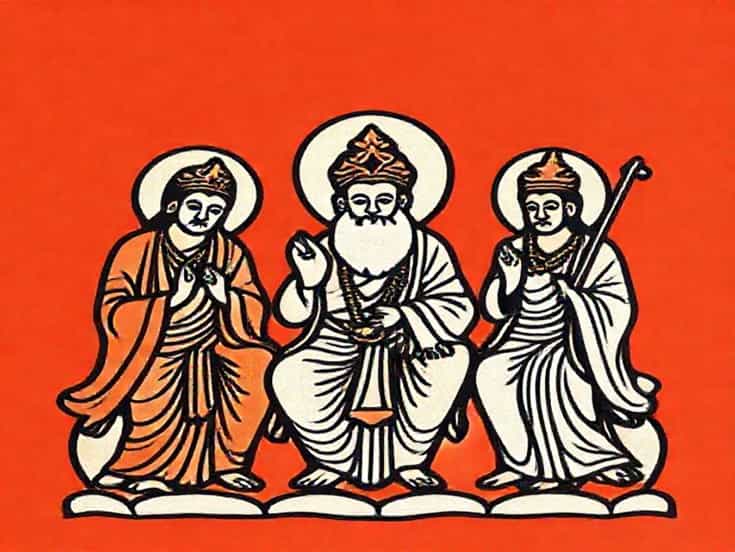
The Nayanar saints were a remarkable group of devotional poets and mystics whose lives and works have left an enduring legacy in the spiritual landscape of South India. Emerging primarily between the 6th and 9th centuries, these saints dedicated themselves entirely to the worship of Lord Shiva, expressing their devotion through poetry, music, and acts of service. Their devotion was not limited to ritualistic practices but extended to deep emotional and personal engagement with the divine, making their spirituality accessible to people from all walks of life. By intertwining their daily lives with religious fervor, the Nayanars created a rich tapestry of Bhakti literature, emphasizing love, surrender, and unshakable faith as paths to liberation.
The Core Devotion of Nayanar Saints
The primary focus of the Nayanar saints was the worship of Lord Shiva, one of the principal deities of Hinduism. Each saint expressed their devotion uniquely, often inspired by personal experiences and the cultural context of their time. The Nayanars’ bhakti, or devotional love, was characterized by intense emotional expression, humility, and a desire to serve Shiva in every aspect of life. Their poetry, known as Tevaram, celebrated the divine presence in temples, nature, and everyday interactions, making their devotion a lived experience rather than a mere philosophical concept.
Bhakti as the Path of Devotion
Bhakti, meaning devotion or loving attachment to God, was central to the Nayanars’ spiritual practice. Unlike ritualistic or scholarly approaches to religion, bhakti emphasized personal and emotional connection with the deity. The saints’ hymns often described Shiva’s attributes, his cosmic activities, and his compassionate nature, reflecting the deep love and reverence they held. This approach made spirituality more inclusive, allowing common people to participate in devotional practices regardless of their social or economic status.
Key Figures Among the Nayanars
The Nayanars were a diverse group, each with a unique story of devotion. Among the most revered were Appar, Sundarar, and Thirugnanasambandar, whose hymns remain foundational in Tamil Shaivism. Appar, also known as Tirunavukkarasar, was known for his transformative life story, shifting from Jainism to intense devotion to Shiva, demonstrating how personal struggle could lead to spiritual awakening. Thirugnanasambandar, a child prodigy, expressed his devotion through inspiring hymns praising Shiva’s grace. Sundarar, on the other hand, often addressed Shiva directly, portraying a relationship filled with intimacy and candid emotion.
Devotion Expressed Through Poetry and Music
The Nayanar saints’ devotion was often articulated through beautifully composed poetry and songs. The Tevaram hymns, which are collections of their devotional songs, are considered sacred texts in Tamil Shaivism. These hymns praised Shiva’s manifestations, celebrated his temples, and recounted divine miracles. Singing and recitation of these hymns became a form of worship, turning music into a spiritual practice that deepened the emotional connection between devotees and the deity. The poetic style was rich, filled with metaphors drawn from nature, daily life, and the cultural milieu of South India, making their devotion vivid and relatable.
Acts of Service and Personal Sacrifice
The Nayanars’ devotion was not limited to verbal or artistic expression; it extended to acts of service and personal sacrifice. Many saints undertook pilgrimages to sacred sites, served in temples, and assisted the poor and marginalized as part of their spiritual practice. Their devotion was holistic, encompassing both internal spiritual discipline and external acts of piety. Stories of Nayanars like Kannappa, who offered his own eyes to Shiva in a moment of ultimate faith, illustrate the extreme dedication and willingness to surrender personal desires for divine love.
Influence on Society and Culture
The devotion of the Nayanar saints significantly influenced the social and cultural fabric of their time. By emphasizing personal connection with Shiva over ritual hierarchy, they promoted social inclusivity in religious practice. Their hymns and stories were orally transmitted, making spiritual teachings accessible to those who could not read or write. This democratization of spiritual knowledge allowed devotion to become a unifying cultural force in Tamil society, inspiring art, literature, and temple architecture. The Nayanars’ lives and works encouraged communities to see devotion not just as an individual pursuit but as a shared cultural and spiritual experience.
Temples and Pilgrimages
Temples played a central role in the lives of Nayanar saints, serving as spaces where their devotion could be expressed and shared. Many saints undertook long pilgrimages to visit sacred Shaivite shrines, often enduring hardships to offer their prayers and songs. These pilgrimages were acts of faith, reflecting the belief that devotion was best expressed through both movement and service. The saints’ association with specific temples helped establish these sites as important centers of worship, many of which continue to attract devotees today. Through their journeys, the Nayanars reinforced the idea that devotion requires both physical and spiritual dedication.
Legacy and Continuing Influence
The influence of the Nayanar saints persists in contemporary devotional practices. Their hymns are still sung in temples across Tamil Nadu and other regions of South India, preserving the spiritual ethos they embodied. Modern devotees draw inspiration from the saints’ lives, seeing examples of courage, faith, and unconditional love for God. Beyond religious practice, the Nayanars’ works have inspired literature, music, and cultural traditions, ensuring that their devotion continues to resonate across generations.
The Nayanar saints were devoted to Lord Shiva in ways that transcended ritual and formalism, embracing a deeply personal, emotional, and holistic approach to spirituality. Through poetry, music, personal sacrifice, and social engagement, they demonstrated that true devotion involves both heart and action. Their legacy continues to shape devotional practices, temple culture, and spiritual literature in South India, illustrating how profound love for the divine can inspire individuals and communities alike. By understanding the lives and devotion of the Nayanars, one gains insight into the enduring power of bhakti, the intimate relationship between humanity and the divine, and the transformative potential of unwavering faith.