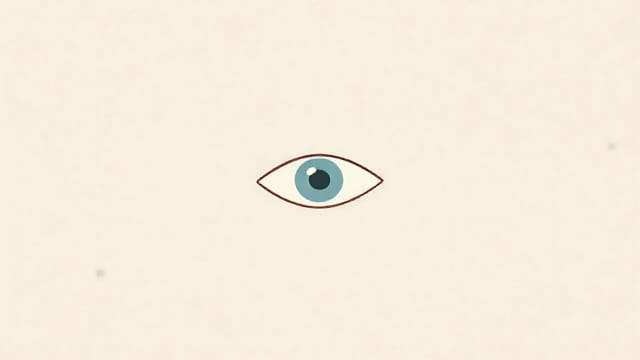
Among the many fascinating works created by Swiss-German artist Paul Klee, ‘One Eye’ stands out as a compelling and thought-provoking piece. Known for his innovative approach to modern art, Klee often fused abstraction with emotion, symbolism, and childlike imagination. ‘One Eye,’ like many of his works, resists easy interpretation but invites viewers to explore complex ideas through deceptively simple visual elements. As with much of Paul Klee’s art, this piece reflects a blend of philosophy, personal symbolism, and unique style that continues to captivate critics and art lovers alike.
Understanding Paul Klee’s Artistic Vision
A Unique Style in Modern Art
Paul Klee’s body of work cannot be confined to a single style or movement. Although often associated with Expressionism, Cubism, and Surrealism, Klee carved out his own path. His artistic language included abstract forms, vivid colors, geometric shapes, and cryptic symbols. These were not merely aesthetic choices but tools to express the inner workings of the soul and the subconscious mind.
Key Characteristics of Klee’s Art
- Use of color inspired by music and emotion
- Incorporation of symbols, numbers, and text
- Childlike simplicity paired with profound depth
- Exploration of dreams and imagination
Klee believed that art did not need to replicate the external world, but rather should represent the unseen truths behind what we experience. This philosophy deeply informs a piece like ‘One Eye.’
The Enigma of One Eye
Symbolism in Simplicity
‘One Eye’ is a title that immediately provokes curiosity. Although Klee created many works that included faces or figures with stylized or exaggerated features, this particular piece draws attention to a singular element: the eye. In Klee’s symbolic vocabulary, eyes often represent awareness, perception, and inner vision. A single eye might suggest limited perception or the concentration of sight into one focal point, perhaps emphasizing intuition over clarity.
Visual Analysis
While there are multiple interpretations and versions of eye-related works by Klee, a typical depiction in this theme might include geometric framing, muted yet emotive colors, and the presence of an abstract face or mask. The eye itself may dominate the composition or be subtly embedded, reflecting how vision both literal and metaphorical is central to the human experience.
Philosophical and Psychological Interpretations
Exploring the Inner World
Paul Klee was not only influenced by visual artists but also by psychology, particularly the ideas of Carl Jung. Jung’s concepts of the unconscious mind and archetypes resonate with Klee’s symbolic use of imagery. ‘One Eye’ might thus be interpreted as a metaphor for introspection, spiritual focus, or the narrowing of perspective to find truth within.
The Role of the Eye in Art History
Throughout history, the eye has been a powerful symbol used to represent divine watchfulness, wisdom, surveillance, and even paranoia. Klee’s ‘One Eye’ could reflect any of these meanings or combine them to provoke deeper thought. The singular eye might also suggest vulnerability, as if the subject has lost one side of their vision or is only partially able to see the world.
Paul Klee’s Personal Life and Influence on His Art
A Life of Dual Identity
Klee was born in Switzerland in 1879 but spent much of his professional life in Germany. He had a background in music, and this influence permeates his artwork his sense of rhythm, harmony, and contrast can be felt in his visual compositions. During his career, he taught at the Bauhaus and interacted with other pioneers of modernism.
Struggles and Health Issues
In his later years, Paul Klee was afflicted with scleroderma, a painful autoimmune disease that limited his movement but seemed to intensify his artistic output. During this period, his work took on darker tones, and his exploration of mortality and the inner self deepened. ‘One Eye’ may well come from this introspective phase, marked by personal suffering and philosophical questioning.
Impact and Legacy of One Eye
Continuing Influence in Modern Art
Paul Klee’s exploration of symbolism and abstraction has left a lasting mark on modern art. ‘One Eye,’ whether viewed as a literal image or a symbolic work, resonates with artists exploring identity, vision, and perception today. The simplicity of the piece challenges viewers to slow down and reflect, engaging not only with the image but also with the self.
Inspiration for Contemporary Artists
Many modern and contemporary artists have drawn from Klee’s style and themes, embracing the freedom to fuse form and emotion. His influence is seen in abstract expressionism, surrealism, and even modern graphic design. Artists like Joan Miró and Wassily Kandinsky acknowledged Klee’s imaginative power and depth.
Educational Value and Museum Displays
Teaching through Symbolic Art
Art educators often use Paul Klee’s work to teach students about abstraction, color theory, and emotional expression. ‘One Eye’ serves as an ideal example of how minimal elements can convey complex ideas. It opens discussions about symbolism, psychological interpretation, and the relationship between the artist and the viewer.
Where to See Paul Klee’s Work
- Zentrum Paul Kleein Bern, Switzerland holds the largest collection of his works.
- Major museums such as the Museum of Modern Art (MoMA) and the Tate Modern include his paintings in their collections.
- Traveling exhibitions and online galleries make his art accessible to global audiences.
Whether seen in person or digitally, the experience of viewing ‘One Eye’ is often intimate and personal, inviting interpretation rather than dictating meaning.
A Singular Vision through Art
Paul Klee’s ‘One Eye’ is more than just a painting it is a window into the human psyche, a visual representation of perception, awareness, and spiritual depth. Like much of his work, it refuses to be confined by definitions or categories. It invites quiet reflection and allows each viewer to find their own meaning. Through its simplicity, ‘One Eye’ achieves a kind of universal language that speaks to artists, thinkers, and viewers across cultures and generations. In doing so, it keeps Paul Klee’s legacy alive as one of the most thoughtful and visionary artists of the twentieth century.