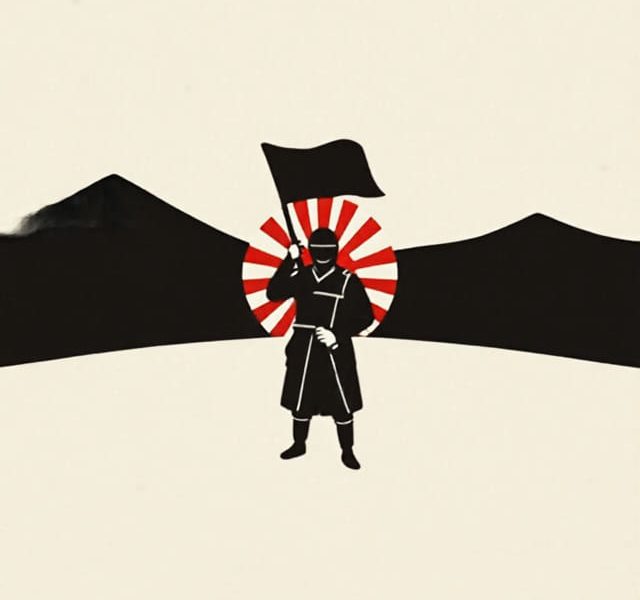
The origins of Japanese militarism can be traced through centuries of cultural evolution, political developments, and international events that shaped Japan’s national identity and foreign policy. Long before the outbreak of World War II, militaristic ideas were deeply rooted in the Japanese mindset, with samurai traditions, imperial ideologies, and external pressures all contributing to a powerful belief in military strength and expansion. Understanding the roots of Japanese militarism requires exploring its historical, cultural, and geopolitical foundations across different eras of Japan’s development.
Feudal Legacy and the Rise of the Samurai
One of the earliest foundations of Japanese militarism was the samurai class and the feudal structure of medieval Japan. For centuries, Japan was ruled by military leaders known as shoguns, with the emperor often serving as a symbolic figurehead. The samurai, a warrior class bound by the Bushido code, were central to the country’s governance and societal structure.
Bushido, or the way of the warrior, emphasized loyalty, honor, duty, and readiness to die in battle. These ideals became ingrained in Japanese culture and education. The glorification of the warrior spirit persisted well into the modern era, influencing how Japanese society viewed authority, sacrifice, and conflict.
The Tokugawa Era and Isolation
During the Tokugawa shogunate (16031868), Japan adopted a policy of isolation, known as sakoku. Foreign influence was minimized, and a rigid social order was maintained. While this period was relatively peaceful, the underlying structure of military dominance remained intact. The shogunate’s central authority was enforced through a powerful military bureaucracy, reinforcing militaristic values even during times of internal peace.
Even though Japan experienced limited external warfare during this era, the ideology of defending the homeland and preserving social order through force never fully disappeared. This long-standing tradition of centralized military control laid the groundwork for the eventual rise of modern Japanese militarism.
The Meiji Restoration and Modern Military Development
In 1868, the Meiji Restoration brought an end to the Tokugawa shogunate and restored power to the emperor. The new Meiji government aimed to modernize Japan rapidly to catch up with Western powers. This modernization included a dramatic overhaul of the military. Japan adopted Western military technology, training systems, and organizational structures.
The creation of a conscripted national army replaced the samurai-led forces, and military service became a symbol of citizenship and patriotism. Military successes in the First Sino-Japanese War (18941895) and the Russo-Japanese War (19041905) further fueled national pride and reinforced the belief that Japan was destined for regional leadership.
Militarism in Education and Society
During the Meiji era and beyond, education became a key tool in promoting loyalty to the emperor and national unity. Textbooks emphasized Japan’s divine origins, the uniqueness of the Japanese race, and the sacred duty of serving the nation. Military values were incorporated into school curricula, with physical training, discipline, and obedience being central elements.
Over time, a strong connection developed between national identity and military service. Civilians were encouraged to view the military not only as a protector but as a vital part of Japan’s cultural and political structure. This contributed to the widespread acceptance of militarism as a core part of daily life and national policy.
Political Instability and the Rise of Militarist Factions
By the 1920s and 1930s, Japan was facing economic difficulties, political instability, and social unrest. Civilian governments struggled to control the military, and factions within the army and navy gained increasing influence over national policy. Radical officers believed that military expansion abroad was the solution to Japan’s domestic problems and resource shortages.
Incidents such as the Manchurian Incident of 1931, in which Japanese military officers staged a bombing as a pretext to invade Manchuria, demonstrated the army’s willingness to act independently of the civilian government. These actions were often met with public approval due to the nationalistic fervor that had been cultivated for decades.
Expansionism and Imperial Ambitions
Japanese militarists believed that their country had a mission to liberate and lead Asia. This belief was influenced by both racial ideologies and a desire for resources to fuel industrial growth. The concept of the Greater East Asia Co-Prosperity Sphere promoted the idea that Japan would unite Asia under its leadership, free from Western colonialism.
This vision led to aggressive expansion into Korea, China, and Southeast Asia. Military leaders assumed key government positions, and decisions about war and diplomacy increasingly came from the armed forces rather than elected officials. By the time of the invasion of China in 1937 and the attack on Pearl Harbor in 1941, Japanese militarism had reached its peak.
Role of the Emperor in Japanese Militarism
The emperor, viewed as a divine figure by the Japanese public, played a symbolic but powerful role in legitimizing militarist policies. Although Emperor Hirohito’s actual involvement in military planning remains debated, his image was used extensively to unite the nation behind war efforts.
Soldiers were told they were fighting in the name of the emperor, and dying in battle was portrayed as the highest honor. This cult-like devotion to the emperor helped suppress dissent and justify extreme military actions, both at home and abroad.
Militaristic Propaganda and Media
During the height of Japanese militarism, media and propaganda were tightly controlled to promote military values. Newspapers, radio broadcasts, and films glorified the bravery of soldiers and portrayed enemies as evil or subhuman. Civilians were urged to sacrifice for the nation, and women were encouraged to support the war effort by bearing and raising strong, loyal sons.
This atmosphere of total war reinforced militaristic attitudes and ensured that opposition to the government or military policies was rare and often harshly punished.
The origins of Japanese militarism lie in a complex combination of historical traditions, political changes, cultural ideologies, and global pressures. From the warrior ethos of the samurai to the modern imperial army, militarism evolved to become a defining feature of Japanese national identity in the early 20th century.
While the devastation of World War II eventually discredited and dismantled militarist structures in Japan, the roots of this ideology remain a critical subject of study. Understanding how Japan embraced militarism provides important lessons on the dangers of unchecked military influence, the manipulation of education and media, and the consequences of merging national identity with armed force.