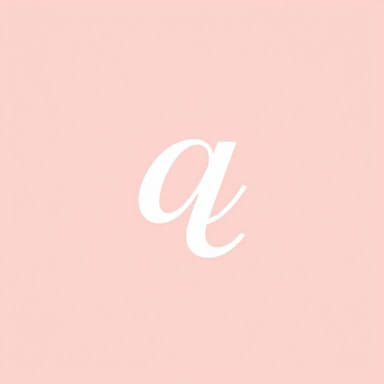
Learning cursive handwriting is a valuable skill that not only improves fine motor abilities but also adds a personal and elegant touch to writing. Among the lowercase letters, the cursive q often causes confusion because its shape significantly differs from its printed form. For those unfamiliar with cursive, this particular letter may even appear unusual or unfamiliar at first glance. However, understanding how to write the lowercase cursive q is essential for mastering the complete cursive alphabet and writing fluidly in script.
Understanding the Cursive Lowercase q
Why Is the Cursive q Unique?
The lowercase cursive q stands out because it doesn’t resemble its standard printed counterpart. In cursive, q looks more like a number 2 than a round circle with a tail, which can be surprising for learners. This distinction in shape is due to the flowing nature of cursive script, which emphasizes continuous strokes and connection between letters.
Characteristics of Cursive q
- Begins with an entry stroke from the baseline
- Loops around similar to a lowercase a initially
- Ends with a descending loop that curves rightward
- Usually connects seamlessly to the following letter
How to Write a Lowercase Cursive q
Step-by-Step Instructions
To write a lowercase q in cursive, follow these steps to form the letter accurately:
- Start at the baseline and move up diagonally to the midline with a light curve this is the entry stroke.
- From the midline, curve back down and form an oval shape similar to the start of a cursive a.
- After completing the oval, continue the stroke downward past the baseline, forming a loop similar to the tail of a cursive g.
- Finish by curving the tail rightward and upward to connect to the next letter.
Common Mistakes to Avoid
- Confusing it with the number 2: While it resembles a 2, it is smoother and more rounded at the top.
- Incorrect loop direction: Ensure the downward stroke loops to the right, not left.
- Disconnection: The tail should be curved for smooth transitions, not abruptly ending.
Practical Tips for Learning Cursive q
Practice with Lined Paper
Use lined paper designed for cursive writing, which includes guidelines for the baseline, midline, and topline. These lines help with proportion and letter formation.
Repeat Letter Drills
Write rows of lowercase q to build muscle memory. Repetition is key to mastering the unique motion required for this letter.
Combine with Other Letters
Once you feel comfortable writing the cursive q on its own, start connecting it with other letters. Practice common letter pairs such as:
- qu
- qa
- qe
- qi
Use Visual Aids
Look at charts or tracing sheets that show the formation of cursive letters. Following visual guides can clarify the loops and connections.
Connecting q to Other Letters
Linking to Vowels
The most frequent pair is qu, especially since many English words like quick, quiet, and question begin this way. It’s important to master the transition from the descending loop of q to the entry stroke of u.
Writing in Full Words
Practice writing entire words that include the letter q in cursive. Examples include:
- quick
- equal
- quiet
- quote
- acquire
These exercises improve fluency and reinforce how q interacts with different types of letters.
Why Learn the Cursive Lowercase q?
Enhances Handwriting Fluency
Understanding all the letters in cursive, including the trickier ones like q, helps maintain a consistent and flowing writing style. It allows for faster writing while maintaining readability.
Boosts Brain Function
Cursive writing has been shown to enhance brain development in areas related to thinking, language, and working memory. Learning complex letters contributes to cognitive growth and fine motor coordination.
Preserves Traditional Handwriting Skills
In a digital age, cursive writing offers a personal, human touch. Being able to write a full cursive alphabet, including a well-formed lowercase q, keeps the art of handwriting alive.
Historical Context of the Cursive q
Origins of the Design
The cursive q design dates back to classic handwriting systems used in calligraphy and penmanship schools. Its looped structure was intended for smooth writing with fountain pens, reducing the number of pen lifts needed.
Differences Across Cursive Styles
While the basic structure remains the same, cursive q can vary slightly depending on the handwriting system. For example:
- D’Nealian: More rounded with a pronounced loop
- Zaner-Bloser: Cleaner and less loopy
- Spencerian: Elegant, more ornate strokes
Incorporating Cursive q in Daily Writing
Writing Notes and Journals
Integrate cursive letters, including q, into everyday writing such as journaling, to-do lists, or handwritten letters. This helps keep your skills sharp.
Teaching Others
If you are a parent or educator, demonstrating how to write the cursive q can help children appreciate the uniqueness of cursive letters and improve their overall penmanship.
Mastering the lowercase cursive q may take some patience, but it is a rewarding part of learning the cursive alphabet. Its unique shape sets it apart from most other letters, making it both a challenge and a highlight of cursive writing. By practicing its form, connecting it to other letters, and using it in real-word applications, anyone can become confident in writing the cursive q. As handwriting continues to hold its place in education and personal expression, this small letter plays a big role in maintaining the flow and elegance of script writing.