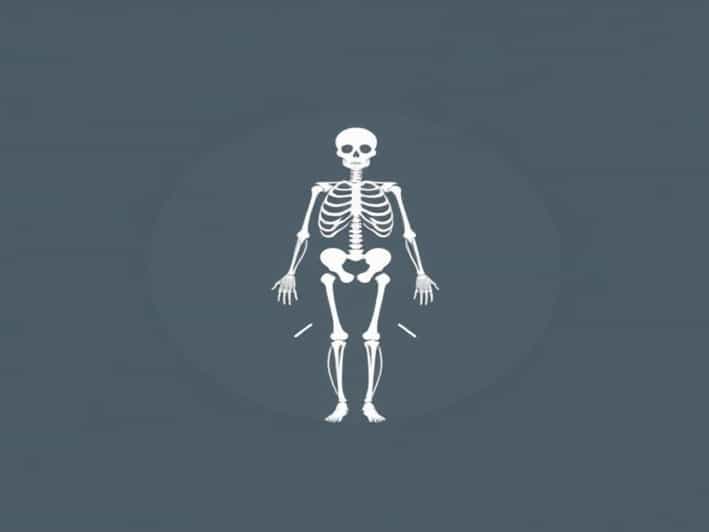
Understanding anatomical references is essential for anyone studying human anatomy, healthcare, or medical terminology. In Unit 4 of most anatomy and physiology courses, students explore how the body is divided into regions, planes, and directions to help describe location and movement accurately. This knowledge forms the foundation for communicating effectively in medicine, ensuring that healthcare professionals can describe the human body precisely, regardless of language or specialty. This topic explores key concepts typically found in a Unit 4 quiz on anatomical references, including anatomical position, directional terms, body planes, and body cavities.
Anatomical Position and Its Importance
The anatomical position serves as the universal starting point for describing body parts and movements. In this standardized position, the body stands erect, facing forward, with arms at the sides and palms facing outward. The feet are slightly apart and directed forward. This posture provides a consistent frame of reference for all anatomical descriptions, eliminating confusion that might arise from body movement or orientation.
For instance, when a quiz question asks about the relationship between two body parts, such as the wrist and elbow, students must assume the anatomical position before answering. Regardless of how a person is standing or lying, terms like superior and inferior are always defined relative to this standard position. Therefore, understanding and memorizing the anatomical position is often one of the first tasks in a Unit 4 anatomy quiz.
Directional Terms in Anatomy
Directional terms are crucial for locating one body part relative to another. These terms form the vocabulary that allows precise and universal communication between healthcare professionals. A Unit 4 quiz on anatomical references often tests knowledge of these terms through multiple-choice or labeling questions.
Common Directional Terms
- Superior (Cranial)Toward the head or upper part of the body. For example, the heart is superior to the stomach.
- Inferior (Caudal)Away from the head, or toward the lower part of the body. The knees are inferior to the hips.
- Anterior (Ventral)Toward the front of the body. The sternum is anterior to the spine.
- Posterior (Dorsal)Toward the back of the body. The spine is posterior to the sternum.
- MedialToward the midline of the body. The nose is medial to the eyes.
- LateralAway from the midline. The ears are lateral to the eyes.
- ProximalCloser to the point of attachment or origin. The elbow is proximal to the wrist.
- DistalFarther from the point of attachment. The fingers are distal to the elbow.
Knowing these terms helps students interpret questions accurately, particularly when diagrams or anatomical models are used in assessments. A Unit 4 quiz may require identifying relationships between structures based on these directional terms.
Body Planes and Sections
Body planes are imaginary lines that divide the body into specific sections, helping describe movements and positions. Most Unit 4 anatomical reference quizzes test the ability to identify or label these planes correctly. Understanding them is also important for interpreting medical imaging such as CT scans, MRIs, and X-rays.
The Three Major Body Planes
- Sagittal PlaneDivides the body into left and right halves. A midsagittal plane divides the body exactly in half, while a parasagittal plane divides it unequally.
- Frontal (Coronal) PlaneDivides the body into anterior (front) and posterior (back) sections.
- Transverse (Horizontal) PlaneDivides the body into superior (upper) and inferior (lower) sections.
When taking a quiz on anatomical references, students may be asked to identify which plane an organ lies on or which direction a movement occurs. For example, flexion and extension of the arm happen in the sagittal plane, while abduction and adduction of the legs occur in the frontal plane.
Body Cavities and Their Divisions
In addition to planes and directional terms, Unit 4 typically introduces students to the body’s major cavities. These cavities house and protect internal organs, providing both structure and safety. A quiz on anatomical references often includes labeling these cavities or matching them with their contained organs.
Main Body Cavities
- Dorsal CavityIncludes the cranial cavity (which holds the brain) and the spinal cavity (which encloses the spinal cord).
- Ventral CavityComprises the thoracic cavity (lungs and heart) and the abdominopelvic cavity (digestive organs, kidneys, and reproductive structures).
The diaphragm separates the thoracic and abdominopelvic cavities. Understanding this division is key for identifying the location of internal organs. For instance, the liver is in the upper right portion of the abdominopelvic cavity, while the heart sits in the mediastinum of the thoracic cavity.
Body Regions and Quadrants
To make communication more precise, the abdominopelvic area is divided into regions and quadrants. These divisions are vital for medical documentation and physical assessments, especially when describing pain or injury locations.
Four Quadrants
- Right Upper Quadrant (RUQ)
- Left Upper Quadrant (LUQ)
- Right Lower Quadrant (RLQ)
- Left Lower Quadrant (LLQ)
Each quadrant contains specific organs. For example, the RUQ houses the liver and gallbladder, while the RLQ contains the appendix. A Unit 4 quiz may include questions that ask students to identify which quadrant an organ belongs to or where certain symptoms might originate.
Nine Abdominal Regions
For more detailed analysis, the abdomen is divided into nine regions
- Right hypochondriac region
- Epigastric region
- Left hypochondriac region
- Right lumbar region
- Umbilical region
- Left lumbar region
- Right iliac (inguinal) region
- Hypogastric (pubic) region
- Left iliac (inguinal) region
Learning these regions helps healthcare providers pinpoint internal problems. For instance, pain in the left lower quadrant could suggest issues with the large intestine, while pain in the right upper quadrant might be linked to the gallbladder or liver.
Applications in Healthcare and Anatomy Studies
Mastering anatomical references is not just about passing a quiz it’s a fundamental part of medical communication. Doctors, nurses, and physical therapists rely on these references every day when diagnosing patients or performing medical procedures. By understanding how to describe the position of organs and body parts, professionals ensure clear communication and accurate documentation.
For example, when a surgeon discusses an incision superior to the umbilicus, the phrase provides a precise location that anyone trained in anatomy can visualize. Similarly, medical imaging reports use terms like posterior lesion or lateral displacement to describe findings accurately.
Study Tips for a Unit 4 Anatomical References Quiz
Preparing for a Unit 4 quiz can be easier with a few helpful strategies
- Memorize directional terms using flashcards or diagrams.
- Practice labeling body planes and cavities on anatomical charts.
- Use mnemonics to remember the order and function of regions.
- Review real-world examples, such as where organs are located in each quadrant.
- Test yourself regularly to strengthen recall and understanding.
Unit 4 on anatomical references provides the language that connects all aspects of anatomy and physiology. From the basic understanding of the anatomical position to the detailed identification of body planes, regions, and cavities, these concepts build the foundation for all medical studies. A quiz on this topic not only measures memorization but also the ability to apply spatial awareness to real-life anatomy. By mastering these references, students gain a deeper comprehension of how the human body is organized, allowing for accurate communication and effective learning in any healthcare field.