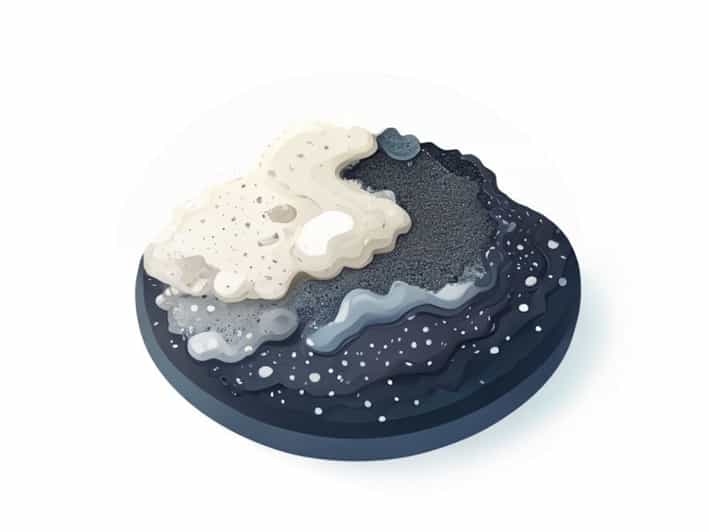
The ocean floor holds a fascinating world of sediments that reveal the history of Earth’s climate, marine life, and geological processes. Among these sediments, siliceous ooze and calcareous ooze are two of the most significant types, each playing a crucial role in the marine ecosystem and in scientific studies. These oozes are composed of the skeletal remains of microscopic organisms and provide insight into the productivity and composition of the ocean over millions of years. Understanding their formation, distribution, and characteristics is essential for geologists, oceanographers, and anyone interested in the dynamics of the marine environment. These oozes are not only important for scientific research but also for understanding the resources present on the ocean floor and the processes that influence marine sedimentation.
What is Siliceous Ooze?
Definition and Composition
Siliceous ooze is a type of deep-sea sediment primarily composed of the silica-based skeletal remains of microscopic marine organisms. The main contributors to siliceous ooze are diatoms, which are single-celled algae with intricate silica shells, and radiolarians, protozoa with complex silica skeletons. This type of ooze is typically rich in silicon dioxide (SiO2), which is the primary component of glass. Over time, the accumulation of these microscopic skeletons forms thick deposits on the ocean floor, particularly in regions of high biological productivity.
Formation of Siliceous Ooze
The formation of siliceous ooze depends on the abundance of diatoms and radiolarians in the upper layers of the ocean. When these organisms die, their silica shells sink to the ocean floor. Silica dissolves more slowly in cold, nutrient-rich waters, which is why siliceous ooze is commonly found in high-latitude regions such as the Southern Ocean near Antarctica and the North Pacific. The rate of deposition can vary, but in areas with abundant nutrients, thick siliceous deposits can accumulate over millions of years.
Distribution and Environmental Conditions
Siliceous ooze is primarily found in areas where surface waters are rich in nutrients, supporting large populations of diatoms and radiolarians. These regions are often characterized by upwelling currents that bring nutrient-rich waters to the surface. Siliceous sediments are typically located below the carbonate compensation depth (CCD), a depth at which calcareous materials dissolve faster than they accumulate. Because silica is less soluble than calcium carbonate in deep waters, siliceous ooze can persist even in great ocean depths.
What is Calcareous Ooze?
Definition and Composition
Calcareous ooze is a type of marine sediment that is primarily composed of calcium carbonate (CaCO3) derived from the skeletal remains of microscopic organisms such as foraminifera and coccolithophores. Foraminifera are tiny amoeboid protists with calcareous shells, while coccolithophores are single-celled algae covered in calcareous plates called coccoliths. Calcareous ooze is responsible for the formation of many limestone deposits found on the seafloor and is a significant indicator of past ocean chemistry and climate conditions.
Formation of Calcareous Ooze
Calcareous ooze forms when the calcium carbonate shells of planktonic organisms sink through the water column and accumulate on the seafloor. The solubility of calcium carbonate increases with depth and pressure, and below a certain threshold known as the carbonate compensation depth (CCD), the shells begin to dissolve faster than they accumulate. Therefore, calcareous ooze is mostly found above the CCD, typically in shallower parts of the deep ocean, while siliceous ooze dominates the deeper regions where carbonate dissolution occurs.
Distribution and Environmental Conditions
Calcareous ooze is abundant in tropical and temperate oceans where warm surface waters support large populations of foraminifera and coccolithophores. The deposition of calcareous ooze is influenced by factors such as water temperature, acidity, and nutrient availability. Regions with high plankton productivity tend to have thicker deposits of calcareous ooze, which can later lithify into chalk or limestone, forming significant geological records of the Earth’s history.
Differences Between Siliceous and Calcareous Oozes
- CompositionSiliceous ooze is rich in silica from diatoms and radiolarians, while calcareous ooze contains calcium carbonate from foraminifera and coccolithophores.
- SolubilitySilica is less soluble in deep, cold waters, allowing siliceous ooze to accumulate below the carbonate compensation depth. Calcareous ooze dissolves more readily at greater depths and is mostly found above the CCD.
- DistributionSiliceous ooze dominates high-latitude oceans and regions of nutrient upwelling, whereas calcareous ooze is common in tropical and temperate oceans.
- Formation RateSiliceous ooze tends to accumulate slower in regions with lower nutrient availability, while calcareous ooze can form faster in productive surface waters.
- Scientific SignificanceSiliceous ooze provides information about past nutrient levels and ocean circulation, while calcareous ooze offers insights into past climate conditions, carbon cycles, and ocean acidity.
Scientific Importance of Siliceous and Calcareous Oozes
Climate and Environmental Records
Both siliceous and calcareous oozes serve as valuable archives of Earth’s climate history. The composition and thickness of these oozes can reveal changes in ocean productivity, nutrient availability, and global climate patterns over millions of years. For example, analyzing siliceous ooze layers can indicate periods of high diatom productivity linked to upwelling events, while calcareous ooze provides clues about carbon dioxide levels and ocean acidity in the past.
Paleontology and Fossil Studies
Oozes contain microscopic fossils that are crucial for studying evolutionary history and past marine ecosystems. The fossilized remains in siliceous and calcareous oozes help scientists identify species distribution, migration patterns, and extinction events, offering a window into the biological history of our planet.
Geological and Economic Significance
Accumulated oozes can eventually lithify into sedimentary rocks such as chert from siliceous ooze and limestone from calcareous ooze. These rocks are important for geological research and have economic value in construction, cement production, and as reservoirs for oil and gas exploration.
Siliceous and calcareous oozes are essential components of the deep-sea sedimentary environment, each providing unique insights into marine life, oceanic processes, and the Earth’s climate history. While siliceous ooze is rich in silica from diatoms and radiolarians and forms primarily in high-latitude and nutrient-rich waters, calcareous ooze is composed of calcium carbonate from foraminifera and coccolithophores, mostly accumulating above the carbonate compensation depth in tropical and temperate oceans. Both types of ooze play significant roles in paleoclimatology, marine biology, and geology, helping scientists reconstruct past environmental conditions and understand the complex interactions within the Earth system. The study of these oozes not only advances scientific knowledge but also highlights the dynamic processes shaping the ocean floor and influencing life on our planet.
Understanding siliceous and calcareous oozes allows researchers to trace the history of ocean productivity, nutrient cycles, and carbon storage over geological time scales. These oozes are more than just sediments they are archives of the planet’s environmental past, offering clues about how oceans and climates have changed and how they might continue to evolve in the future. As scientific techniques improve, the study of these marine sediments will remain a cornerstone of oceanographic and geological research, underscoring their lasting importance to our understanding of Earth’s natural systems.