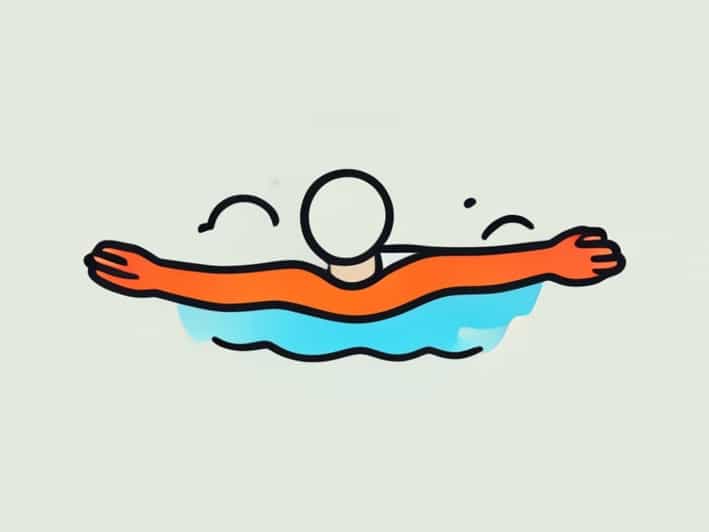
The sidestroke is one of the most valuable swimming techniques for survival, known for its efficiency, control, and ability to conserve energy over long distances. Unlike competitive strokes that focus on speed, the sidestroke is designed for endurance and safety in open water situations. Its arm movement plays a crucial role in propelling the swimmer forward smoothly while keeping the head above water for breathing and observation. Understanding the technique for survival sidestroke arms is essential for anyone learning lifesaving skills, survival swimming, or water rescue methods.
What Makes the Sidestroke Ideal for Survival Swimming
The sidestroke is often taught in military and lifeguard training because it combines practicality with minimal effort. Swimmers use it when they need to travel long distances without exhausting themselves. The stroke’s horizontal body position reduces drag while allowing one arm to recover above the water and the other to glide beneath it. This creates a rhythmic, sustainable movement ideal for calm or rough water environments. The sidestroke is also useful when carrying equipment or towing another person, as the head stays above the surface most of the time.
Basic Principles of the Sidestroke Arm Technique
In survival swimming, efficiency and rhythm are everything. The sidestroke’s arm technique follows a scissor-like coordination with the legs, where both movements complement each other to maintain balance and propulsion. The swimmer lies on their side, typically with the lower arm extended forward and the upper arm resting alongside the body or performing a pull.
The movement sequence alternates between a pulling and gliding phase. During the pull, one arm generates thrust while the other recovers through the water. During the glide, both arms extend forward to maximize distance per stroke, giving the swimmer a chance to rest briefly between pulls. This glide phase is what helps conserve energy a key element in any survival scenario.
Step-by-Step Breakdown of Arm Movements
- 1. Lead Arm ExtensionStart with your lead arm (the one closest to the bottom of the pool or sea floor) fully extended forward. This arm acts like an anchor, ready to pull you ahead.
- 2. Pull PhaseSweep the lead arm downward and backward in a curved motion. The pull should be firm but controlled, using the forearm and hand to push against the water.
- 3. Recovery Arm MotionWhile the lead arm is pulling, the upper arm (recovery arm) bends at the elbow and moves forward in front of your chest, just below the surface of the water.
- 4. Glide and StreamlineOnce both arms meet in front, pause briefly in a streamlined position. This glide helps you maintain momentum and reduce fatigue.
- 5. Repeat RhythmicallyContinue alternating between pull and recovery, maintaining a smooth and coordinated rhythm with your legs performing a scissor kick.
Maintaining Proper Body Position
Good body alignment is key to performing the sidestroke efficiently. The swimmer should lie slightly on one side, with the head kept comfortably above the water surface. The face should remain turned upward to allow for easy breathing. Avoid rolling too much toward your stomach or back, as this can create unnecessary resistance.
The hips and shoulders should stay in line to maintain a natural flow. During the pull phase, the torso may rotate slightly to support the motion of the arms, but the rotation should be subtle. Over-rotating wastes energy and disrupts balance, which is especially risky in survival conditions where every bit of energy matters.
Coordination Between Arms and Legs
In the sidestroke, the arms and legs must move in harmony. The scissor kick complements the arm movements, providing propulsion while stabilizing the body. The kick occurs during the pull phase of the arms, followed by a glide when both limbs extend forward. This synchronization ensures steady forward motion without jerky or uneven movements. The goal is smooth coordination rather than forceful power.
Breathing and Endurance in Sidestroke Swimming
One major advantage of the sidestroke is the ability to breathe easily at any time. Because the swimmer’s face is above the water throughout most of the stroke, it allows for natural inhaling and exhaling without timing it to specific phases. This is particularly important in open water or emergency situations where calm breathing helps maintain composure and oxygen efficiency.
Endurance is built by practicing long, steady sessions rather than short bursts of speed. Swimmers should focus on maintaining a consistent stroke rhythm and a relaxed breathing pattern. Over time, this improves stamina, enabling them to cover longer distances without exhaustion a key aspect of any survival technique.
Common Mistakes in Sidestroke Arm Technique
Beginners often make several errors when learning the sidestroke arm movement. Understanding these mistakes can help prevent bad habits that reduce efficiency and increase fatigue.
- Pulling too forcefully with the lead arm, which tires the shoulder and breaks rhythm.
- Neglecting the glide phase, which eliminates rest periods and wastes energy.
- Allowing the arms to cross over the center line of the body, causing imbalance.
- Keeping both arms submerged for too long instead of alternating between pull and recovery.
- Failing to coordinate arm movement with leg kicks, resulting in jerky propulsion.
Correcting these mistakes takes patience and practice. Slow, deliberate repetition of the technique is better than trying to swim quickly from the start.
Drills to Improve Sidestroke Arm Efficiency
Improving your arm technique for survival sidestroke requires targeted drills that enhance coordination and muscle memory. These exercises can be done in shallow or deep water.
- Glide PracticeAfter each arm pull, hold the glide position for a few seconds to develop a feel for balance and buoyancy.
- Single-Arm DrillPractice using only one arm at a time while keeping the other extended forward. This isolates the pulling motion and builds strength.
- Slow Motion DrillPerform each phase slowly to ensure your arms follow the correct path and your breathing stays controlled.
- Scissor Kick SynchronizationFocus on matching the timing of your kick with your arm pull for smoother propulsion.
Practical Applications of Sidestroke Arm Technique
The survival sidestroke is not just a swimming skill it’s a life-saving ability. Its practical uses extend beyond basic swimming into rescue scenarios, water safety, and military operations. Lifeguards often use sidestroke arms when towing victims because it allows them to swim efficiently while keeping one hand free. In survival situations, the sidestroke enables swimmers to conserve strength and maintain visibility of their surroundings.
Military personnel and open-water rescue teams also favor this technique because it combines stealth, control, and endurance. The sidestroke allows for quiet, low-profile movement through water while maintaining awareness of the environment essential during tactical or emergency missions.
Mastering the technique for survival sidestroke arms is about more than learning a swimming stroke it’s about developing endurance, awareness, and calm under pressure. The balance between powerful pulls and restful glides makes this stroke one of the most energy-efficient methods of propulsion in the water. By refining your arm movements, maintaining proper body alignment, and coordinating breathing with rhythm, you can build a reliable and sustainable survival swimming skill. Whether used in rescue training, open-water swimming, or emergency preparedness, the sidestroke remains a timeless and essential technique for safety and endurance.