Among the long and complex history of China’s imperial dynasties, one tradition remained nearly unbroken: emperors maintained multiple wives and concubines. These arrangements were often tied to political alliances, status, and dynastic continuity. However, in the midst of these traditions, one emperor stood apart by embracing monogamy a rare and remarkable choice for a Chinese ruler. His story not only challenges conventional expectations of imperial behavior but also reveals the personal values and character of a sovereign who defied norms for love and devotion.
Who Was the Only Monogamous Chinese Emperor?
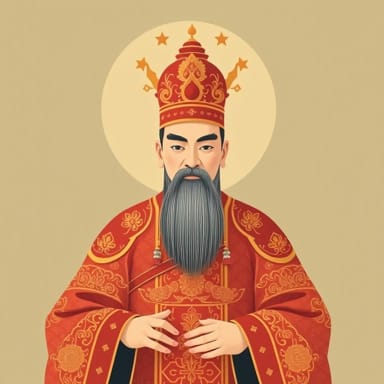
The only monogamous emperor in Chinese history was Emperor Hongzhi of the Ming Dynasty. Born in 1470 and reigning from 1487 to 1505, he was the son of Emperor Chenghua and Lady Ji. Emperor Hongzhi, also known by his personal name Zhu Youcheng, earned widespread respect for his honesty, diligence, and unusually moral personal life. Unlike his predecessors and successors, Hongzhi remained devoted to one woman, Empress Zhang, throughout his reign.
Background of Emperor Hongzhi
Emperor Hongzhi came to power at a time when the Ming Dynasty had experienced corruption and decadence under previous emperors. His father, Emperor Chenghua, had been heavily influenced by palace intrigues and favored concubines, leading to questionable governance. Perhaps in reaction to this, Hongzhi was raised with a strong Confucian education and a sense of personal responsibility. These early influences deeply shaped the way he ruled and lived.
A Unique Royal Marriage
Hongzhi’s marriage to Empress Zhang was both politically and personally significant. Their union was marked by deep affection, loyalty, and partnership. Unlike most emperors who maintained harems filled with concubines, Hongzhi was remarkably devoted to his empress alone. Records from the Ming court state that he never took another consort, making him the only Chinese emperor to remain monogamous throughout his life.
Why Monogamy Was So Unusual for Chinese Emperors
In ancient China, emperors were expected to maintain large harems to ensure the continuation of the dynasty and to strengthen political alliances through concubinage. A typical Chinese emperor had dozens, if not hundreds, of concubines living within the inner palace. The concept of monogamy in a royal context was almost unheard of, especially considering the pressure to produce multiple heirs and to display dominance and prestige through a grand court.
Despite this, Emperor Hongzhi resisted these norms. His monogamy wasn’t simply the absence of concubines it was an active expression of his personal values. He broke with tradition not out of necessity, but out of choice and love for Empress Zhang.
Qualities of Empress Zhang
Much of Hongzhi’s devotion can be attributed to the exceptional character of Empress Zhang. She was known for her intelligence, kindness, and ability to manage palace affairs with integrity. She served not only as a wife but as a trusted advisor. Together, they presented an idealized image of marital harmony and mutual respect something that resonated deeply with Confucian ideals of virtue and proper conduct.
How Monogamy Shaped His Reign
Emperor Hongzhi’s personal life mirrored his political reforms. His reign was often referred to as the Hongzhi Restoration, a period marked by governmental efficiency, reduced corruption, and economic stability. Scholars argue that his moral discipline extended from his private life into his public rule. His loyalty to one woman was not a weakness in the eyes of the court but a symbol of his uprightness and strength of character.
By avoiding the factionalism that often arose among concubines and their supporters, Hongzhi’s court was more harmonious and less burdened by the intrigues that plagued previous emperors. This allowed him to focus on governance rather than personal dramas within the palace.
Fatherhood and Succession
Despite having only one wife, Hongzhi ensured the continuity of the imperial line. Empress Zhang gave birth to a son, Zhu Houzhao, who would become the Zhengde Emperor after Hongzhi’s death. Though Zhu Houzhao’s reign did not live up to his father’s standards, Hongzhi’s monogamous example had already left a lasting impression in the annals of Chinese imperial history.
Legacy and Historical Significance
Emperor Hongzhi’s reign is often looked upon as one of the rare high points in the Ming Dynasty. His legacy is remembered not just for the administrative reforms he implemented but for his exceptional personal ethics. He embodied Confucian ideals in practice, demonstrating that personal virtue could extend to good governance. Historians have debated whether his monogamy limited or strengthened the dynasty, but many agree that his moral example stood in contrast to the decadence that followed.
While his successor fell into extravagance and neglect of duty, Hongzhi remains a symbol of an emperor who placed values, order, and personal commitment above power politics. His reign is studied in Chinese history not only for its achievements but for the rare integrity he brought to the throne.
Modern Reflections on a Monogamous Emperor
In contemporary times, the story of the only monogamous Chinese emperor often appeals to modern audiences seeking examples of love, loyalty, and ethical leadership. In literature and television portrayals, Hongzhi is depicted as a rare man who lived according to principles, even when surrounded by temptation and immense authority. His monogamy resonates today not merely as a romantic detail but as a sign of discipline and authenticity in a world where such traits remain highly admired.
Emperor Hongzhi’s monogamy was not simply a private decision it was a political and moral stance that influenced his entire reign. In a dynasty and era where emperors were expected to maintain vast harems, his lifelong devotion to Empress Zhang was revolutionary. It helped establish a more stable and ethical court, strengthened his leadership, and left a lasting impression on Chinese imperial history. As the only monogamous Chinese emperor, Hongzhi stands as a unique figure who proved that love, integrity, and effective rule can indeed go hand in hand.