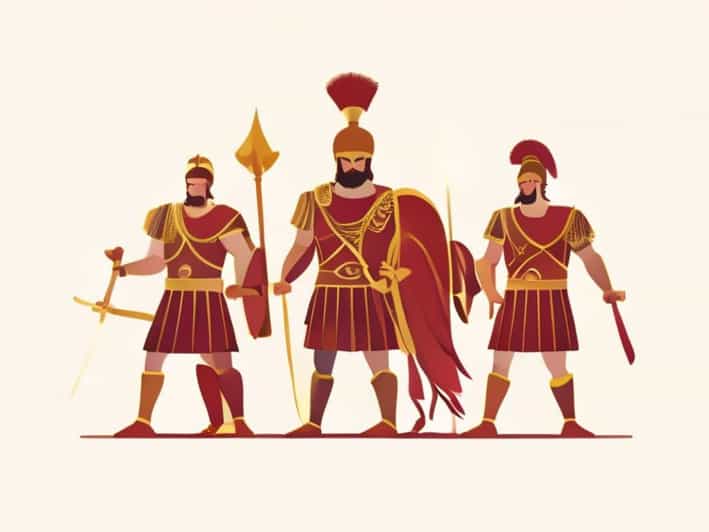
The Seleucid army of Antiochus the Great is often remembered as one of the most ambitious military forces of the Hellenistic world. Many people who study ancient warfare want to understand how this army was organized, what made it distinctive, and why it played such an important role in the expansion of the Seleucid Empire. Exploring the structure, strategy, and composition of Antiochus III’s forces offers insight into a period marked by shifting borders, cultural exchange, and fierce competition among successor kingdoms that emerged after the death of Alexander the Great.
The Historical Background of Antiochus the Great
The Seleucid Empire’s Vast Territory
The Seleucid Empire stretched from the Mediterranean to parts of Central Asia, making it one of the largest kingdoms of the Hellenistic era. Controlling such an expansive region required a strong and flexible military. Antiochus III, who reigned from 223 to 187 BCE, sought to restore the empire’s former glory by reestablishing control over lost territories and implementing major reforms in the Seleucid army.
Antiochus III’s Ambition
Known as Antiochus the Great for his bold campaigns, he aimed to rebuild the empire’s influence both east and west. His military campaigns included victories in Asia Minor, Coele-Syria, and even into the eastern territories near Bactria. Understanding the Seleucid army during this period shows how Antiochus attempted to emulate-and sometimes surpass-the model of Alexander the Great.
The Core Components of the Seleucid Army
The Macedonian Phalanx
At the heart of the Seleucid army was the Macedonian-style phalanx, a dense formation of infantry armed with long pikes called sarissas. These soldiers, often referred to as phalangites, formed the backbone of Antiochus III’s forces. They provided stability on the battlefield, anchoring the center while cavalry and specialized units maneuvered around them.
The Role of the Silver Shields
One of the most elite units of the Seleucid army was the Argyraspides, or Silver Shields. These veteran soldiers carried a reputation for discipline and strength, inherited from earlier Macedonian traditions. Although their exact size and power varied over time, they served as a symbol of continuity with the legacy of Alexander’s armies. In Antiochus’s campaigns, they often served in key positions where reliability was essential.
Cavalry Forces
The Seleucid cavalry played an important strategic role, especially in flanking maneuvers and shock attacks. Antiochus relied heavily on
- Heavy cavalry, including cataphracts armored from head to toe
- Light cavalry recruited from regions such as Media and Persia
- Mounted archers, who provided mobility and ranged attacks
This combination allowed the Seleucid army to adapt to different enemies, ranging from heavily armored foes to more mobile nomadic warriors.
Specialized and Foreign Units
War Elephants
One of the most distinctive features of the Seleucid army of Antiochus the Great was its use of Indian war elephants. These massive creatures served as psychological weapons, capable of disrupting enemy formations and boosting the morale of friendly troops. Antiochus inherited access to elephants through diplomatic relations with eastern kingdoms. They became an important part of his military identity, used in several major battles.
Skirmishers and Light Infantry
Light infantry played crucial roles in scouting, early engagement, and protecting the flanks of the phalanx. These troops could include
- Javelin throwers from Anatolia and the Levant
- Slingers from regions with strong traditions in ranged combat
- Archers from eastern territories of the empire
Because of the empire’s diversity, Antiochus could recruit specialized fighters from many cultural backgrounds, giving the Seleucid army a unique flexibility on the battlefield.
Mercenaries and Allied Troops
The empire’s vast reach meant it could draw mercenaries from Greece, Thrace, and various Near Eastern regions. Allied troops sometimes joined campaigns, offering additional manpower and specialized skills. These soldiers often filled gaps in the army’s capabilities or reinforced units during extended campaigns.
The Influence of Hellenistic Military Reforms
Borrowing from Earlier Successors
Antiochus the Great inherited many military traditions established by earlier Seleucid rulers and other Hellenistic kingdoms. The army’s composition reflected a blend of Greek, Persian, and local practices. By adopting and refining these methods, Antiochus created a diverse and powerful force capable of handling multiple fronts.
Integration of Local Cultures
The empire encompassed many regions, each with its own martial traditions. Antiochus incorporated these cultures into his army, creating units that brought local expertise to the battlefield. This diversity was a strength, offering tactical options that were unavailable to more homogeneous armies.
Major Campaigns and Military Achievements
The Eastern Anabasis
One of the most impressive achievements of Antiochus III was his eastern campaign, often called the Anabasis. In this expedition, he reasserted control over rebellious eastern provinces and renewed the Seleucid presence deep into Asia. The army encountered various opponents, requiring versatility and discipline. The success of these campaigns demonstrated the strength and adaptability of his forces.
Battles in Asia Minor and Syria
Antiochus also focused on Asia Minor, where he sought to reclaim lost territories. His battles there involved confronting independent Greek cities as well as rival Hellenistic powers. The Seleucid army displayed both the power of the phalanx and the mobility of cavalry in these engagements. Victories in Coele-Syria further strengthened his reputation and expanded the empire’s influence.
Conflict with Rome
The later years of Antiochus’s reign brought him into conflict with Rome. While the Seleucid army was formidable, Roman legions had begun to dominate Mediterranean warfare. The Battle of Magnesia in 190 BCE highlighted the limitations of the traditional Hellenistic phalanx when facing highly flexible legionary formations. Despite earlier successes, this defeat marked a turning point for Antiochus and the future of the Seleucid Empire.
Strengths and Weaknesses of the Seleucid Army
Strengths
The Seleucid army under Antiochus the Great excelled in several areas
- Diverse troops with specialized skills
- Powerful cavalry and effective war elephants
- Strong central phalanx capable of maintaining order under pressure
- Access to vast manpower from multiple regions
Weaknesses
Despite its strengths, the army faced notable challenges
- Dependence on coordination between varied units
- Difficulty adapting the phalanx to unpredictable terrain
- Logistical complications due to the empire’s enormous size
- Increasing pressure from rising powers such as Rome
Legacy of Antiochus the Great’s Military
Influence on Hellenistic Warfare
The Seleucid army of Antiochus the Great left a lasting mark on military history. Its combination of Macedonian tradition with eastern innovations created a model for hybrid armies. Scholars continue to study its composition to understand how large, multicultural forces operated in the ancient world.
A Symbol of Seleucid Ambition
Antiochus’s army symbolized the height of Seleucid power. Even though later defeats overshadowed some achievements, his military reforms revived the empire’s strength for several decades. The army demonstrated the possibilities-and limitations-of the Hellenistic military system.
The Seleucid army of Antiochus the Great stands out as a dynamic and multifaceted force shaped by centuries of military tradition. By analyzing its structure, troops, campaigns, and strategies, we gain a clearer understanding of how Antiochus attempted to restore his empire’s dominance. His army blended discipline, diversity, and ambition, reflecting the complexities of a vast kingdom struggling to maintain power in a competitive world. Studying this remarkable military system helps illuminate the broader history of the Hellenistic era and the enduring legacy of one of its most determined rulers.