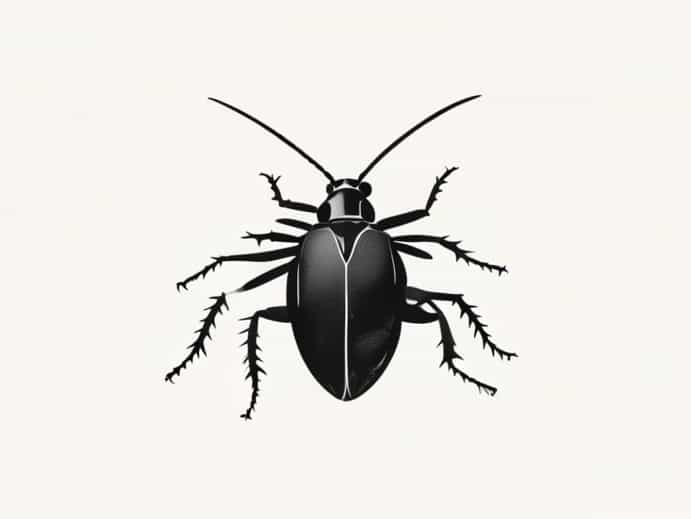
The ventral view of a cockroach offers a fascinating glimpse into the complex anatomy and functional adaptations of this resilient insect. Unlike the dorsal side, which primarily reveals the outer protective shell and coloration, the ventral perspective focuses on the underside, highlighting the arrangement of legs, mouthparts, and other key structures essential for survival. Studying the ventral side provides valuable insights into the cockroach’s locomotion, feeding mechanisms, and reproductive organs, making it a crucial aspect of entomological research. This perspective allows scientists, students, and enthusiasts to understand how these insects interact with their environment, hunt for food, and navigate obstacles efficiently.
Anatomical Features on the Ventral Side
The ventral side of a cockroach is characterized by several distinctive features that play critical roles in its daily activities. One of the most noticeable elements is the segmentation of the thorax and abdomen, which provides flexibility and supports movement. Each segment is connected by soft membranes that allow the cockroach to twist and turn easily, an essential adaptation for escaping predators and navigating tight spaces.
Legs and Locomotion
Cockroaches have three pairs of legs attached to the thorax, all visible from the ventral view. The forelegs, midlegs, and hindlegs each serve specific functions that contribute to the insect’s exceptional mobility. The ventral view highlights the detailed structure of each leg, including the coxa, femur, tibia, and tarsus, along with tiny claws and spines that enhance grip on various surfaces. The hindlegs, in particular, are adapted for rapid running, allowing cockroaches to escape threats swiftly. Observing these legs from below also reveals the muscular attachments and articulation points that provide both strength and flexibility.
Mouthparts and Feeding
The ventral side of the head displays the intricate arrangement of mouthparts, which are essential for the cockroach’s omnivorous diet. The mandibles, maxillae, and labium work together to grasp, cut, and manipulate food. The ventral view exposes these structures in detail, showing how they interact with each other to process different types of food efficiently. Studying the ventral orientation of these mouthparts helps entomologists understand feeding behavior, dietary preferences, and ecological impact, as cockroaches can consume a wide range of organic matter.
Abdominal Structures
The ventral side of the abdomen reveals additional anatomical features that are critical for reproduction and respiration. The spiracles, which are small openings along the sides of the abdomen, allow for gas exchange and are clearly visible from below. The arrangement and functionality of these spiracles are essential for maintaining the insect’s metabolism and overall health.
Reproductive Organs
For reproductive purposes, the ventral view exposes the external genitalia in both male and female cockroaches. In males, specialized structures help transfer sperm during mating, while females exhibit ovipositors used for laying eggs. Observing these features from the ventral perspective allows researchers to study mating behavior, reproductive cycles, and the development of offspring, providing valuable insights into population dynamics and species propagation.
Behavioral Observations
Examining cockroaches from a ventral perspective can also shed light on their behavior and interaction with the environment. The underside often comes into contact with the ground or surfaces the insect navigates, making it crucial for detecting vibrations, obstacles, and potential predators. Sensory hairs and other tactile structures on the ventral side contribute to the cockroach’s awareness and ability to respond rapidly to threats.
Defensive Adaptations
The ventral view also reveals defensive adaptations, such as toughened exoskeletal plates that protect vital organs from predators and environmental hazards. Some cockroach species have spines or ridges along the ventral surface, which provide added protection and help them wedge into narrow spaces for shelter. These features highlight the evolutionary success of cockroaches as highly adaptable and resilient insects.
Scientific and Educational Importance
Studying the ventral view of cockroaches is important for scientific research, pest management, and educational purposes. Detailed observations of the underside can help identify species, understand feeding patterns, and monitor reproductive health. In educational settings, ventral dissections and illustrations provide students with a clear understanding of insect anatomy and functionality. This knowledge is essential for entomologists, ecologists, and pest control professionals who rely on a comprehensive understanding of cockroach biology for research and management strategies.
Identification and Taxonomy
The ventral perspective is particularly useful for taxonomic classification, as many distinguishing features are located on the underside of the insect. Morphological traits such as leg structure, abdominal segments, and genitalia are often critical in differentiating species. By analyzing these features carefully, scientists can accurately classify cockroach species, track their distribution, and study evolutionary relationships among related insects.
Observational Techniques
To study the ventral side of cockroaches, researchers use a variety of observational and imaging techniques. Dissection under microscopes, high-resolution photography, and digital scanning allow detailed examination of ventral features without damaging specimens. Live observations in controlled environments can also reveal how cockroaches use their ventral anatomy during movement, feeding, and interaction with other insects. Proper handling and ethical considerations ensure that scientific investigations are conducted safely and responsibly.
Practical Applications
Understanding the ventral anatomy of cockroaches has practical applications in multiple fields. In pest control, knowledge of the ventral structures helps identify vulnerabilities and develop targeted interventions. In biology and education, it enhances understanding of insect physiology and behavior. Moreover, insights gained from studying cockroach locomotion and sensory adaptations can inspire biomimetic designs in robotics and engineering, where efficient movement and sensory detection are essential.
The ventral view of a cockroach offers an intricate and detailed look at the anatomy, behavior, and adaptations of this remarkable insect. From locomotion and feeding to reproduction and defense, the underside reveals critical features that are essential for survival in diverse environments. Observing and studying the ventral side not only aids in scientific research and species identification but also provides educational insights and practical applications for pest management and biomimicry. By appreciating the complexity of the ventral view, one gains a deeper understanding of the cockroach’s resilience, evolutionary success, and the fascinating world of insect anatomy.