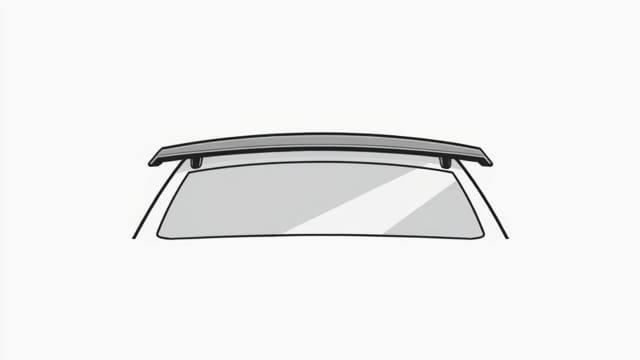
When discussing aerodynamic components in motorsports or aircraft design, one might come across the term Gurney flap. This small, simple addition can make a significant difference in how air flows over a wing or spoiler. Though it may appear to be a minor detail, the Gurney flap plays a vital role in improving downforce, stability, and efficiency. Understanding what a Gurney flap is and how it works can provide deeper insight into vehicle performance and aerodynamics as a whole, particularly in high-speed environments where even the smallest adjustments can have major effects.
Definition and Origin of the Gurney Flap
What Is a Gurney Flap?
A Gurney flap is a small, vertical tab attached to the trailing edge of a wing or aerodynamic surface. Typically, it’s a right-angle piece of metal or composite material that sticks up perpendicular to the airflow. Despite its modest size usually around 1-2% of the chord length of the wing the Gurney flap can significantly influence aerodynamic behavior, especially lift and downforce generation.
Where the Name Comes From
The Gurney flap is named after Dan Gurney, an American race car driver and team owner. He first used it in the 1970s on his race cars to enhance performance. Initially developed through trial and error, the Gurney flap proved so effective that it eventually caught the attention of engineers and aerodynamicists in both motorsports and aviation industries.
How a Gurney Flap Works
Basic Aerodynamic Principle
To understand how a Gurney flap functions, it’s essential to know the basics of how a wing generates lift or downforce. Air flowing over a curved surface creates a pressure difference: lower pressure on the top and higher pressure on the bottom. The Gurney flap enhances this effect by disrupting the flow at the trailing edge of the wing. This creates a higher-pressure zone on one side and a low-pressure wake behind the flap, increasing the net aerodynamic force.
Impact on Lift and Drag
Adding a Gurney flap generally increases lift or downforce, depending on the wing’s orientation. However, this benefit comes with a small trade-off in drag. Despite this, the drag penalty is relatively minor compared to the aerodynamic gain, especially in racing conditions where grip and cornering speed matter more than top speed.
Applications of Gurney Flaps
In Motorsports
Gurney flaps are widely used in various racing series, including Formula 1, IndyCar, and endurance racing. Teams often use them on rear wings, front wings, or even underbody elements to fine-tune downforce levels. Because they are easy to install or remove, Gurney flaps are a flexible tool for adapting a car to different tracks or weather conditions.
In Aviation
In the aviation world, Gurney flaps have been applied to aircraft wings, control surfaces, and helicopter rotors. They help enhance lift at lower speeds, making takeoffs and landings more efficient. In some cases, they have been used as retrofitting solutions for improving older aircraft without major redesigns.
In Wind Turbines and Engineering
The principle behind the Gurney flap has also been applied to wind turbine blades and other aerodynamic structures in engineering. By improving flow separation and increasing efficiency, these small tabs contribute to better energy conversion and structural stability.
Benefits of Using a Gurney Flap
- Improved Downforce or Lift: A small Gurney flap can create a noticeable increase in aerodynamic force without requiring large changes to the wing geometry.
- Minimal Structural Impact: Because it is a bolt-on addition, it does not require major modifications to the wing or bodywork.
- Adjustability: Engineers can swap out different flap sizes to tailor performance for specific situations or race tracks.
- Increased Efficiency: The Gurney flap can offer a good balance between increased downforce and manageable drag, making it efficient in both motorsport and aviation applications.
Design Considerations
Size and Angle
The effectiveness of a Gurney flap depends on its size and shape relative to the wing it’s attached to. Common flap heights range from 1% to 2% of the chord length of the wing. Larger flaps produce more aerodynamic force but also more drag, so the size must be carefully chosen based on the intended application.
Placement and Orientation
The placement of the flap at the trailing edge is critical. It must be mounted vertically and precisely at the end of the aerodynamic surface to generate the desired effects. Incorrect positioning can lead to flow separation or inefficient aerodynamic behavior.
Material Choice
Gurney flaps are usually made from lightweight, durable materials like aluminum, carbon fiber, or composite plastics. These materials ensure the flap can endure high-speed airflow and mechanical stress while adding minimal weight to the vehicle or aircraft.
Gurney Flap vs. Other Aerodynamic Devices
Comparison with Spoilers and Diffusers
While spoilers and diffusers are also used to manage airflow and improve stability, the Gurney flap is much simpler and smaller in comparison. Spoilers generally redirect airflow to reduce lift, while diffusers manage airflow beneath the vehicle. The Gurney flap, on the other hand, enhances the performance of an existing wing by sharpening the airflow separation point.
Vortex Generators and Winglets
Vortex generators are small fins placed on surfaces to energize the boundary layer and prevent flow separation. Winglets reduce wingtip vortices in aircraft, improving efficiency. The Gurney flap serves a different function by modifying the pressure distribution directly at the trailing edge. In some advanced applications, these devices are used in combination for optimized performance.
Testing and Data Analysis
Wind Tunnel Testing
Most Gurney flap designs are validated through wind tunnel testing. Engineers observe changes in lift, drag, and flow patterns to determine the flap’s effectiveness. Flow visualization techniques, such as smoke trails or ptopic image velocimetry (PIV), help reveal how the flap influences the air around the wing.
CFD Simulations
Computational Fluid Dynamics (CFD) has become an essential tool in evaluating Gurney flap performance. These simulations allow for detailed analysis of how airflow changes with different flap configurations, helping engineers make data-driven decisions without extensive physical testing.
Real-World Examples
Formula 1 and Racing Cars
In Formula 1, teams often use Gurney flaps on rear wings during qualifying or specific races to gain a performance edge. The ability to generate more downforce without compromising too much on straight-line speed is highly valuable in competitive motorsport environments.
Helicopter Rotors
Some helicopter manufacturers use Gurney flaps on rotor blades to improve lift and reduce noise. The flaps help control air separation at blade tips, leading to smoother and more stable flight characteristics.
The Gurney flap is a perfect example of how a simple concept can have a profound impact in advanced engineering applications. Whether it’s enhancing cornering grip in a race car, improving lift during aircraft takeoff, or increasing efficiency in wind turbines, this small aerodynamic tab proves that size is not always indicative of importance. As engineers continue to refine performance in various fields, the Gurney flap remains a trusted and effective solution that blends simplicity with innovation.