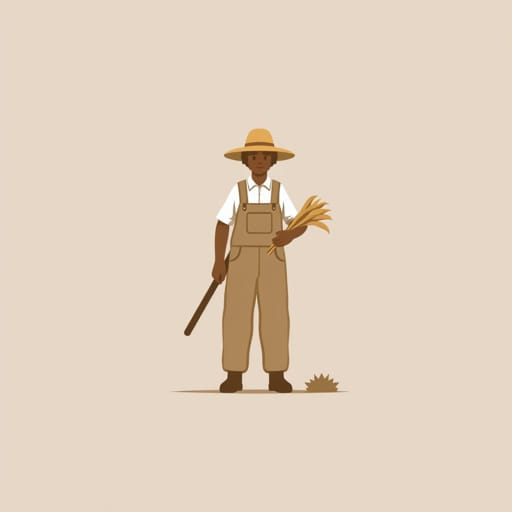
In the aftermath of the American Civil War, many formerly enslaved individuals and poor white farmers turned to sharecropping as a way to survive. This system offered a small measure of independence, though often with harsh limitations. For a sharecropper who managed to make ends meet or even succeed slightly beyond expectations the possibilities, though limited, were not nonexistent. The path out of poverty was steep and narrow, but a few sharecroppers managed to find modest upward mobility within a challenging economic structure.
Understanding the Sharecropping System
Origins and Purpose
Sharecropping emerged during Reconstruction as Southern plantation owners needed labor to maintain their agricultural operations, while freed African Americans and poor whites needed jobs. The basic arrangement was that landowners provided land, tools, and seeds, while the sharecropper provided labor. At harvest time, the sharecropper would give a large portion often up to 50% of the crop to the landowner as rent.
Economic Constraints
The sharecropping system often trapped families in cycles of debt. Tools, seed, and food were typically provided on credit by the landowner or local merchants, and high interest rates made it nearly impossible to repay the debt. Many sharecroppers found themselves in perpetual financial bondage, unable to leave the land or seek better opportunities.
What Was Possible for a Sharecropper Who Made It
Paying Off Debt
One of the biggest milestones for a successful sharecropper was paying off annual debts at the end of the season. A sharecropper who was careful with resources, had good weather conditions, and a favorable crop yield might avoid additional debt and start to build a small financial reserve. While rare, this was a critical first step toward economic freedom.
Saving and Small Investments
A successful sharecropper might save enough to buy his own mule or better tools. Ownership of basic farm equipment could improve productivity and reduce dependency on credit. Some also used their savings to send children to school, investing in future generations’ opportunities outside of agriculture.
Land Ownership
Although uncommon, a small number of sharecroppers were eventually able to purchase land. This achievement marked a major turning point, as landownership allowed for full control over one’s farming operations. Landowners no longer had to give up half their crop, and they could invest in their property for long-term improvements.
Social Mobility and Community Impact
Gaining Respect in the Community
Successful sharecroppers who managed to live debt-free or even own land often earned a measure of respect in their communities. They became role models, demonstrating that upward mobility, though difficult, was not entirely out of reach. Some became involved in church leadership or local cooperative efforts to improve education and resources for others.
Educational Opportunities
With extra income, sharecroppers could sometimes afford to send their children to school for longer periods or even to college. Education was seen as a path out of agricultural labor. Families that prioritized learning were more likely to have children who entered skilled professions, moved to cities, or advocated for civil rights and social change.
Challenges Along the Way
Racial Discrimination
Even successful African American sharecroppers faced systemic racism. Legal barriers, violence, and intimidation were used to prevent them from acquiring land or asserting their rights. White landowners often manipulated accounting records or used threats to keep sharecroppers dependent and powerless.
Economic Vulnerability
Despite personal success, sharecroppers remained vulnerable to external forces. A single season of bad weather, a pest infestation, or market price drops could ruin a family financially. Even the most industrious sharecroppers had little cushion against economic shocks, and many who succeeded briefly found themselves back in debt after a poor harvest.
Examples of Progress
Cooperative Farming and Mutual Aid
In some regions, sharecroppers banded together to form cooperatives. These groups shared tools, labor, and information. Cooperative efforts also allowed sharecroppers to purchase supplies in bulk at lower costs or to market their crops independently, avoiding exploitative middlemen. Such initiatives offered a sense of solidarity and hope.
Political Engagement
Some successful sharecroppers became involved in grassroots political movements. In the early 20th century, African American sharecroppers supported organizations like the Farmers’ Union and later the NAACP. These groups fought for better wages, education, and voting rights, all of which were essential for lasting change.
Legacy of Sharecropping
Influence on American Agriculture
Although sharecropping declined after World War II due to mechanization and the Great Migration, its legacy remains in rural Southern communities. Many African American families still own small plots of land acquired by sharecropping ancestors. The cultural knowledge, community bonds, and perseverance of these families are testaments to their endurance.
Historical Reflection
Today, scholars and descendants reflect on what was possible for a sharecropper who made it. The system was designed to keep laborers in poverty, but those who found ways to rise within or out of it represent a powerful story of determination. Their experiences form a vital chapter in the history of American labor, race, and rural life.
While the odds were overwhelmingly against them, some sharecroppers managed to achieve small but significant victories. Whether through savings, land ownership, education, or community leadership, these individuals proved that even within an oppressive system, progress was possible. Understanding what was possible for a sharecropper who made it provides insight into resilience, determination, and the complex dynamics of post-Civil War America. Their stories continue to inspire and inform the ongoing struggle for economic justice and equality.