In everyday writing and reading, we often come across many punctuation marks without giving much thought to their individual names. One such mark is the virgule, a punctuation mark that many people use regularly without knowing what it is called. If you’ve ever seen the symbol ‘/’ and wondered what its proper name is, you’re not alone. Understanding the role and name of the virgule helps improve grammar awareness, especially for young learners or anyone exploring the building blocks of written English.
Understanding the Virgule
The virgule is another name for the forward slash, represented by the symbol ‘/’. It’s used in a variety of contexts, from grammar and poetry to computing and everyday notation. This punctuation mark may look simple, but it plays a key role in sentence construction and conveying specific meanings.
What Does the Virgule Look Like?
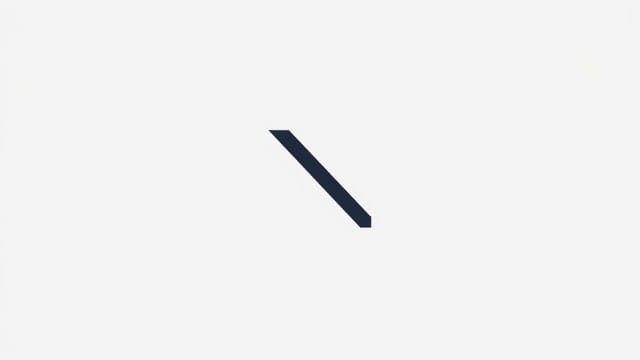
The virgule looks like a slanted line that goes from the lower left to the upper right. It is different from the backslash (\), which leans in the opposite direction and is mostly used in programming and computer directories. The virgule (/) is more commonly used in written language.
Common Uses of a Virgule
Children and learners might not notice it, but the virgule appears in many familiar places. Here are a few everyday uses where the virgule is commonly seen:
- Dates: 07/24/2025 (July 24th, 2025)
- Fractions: 1/2, 3/4
- Choices: He/she, and/or
- Line breaks in poetry: Roses are red / Violets are blue
These examples demonstrate how the virgule helps to combine, divide, or separate elements in a sentence or expression.
History and Origin of the Virgule
The word ‘virgule’ comes from the Latin wordvirgula, meaning a small twig or rod. In medieval manuscripts, a similar mark was used to indicate a pause in reading or to separate parts of text. Over time, it evolved into the symbol we now know as the slash or virgule. Though simple, its impact on readability and grammar structure is important.
Which of the Following Is a Virgule?
Now let’s address the question directly: which of the following is a virgule?
- (A).
- (B) ,
- (C) /
- (D) \
The correct answer is:(C) /
This forward slash is the virgule. It should not be confused with the backslash (\), which serves different purposes, mostly in computing and coding. The period (.) and comma (,) are common punctuation marks, but they are not considered virgules.
How to Teach the Virgule to Kids
For young learners, introducing the virgule can be both fun and educational. Since the mark already appears in familiar formats like dates and fractions, teachers or parents can highlight it during routine lessons. Here are some simple strategies to help children understand and remember the virgule:
Relating to Everyday Use
- Show how the date is written on a classroom calendar (e.g., 12/25/2025).
- Use food portions or measurements in recipes, such as 1/4 cup of sugar.
- Discuss choice words like and/or to show decision-making language.
Practice with Examples
Give students fun fill-in-the-blank exercises or matching games where they identify or use the virgule. For example:
- Write today’s date using the virgule: / /
- Write a sentence using he/she correctly.
- List two options using the virgule: pizza / burger
Visual and Artistic Learning
Encourage kids to draw or color symbols of punctuation. When they decorate the virgule, they can see how it stands out from other marks. Associating it with movement (like a slide going down a hill) can also help visual memory.
Virgule in Grammar and Style
While teaching grammar, the virgule introduces discussions about sentence structure, alternatives, and poetic rhythm. For older kids and growing writers, the virgule also becomes a stylistic tool. For example, it’s often used in legal or academic writing to show combined meanings or pairings like and/or.
Examples in Sentences
- Please bring your notebook and/or your tablet to class.
- The student must read 5/10 pages before lunch.
- He/she will be responsible for their own materials.
These sentence constructions are helpful for building awareness of how punctuation impacts clarity.
Difference Between Virgule and Similar Marks
Understanding what a virgule is also means recognizing what it is not. Many people confuse the virgule with other marks. Let’s clarify:
- Backslash (\): Used in file paths and code (e.g., C:\Documents)
- Vertical bar (|): Used in programming and logic expressions
- Dash (-): Used to separate parts of a sentence or connect words
These symbols serve different functions and should not be used in place of a virgule.
When Not to Use a Virgule
Although the virgule is a helpful tool, it shouldn’t be overused. In formal writing, using too many slashes in place of proper conjunctions can make a sentence unclear. For instance, instead of writing He/she/they will arrive soon, it’s better to rewrite the sentence for clarity, such as He, she, or they will arrive soon.
Why the Virgule Matters
While it might seem like a tiny mark, the virgule plays a big role in written communication. Whether it’s used to show choices, indicate dates, or express fractions, it helps clarify ideas and maintain readability. For kids, learning about the virgule adds another valuable tool to their writing and grammar toolbox. Understanding how to recognize, name, and use this punctuation mark is a small but essential step in becoming a confident communicator. So the next time you see a slash, remember it’s called a virgule!