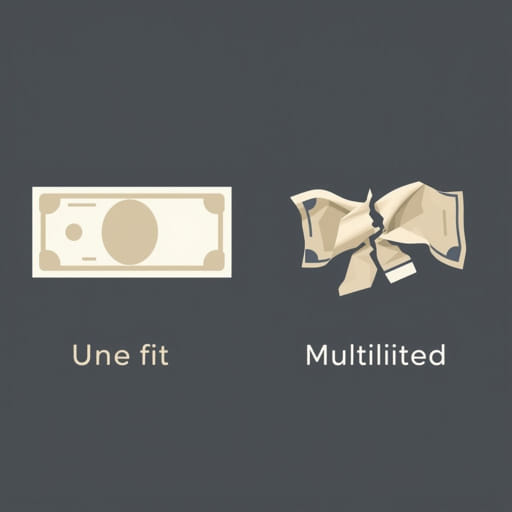
In everyday transactions, people often come across currency notes that are damaged, defaced, or worn out. However, not all damaged money is treated equally by central banks and financial institutions. The terms unfit money and mutilated money are used to categorize different types of damaged currency, and understanding the difference between them is essential for consumers, businesses, and banking professionals alike. Each category has specific definitions, handling procedures, and exchange policies, which vary slightly from one jurisdiction to another but follow universal principles.
Definition of Unfit Money
What is Unfit Currency?
Unfit money refers to currency notes that have become worn out or dirty due to normal usage but still retain all of their essential parts. These notes may not be aesthetically appealing or crisp, but they are still legally acceptable for transactions.
Common Characteristics of Unfit Notes
- Excessively dirty or stained due to long circulation
- Faded color, making details hard to read
- Minor tears at the edges without significant loss of area
- Worn-out corners or folds that make the note fragile
- Weak paper texture from repeated handling
Usability of Unfit Money
Unfit notes are still considered valid tender, meaning they can be used for regular transactions. However, they are typically withdrawn from circulation by banks and replaced with fresh notes to maintain the quality of money in the system. People can deposit or exchange unfit currency at banks without any loss of value.
Definition of Mutilated Money
What is Mutilated Currency?
Mutilated money refers to currency notes that are torn, missing a portion, or otherwise so damaged that parts of the note are no longer present or readable. These notes are often damaged due to fire, water, chemicals, or improper handling, and are not suitable for circulation or use in transactions.
Common Characteristics of Mutilated Notes
- Missing sections or large pieces of the note
- Burn marks or melting that destroys visible features
- Shredded notes reassembled with tape
- Notes eaten or damaged by pests like termites or rodents
- Notes discolored or stuck together due to water damage
Validity and Exchange Policy for Mutilated Notes
Mutilated money cannot be used in transactions, but most central banks offer exchange facilities. In many cases, a partial value or full value may be refunded, depending on how much of the note is intact and identifiable. Banking authorities typically have guidelines specifying how much of the note must be presented for a refund to be processed.
Main Differences Between Unfit and Mutilated Money
1. Degree of Damage
The most fundamental difference lies in the level of damage:
- Unfit Money: Worn but complete; all essential parts of the note are intact.
- Mutilated Money: Torn or incomplete; parts of the note may be missing or destroyed.
2. Usability in Transactions
Another critical difference is whether the note is still acceptable for use:
- Unfit Money: Can still be used in purchases and payments.
- Mutilated Money: Not valid for transactions; must be exchanged or deposited.
3. Exchange Conditions
Policies for exchanging unfit and mutilated notes differ considerably:
- Unfit Notes: Accepted by banks at face value, no questions asked.
- Mutilated Notes: Subject to assessment; full or partial refund based on the portion and condition of the note.
4. Cause of Damage
The origin of damage also plays a role in classification:
- Unfit Money: Damage caused by prolonged use, circulation, and natural wear and tear.
- Mutilated Money: Damage caused by accidents, mishandling, exposure to elements, or deliberate tearing.
5. Role in Currency Management
Unfit notes are gradually removed from circulation during normal banking operations and are replaced by new ones. In contrast, mutilated notes trigger a different process involving verification and possible reimbursement.
Examples for Better Understanding
Example of Unfit Note
Imagine a ₹100 note that has become grimy, with frayed edges and faded ink. Though it may not look pleasant, it is still complete, readable, and can be used in daily transactions or deposited in a bank without issue.
Example of Mutilated Note
Consider a ₹500 note that was partially burned in a house fire, leaving only 40% of it intact. Such a note cannot be used for payment but can be taken to a bank, where it might be exchanged depending on the rules for mutilated currency.
How Banks and Central Banks Handle These Notes
Processing Unfit Notes
Banks usually sort and separate unfit notes during counting and deposit. These notes are sent to the central bank for destruction and replaced by fresh currency. The process is part of standard cash management practices to ensure currency quality remains high.
Processing Mutilated Notes
Mutilated currency goes through a more detailed assessment. Customers are often required to fill out a form and submit the damaged note for evaluation. The central bank’s currency department assesses the remaining portion of the note and may issue a full or partial credit to the customer.
Tips for Handling Damaged Currency
- Never try to tape or glue a note together, especially if it is severely damaged.
- Keep damaged notes flat and avoid further tearing.
- Do not write or stamp on currency, as this can sometimes render it unfit or mutilated.
- Exchange unfit or mutilated notes at banks rather than using them in public transactions.
Legal Framework and Public Awareness
Most countries have a defined legal and procedural framework to deal with unfit and mutilated currency. Central banks, such as the Reserve Bank of India or the Federal Reserve in the U.S., publish detailed guidelines for banks and the public. Public awareness is key, as many people are unaware that mutilated money can still have value if handled properly through official channels.
Understanding the difference between unfit and mutilated money helps individuals and businesses handle damaged currency responsibly and ensures they don’t suffer unnecessary financial losses. Unfit notes, although unpleasant to look at, remain valid for everyday use. Mutilated notes, on the other hand, require proper handling and must be submitted to a bank for possible reimbursement. By staying informed about how each type is treated, people can protect the value of their money even in less-than-perfect physical condition.