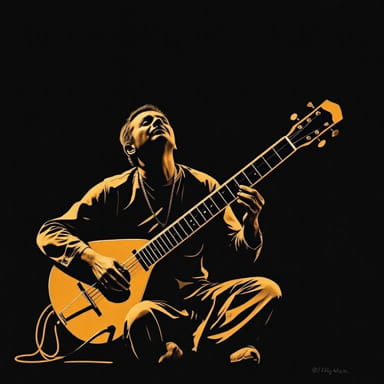
India has a rich and diverse musical heritage, and the sitar holds a special place in the country’s classical music tradition. Among the many talented musicians who have mastered this intricate stringed instrument, certain sitarists have gained worldwide recognition for their exceptional skill, innovative techniques, and contributions to the global appreciation of Indian music. Famous sitarists of India have not only preserved the classical traditions but also introduced the instrument to international audiences, collaborating with Western musicians and performing in prestigious venues around the world. Their work continues to inspire aspiring musicians and elevate the art of sitar performance.
Ravi Shankar The Global Ambassador of the Sitar
Ravi Shankar is arguably the most renowned sitarist of India, known for his virtuosity and ability to bridge Eastern and Western music. Born in 1920, Shankar became a leading figure in Hindustani classical music and played a key role in popularizing the sitar globally. His collaborations with Western musicians, such as George Harrison of The Beatles, helped introduce Indian classical music to a broader audience. Ravi Shankar’s performances were celebrated for their intricate improvisations, melodic depth, and mastery of rhythm. Beyond performance, he taught numerous students worldwide and composed music for films and concerts, solidifying his reputation as an ambassador of Indian music.
Technique and Style
Ravi Shankar’s sitar technique was rooted in the Maihar gharana, a prestigious musical lineage in North India. He combined traditional ragas with innovative improvisation, often extending compositions into elaborate and expressive renditions. His approach emphasized clarity of notes, intricate ornamentation, and precise rhythm, which made his performances both technically impressive and emotionally compelling. Shankar’s ability to communicate the nuances of Indian classical music to international audiences played a crucial role in establishing the sitar as a prominent instrument in world music.
Anoushka Shankar Continuing the Legacy
Anoushka Shankar, daughter of Ravi Shankar, is another famous sitarist who has earned international acclaim. Born in 1981, she began performing at a young age under her father’s guidance and later developed her own distinct style. Anoushka blends traditional Hindustani classical music with contemporary influences, including fusion and world music elements. Her albums and live performances have been celebrated for their emotional depth, technical proficiency, and innovative interpretation of ragas. By carrying forward her father’s legacy while exploring new musical territories, Anoushka Shankar has become a prominent figure in the modern sitar landscape.
Contributions to Contemporary Music
Anoushka Shankar has expanded the possibilities of the sitar by collaborating with musicians across genres, including jazz, electronic, and Western classical music. Her work highlights the versatility of the sitar and demonstrates how traditional Indian instruments can adapt to contemporary contexts. Through performances at international festivals and prestigious concert halls, she continues to introduce the sitar to new audiences while honoring its classical roots.
Vilayat Khan Master of the Imdadkhani Gharana
Vilayat Khan, another legendary sitarist, was known for his distinctive style and mastery of the Imdadkhani gharana. Born in 1928, he emphasized melodic beauty, subtlety, and technical finesse in his performances. Vilayat Khan’s style was characterized by smooth meend (gliding between notes), intricate ornamentation, and deep understanding of ragas. He was celebrated for his ability to convey profound emotion through the sitar, captivating audiences in India and abroad. Vilayat Khan’s recordings and live performances remain influential for students and enthusiasts of Indian classical music.
Signature Techniques
Vilayat Khan introduced innovative techniques that distinguished him from his contemporaries. His use of the gayaki ang, or vocal style of playing, allowed him to mimic the nuances of Indian classical singing on the sitar. This approach emphasized expressiveness and melodic continuity, making his renditions highly evocative. His influence can be seen in the playing styles of many modern sitarists who incorporate elements of his techniques into their performances.
Nikhil Banerjee Emotional Depth and Precision
Nikhil Banerjee, born in 1931, was renowned for his deeply expressive performances and adherence to the traditional classical framework. A disciple of Allauddin Khan, Banerjee combined technical mastery with profound emotional depth. His performances were celebrated for their precision, tonal clarity, and spiritual intensity, often leaving audiences mesmerized. Nikhil Banerjee contributed significantly to the evolution of sitar performance by demonstrating how technical skill and emotional expression could coexist harmoniously.
Legacy and Influence
Banerjee’s approach to sitar playing emphasized both the intellectual and emotive aspects of music. His dedication to classical traditions, combined with his expressive improvisations, has inspired generations of sitarists. His recordings continue to serve as educational resources and sources of inspiration for aspiring musicians seeking to understand the intricate balance of technique and feeling in Indian classical music.
Other Notable Sitarists
- Shahid ParvezKnown for his mastery of traditional ragas and modern interpretations, Shahid Parvez is a leading figure in contemporary sitar music.
- Buddhadev DasguptaRecognized for experimental approaches and blending classical sitar techniques with contemporary musical elements.
- Ravindra JainRenowned for composing music for Indian cinema and integrating sitar into popular music contexts.
- Brij Bhushan KabraFamous for pioneering the slide guitar in Indian classical music while collaborating with sitarists.
Global Recognition and Collaborations
Famous sitarists of India have not only captivated local audiences but have also gained global recognition. Collaborations with Western musicians, performances at international music festivals, and participation in world music projects have helped bring the sitar to a broader audience. These collaborations have emphasized the versatility of the instrument and its ability to transcend cultural boundaries. Musicians like Ravi Shankar and Anoushka Shankar have worked with artists in jazz, rock, and electronic music, creating cross-cultural musical dialogues and expanding the influence of Indian classical music worldwide.
Preserving Tradition and Inspiring Future Generations
While achieving international fame, these sitarists have remained committed to preserving the rich traditions of Hindustani classical music. Their dedication to teaching, performing, and recording ensures that the art form continues to thrive. Music academies, workshops, and online platforms have facilitated the dissemination of their knowledge, inspiring future generations of musicians. By blending tradition with innovation, famous sitarists of India maintain the cultural significance of the sitar while ensuring its relevance in the contemporary music scene.
The sitar is one of India’s most iconic musical instruments, and its global reputation owes much to the contributions of legendary sitarists. Figures like Ravi Shankar, Vilayat Khan, Nikhil Banerjee, and Anoushka Shankar have demonstrated technical brilliance, emotional expressiveness, and innovative vision, elevating the instrument to international acclaim. Their work has inspired countless musicians, promoted Indian classical music on a global scale, and enriched the cultural heritage of the nation. As both custodians of tradition and pioneers of new musical expressions, these famous sitarists continue to shape the legacy of the sitar and ensure that its haunting melodies resonate with audiences worldwide.