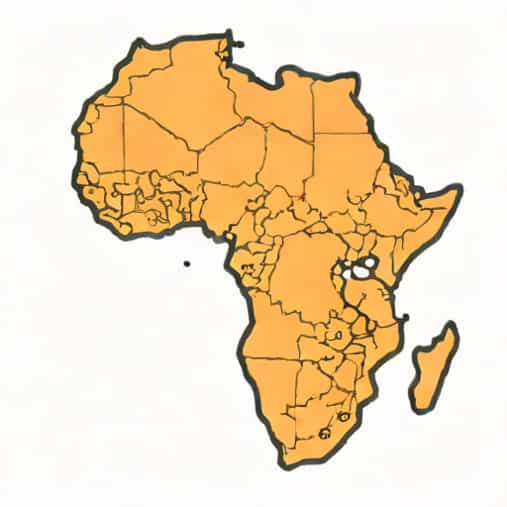
Darfur is a historically and geographically significant region located in the western part of Sudan, which is situated on the African continent. Known for its vast deserts, savannahs, and diverse cultures, Darfur has been the center of international attention due to its complex history of conflict, humanitarian crises, and efforts toward peace and development. Understanding the location of Darfur within Africa provides important context for comprehending its environmental, cultural, and political significance. The region’s geography, bordering nations, and position within Sudan make it a key area for studying African history, international relations, and humanitarian issues.
Geographical Location of Darfur
Darfur is located in the western part of Sudan, which lies in northeastern Africa. The region spans an area of approximately 493,180 square kilometers, making it one of Sudan’s largest regions. Darfur is bordered by Chad to the west, the Central African Republic to the southwest, and Libya to the northwest. Its position on the African continent places it within the Sahel zone, a semi-arid region that stretches across the northern part of sub-Saharan Africa, characterized by dry grasslands and desert landscapes.
Major Cities and Towns
Darfur contains several key cities that serve as administrative, cultural, and economic centers. Some of the most notable include
- El Fasher – The capital of North Darfur, serving as an administrative and economic hub.
- Nyala – The largest city in South Darfur, known for its markets and cultural diversity.
- Zalingei – Located in Central Darfur, notable for its role in regional governance and education.
- Al-Fashir – Another important city, often associated with humanitarian activities and regional administration.
Darfur within the African Continent
Darfur’s location in Africa is significant due to the continent’s diverse geographical and cultural landscape. Africa, the second-largest continent in the world, comprises 54 recognized countries and a wide variety of climates, from tropical rainforests to deserts. Sudan, where Darfur is located, is part of North-East Africa and is often considered a bridge between the Arab world and sub-Saharan Africa. This strategic position has influenced Darfur’s cultural, economic, and political development over centuries.
Climate and Environment
Darfur experiences a semi-arid climate, with hot temperatures and limited rainfall, typical of the Sahel region. The environment consists of
- Deserts and dry plains, particularly in the northern parts.
- Savannahs and grasslands, supporting livestock and agriculture in southern and central areas.
- Seasonal rivers and wadis, which provide water for communities and farming during the rainy season.
The region’s climate has influenced the livelihoods of its inhabitants, including pastoralism, farming, and trade, shaping the culture and economy of Darfur within Africa.
Historical Context of Darfur
Darfur has a rich history dating back centuries, with its own kingdoms and dynasties before becoming part of modern Sudan. Historically, it was an independent sultanate and engaged in trade with neighboring regions, linking Africa’s interior with the Mediterranean and Arab world. The region’s location on the African continent facilitated cultural exchanges and trade networks, contributing to its diverse population and complex social structures.
Colonial and Post-Colonial Era
During the colonial era, Darfur was integrated into Sudan under Anglo-Egyptian rule. Its geographic location in Africa made it strategically important, and colonial policies influenced local governance, economy, and ethnic relations. After Sudan gained independence in 1956, Darfur remained a key region within the nation, but its peripheral location and marginalization contributed to social, political, and economic tensions over the years.
Humanitarian and Political Significance
In recent decades, Darfur has gained international attention due to conflict and humanitarian crises. Its location on the African continent, bordering multiple nations, has affected migration patterns, refugee movements, and international interventions. Conflicts in Darfur have led to widespread displacement, drawing global attention and aid efforts. The region’s geographic position also influences political negotiations, peacekeeping operations, and regional security strategies.
Ethnic and Cultural Diversity
Darfur is home to various ethnic groups, including Fur, Masalit, Zaghawa, and Arab communities. The region’s location in Africa has allowed for a blending of African and Arab cultures, reflected in language, traditions, and social structures. This diversity has been both a strength and a source of tension, contributing to the complexity of political and social dynamics in Darfur.
Darfur’s Role in Regional Development
Darfur’s location within Africa and Sudan positions it as a key area for regional development initiatives. The region’s natural resources, agricultural potential, and human capital offer opportunities for economic growth. Efforts to improve infrastructure, healthcare, education, and agriculture are ongoing, with international and local organizations investing in the region. Its geographic connectivity with neighboring countries facilitates trade, cross-border collaboration, and cultural exchange, enhancing its significance in the African context.
Environmental Challenges
Despite its potential, Darfur faces environmental challenges that affect development. Issues such as desertification, water scarcity, and soil degradation are exacerbated by climate change. These challenges are linked to its location in the semi-arid Sahel zone of Africa, impacting agriculture, livelihoods, and population stability. Sustainable development strategies are critical to addressing these environmental constraints and supporting long-term stability in the region.
Darfur, located in the western part of Sudan on the African continent, is a region of immense geographic, cultural, and political significance. Its vast landscapes, diverse populations, and historical importance make it a key area for understanding the complexities of Africa. The region’s semi-arid climate, natural resources, and strategic location have influenced its economic activities, social dynamics, and political history. Darfur’s challenges, including conflict and environmental pressures, are closely tied to its location within Africa, highlighting the importance of regional cooperation, sustainable development, and humanitarian efforts. By studying Darfur, we gain valuable insights into the broader issues affecting Africa, including cultural diversity, geopolitical dynamics, and the impact of geography on human societies.