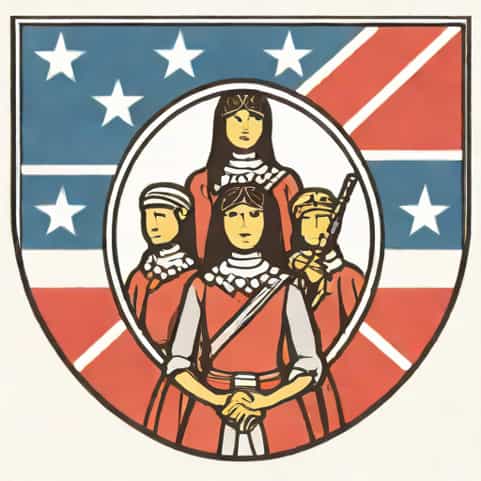
The Daughters of the Confederacy, formally known as the United Daughters of the Confederacy (UDC), have played a significant role in shaping how the Civil War and its legacy are remembered in the United States. Founded in the late nineteenth century, this organization has been closely linked with honoring Confederate soldiers, preserving Southern heritage, and promoting a particular narrative of history. For many, the name is associated with memorials, monuments, and educational programs, while for others, it raises questions about memory, race, and the interpretation of the past. Understanding the Daughters of the Confederacy involves looking at their origins, their activities, and the controversies that continue to surround their presence in American life.
Origins of the Daughters of the Confederacy
The United Daughters of the Confederacy was founded in 1894 in Nashville, Tennessee. The group emerged during a time when the South was still recovering from the Civil War and Reconstruction. Women in the South began to organize in order to honor fallen soldiers, care for cemeteries, and preserve the memory of their family members who had fought for the Confederacy. Unlike veterans’ groups, which were led by men, the Daughters created a space where women could contribute to public life through commemorative and cultural work. Their mission was framed around remembrance, education, and heritage preservation.
Core Goals and Mission
The Daughters of the Confederacy established several central goals that defined their activities. These included
- Honoring Confederate soldiers and veterans through ceremonies and memorials.
- Preserving artifacts, documents, and stories connected to the Confederacy.
- Supporting educational initiatives that reflected their interpretation of Southern history.
- Promoting the values of loyalty, duty, and respect for ancestors.
By focusing on these goals, the organization became a cultural force in the South and beyond, influencing how generations of Americans learned about the Civil War.
Monuments and Memorialization
One of the most visible contributions of the Daughters of the Confederacy has been the construction of Confederate monuments and memorials. Throughout the late nineteenth and early twentieth centuries, the organization raised funds to build statues, markers, and plaques dedicated to generals, soldiers, and battles. Many of these monuments were placed in prominent public spaces, including town squares and courthouse lawns. The intention was not only to honor the dead but also to assert a lasting presence of Confederate memory in Southern society.
Educational Efforts
Beyond physical monuments, the Daughters of the Confederacy dedicated themselves to education. They donated books, influenced curricula, and supported essays and lectures that reinforced their interpretation of the Civil War. This approach became known as part of the Lost Cause narrative, which framed the Confederacy’s actions in terms of honor and states’ rights rather than slavery. By shaping textbooks and school programs, the organization sought to ensure that future generations would inherit their version of Southern heritage.
Social and Cultural Influence
The Daughters of the Confederacy also functioned as a social and cultural organization for Southern women. Membership carried prestige, and being part of the group meant taking part in civic events, historical societies, and public ceremonies. For many members, it offered a sense of community and identity rooted in family history and regional pride. Through luncheons, conventions, and organized chapters, the Daughters provided a network that extended across the South and into other parts of the country.
Controversies and Criticism
Over time, the activities of the Daughters of the Confederacy have drawn criticism, particularly in relation to race and the legacy of slavery. Their role in promoting the Lost Cause narrative has been seen as a distortion of history, minimizing the central role of slavery in the Civil War. Monuments funded or supported by the organization have become flashpoints in public debates, especially in recent decades as movements to remove Confederate symbols have grown. Critics argue that these memorials glorify a cause tied to racism and oppression, while supporters claim they represent heritage and family pride.
Shifts in Modern Times
In the twenty-first century, the Daughters of the Confederacy continue to exist, though their influence has declined compared to earlier eras. Many of their monuments have been removed or relocated due to public pressure. Some chapters focus more on genealogy, historic preservation, and charitable activities rather than monument-building. However, the organization’s historical role remains a subject of academic study and public discussion, highlighting the challenges of balancing heritage with historical truth.
Membership and Structure
Membership in the United Daughters of the Confederacy is based on lineage. Women who can trace their ancestry directly to a Confederate soldier or supporter may apply for membership. The group is organized into local chapters, state divisions, and a national body, with regular meetings and conventions. This structure mirrors other heritage organizations, allowing members to engage in both local projects and broader initiatives.
The Lost Cause Narrative
Central to the Daughters’ historical influence is their connection to the Lost Cause narrative. This interpretation of history presents the Confederacy as fighting for noble principles such as states’ rights and honor, while downplaying or ignoring slavery as the core issue of the war. By promoting this perspective, the Daughters of the Confederacy helped shape public memory in a way that endured for generations. Today, historians widely challenge the Lost Cause as a misleading and incomplete account of the past.
Examples of Their Legacy
- MonumentsNumerous Confederate statues and memorials across the South were funded or supported by the Daughters.
- ScholarshipsSome chapters established educational funds and scholarships for students, often tied to heritage themes.
- Historic PreservationThe organization has maintained cemeteries, battlefields, and archives related to the Confederacy.
- PublicationsEssays, pamphlets, and newsletters have been used to spread their interpretation of history.
The Broader Historical Context
The emergence of the Daughters of the Confederacy must be understood in the context of post-Reconstruction America. As the South sought to reassert itself politically and culturally, groups like the UDC played a role in defining regional identity. Their activities reflected broader themes of nationalism, gender roles, and the politics of memory. Women, often excluded from formal political power at the time, found in this organization a way to influence society and preserve their perspective of history.
The Daughters of the Confederacy remain one of the most debated heritage organizations in American history. While they began with goals of honoring ancestors and preserving memory, their work has had lasting consequences for how the Civil War and its causes are understood. From building monuments to shaping education, they influenced the national conversation about heritage, history, and identity. Today, their legacy continues to spark debate, reminding us that memory is never neutral. The story of the Daughters of the Confederacy highlights how the past is preserved, interpreted, and contested, making it a central part of America’s ongoing dialogue about history and truth.