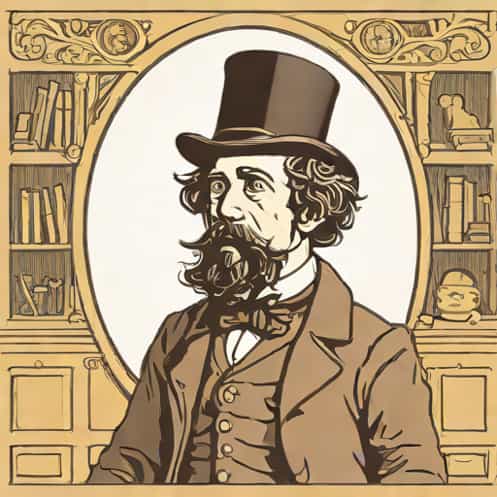
Charles Dickens, one of the greatest novelists in English literature, had a childhood marked by both joy and hardship. His early years deeply shaped his worldview and inspired many of the memorable characters and stories he later wrote. To understand how Charles Dickens’s childhood influenced his writing, it is important to explore his family background, the struggles he faced in his youth, and the resilience that allowed him to rise from poverty to fame. His experiences during childhood are reflected in nearly every page of his novels, giving readers a glimpse into the emotional depth and social realities of 19th-century England.
Early Family Life and Background
Charles John Huffam Dickens was born on February 7, 1812, in Portsmouth, England. He was the second of eight children born to John and Elizabeth Dickens. His father worked as a clerk in the Navy Pay Office, which gave the family a comfortable life for a short time. However, John Dickens was known for his poor financial management, and the family often found themselves in debt. Despite these challenges, Charles’s early years were filled with warmth, imagination, and stories told by his parents.
From an early age, Dickens showed signs of creativity and intelligence. He loved reading and was fascinated by books such as The Arabian Nights and Robinson Crusoe. These stories opened his imagination and inspired his lifelong passion for storytelling. Although his family moved several times due to financial troubles, young Charles remained an observant child who paid attention to people’s behaviors, speech, and struggles-skills that later made his writing so vivid and realistic.
The Impact of Financial Hardship
One of the most defining experiences in Charles Dickens’s childhood was his family’s financial downfall. When Dickens was about 12 years old, his father was imprisoned in the Marshalsea Debtors’ Prison because of unpaid debts. At that time, English law allowed the imprisonment of those who could not pay what they owed, a harsh system that Dickens would later criticize in his novels.
With his father in prison, the rest of the family joined him there except for Charles, who was sent to work. This was an extremely difficult and lonely period for the young boy, who was forced to grow up far sooner than he should have. The trauma of separation and the shame of poverty left a deep scar on him, one that shaped both his personal life and literary voice.
Working in the Blacking Factory
At the age of twelve, Dickens began working at Warren’s Blacking Factory, a warehouse that produced shoe polish. His job was to paste labels on bottles for ten hours a day, six days a week, earning only a few shillings. The conditions were harsh, the air was filled with dust, and the work was monotonous. For a child of his age and background, it was a humiliating experience.
While working in the factory, Dickens encountered children and adults living in extreme poverty. These people became the living inspiration for many of his later characters-such as Oliver Twist, David Copperfield, and the street children of Bleak House. He never forgot the sense of injustice he felt, and it became one of the central themes in his novels the mistreatment of the poor and the cruelty of society toward the vulnerable.
Return to Education
After several months of factory work, Dickens’s life took a turn when his father was released from prison thanks to an inheritance. Charles’s mother wanted him to continue working at the factory, but his father insisted that he return to school. Although the damage to his childhood was already done, returning to education helped Dickens rebuild his confidence and intellect. He studied at Wellington House Academy and later began working as a clerk before pursuing a career in journalism.
His early education and exposure to classical literature laid the foundation for his sharp writing style. More importantly, his experiences of injustice and hardship gave him the empathy and social awareness that would define his novels. His writing combined the insight of a keen observer with the passion of someone who had truly suffered and survived.
Influence of Childhood on His Writing
Charles Dickens’s childhood is often mirrored in his literary works. His novel David Copperfield is perhaps the most autobiographical, with the main character sharing many experiences similar to Dickens’s own. Like Dickens, David works in a factory, faces humiliation, and dreams of becoming a writer. Other novels such as Oliver Twist, Great Expectations, and Hard Times explore themes of child labor, poverty, and the struggle for dignity in a harsh society.
Through his characters, Dickens gave a voice to the voiceless. He drew attention to the social inequalities of Victorian England, especially the plight of poor children forced into labor. His vivid depictions of orphanages, workhouses, and debtors’ prisons were inspired by the painful memories of his own youth. The realism in his writing came from lived experience rather than imagination alone.
Recurring Themes from His Childhood
- Social injusticeHis early exposure to poverty and class differences made him a lifelong critic of unfair systems.
- Childhood innocenceDickens often portrayed children as symbols of purity and hope in a corrupt society.
- Redemption and resilienceMany of his stories show how people can overcome adversity through kindness, perseverance, and compassion.
- Family and loveHaving felt abandoned during his factory years, Dickens often emphasized the importance of family and moral strength.
Emotional and Psychological Effects
Although Dickens achieved fame and wealth as an adult, the wounds of his childhood never completely healed. He rarely spoke about his time in the blacking factory, even to close friends. When he finally revealed the story, it was with deep shame and emotion. The feelings of abandonment and humiliation haunted him, influencing not only his writing but also his relationships and sense of identity.
Some scholars suggest that his relentless energy and need for recognition stemmed from his early experiences of hardship. The pain of his youth drove him to success but also left him restless. His compassion for the poor was genuine, yet it was also mixed with personal memories of suffering and endurance.
Legacy of a Difficult Childhood
Charles Dickens’s difficult childhood became the foundation of his literary genius. Without those early struggles, he might never have developed the empathy and understanding that made his works so powerful. His novels helped reform social attitudes and even influenced laws concerning child labor and debt imprisonment.
Today, Dickens is remembered not only as a brilliant storyteller but also as a social reformer whose words changed the way people viewed poverty and injustice. His childhood, filled with both love and pain, gave him the perspective to portray the human condition with honesty and heart.
The story of Charles Dickens’s childhood is one of hardship, endurance, and transformation. From the dark days of the blacking factory to the heights of literary fame, his journey reflects the power of resilience and creativity. His early experiences became the soul of his fiction, shaping his vision of a fairer and more compassionate world. Understanding how Charles Dickens’s childhood unfolded allows readers to appreciate not only his genius but also the depth of humanity that runs through all his works.