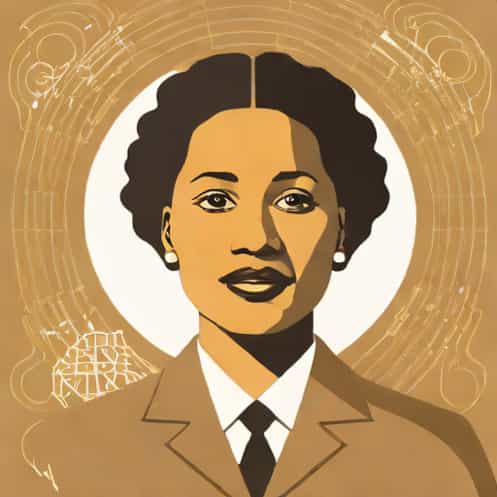
In the early 1950s, an African American woman named Henrietta Lacks unknowingly became one of the most influential figures in modern medical science. Her cells, taken without her consent, were the first human cells to survive and multiply indefinitely outside the body. This discovery revolutionized medicine and gave birth to the immortal HeLa cell line. The story of Henrietta Lacks, her family, and the scientific legacy tied to her cells continues to raise questions about ethics, race, and the intersection of science and humanity. Understanding the immortal life of Henrietta Lacks is essential for grasping how one woman’s cells changed the course of medical history.
The Life of Henrietta Lacks
Henrietta Lacks was born in 1920 in Roanoke, Virginia. She grew up in a working-class African American family during a time of deep racial segregation in the United States. Life for Henrietta was filled with hardship, yet she was known for her warmth, generosity, and strong sense of family. She married David Lacks and moved to Turner Station, Maryland, where they raised five children. Her life, though ordinary on the surface, would later have an extraordinary impact on science and medicine.
The Discovery of HeLa Cells
In 1951, Henrietta went to Johns Hopkins Hospital, one of the few institutions that treated Black patients at the time, after discovering a painful lump in her cervix. She was diagnosed with an aggressive form of cervical cancer. During her treatment, doctors took a small tissue sample from her tumor without asking for her permission-a common practice then, but one that would later spark ethical debates. The cells from her tumor, unlike any others scientists had seen, continued to divide and thrive in the laboratory.
These cells were given the code name HeLa, derived from the first two letters of Henrietta’s first and last name. The HeLa cells became the first line of human cells that could be grown indefinitely, allowing scientists to experiment and test new medical treatments without the need for live human subjects.
The Impact of HeLa Cells on Science
The immortal life of Henrietta Lacks has influenced nearly every area of medicine and biology. HeLa cells were used in the development of the polio vaccine, which saved millions of lives. They have contributed to breakthroughs in cancer research, gene mapping, cloning, and even space biology. Scientists sent HeLa cells into space to study the effects of zero gravity on human cells, and they were vital in the early research on in vitro fertilization (IVF).
- Development of the polio vaccine
- Advancements in chemotherapy and cancer treatment
- Contributions to genetic and virology research
- Studies related to space and radiation
Even decades after her death, HeLa cells remain one of the most used cell lines in laboratories around the world. They continue to play a crucial role in advancing biomedical research and understanding how diseases develop and respond to treatment.
Ethical Questions and Controversy
Despite the enormous contributions of HeLa cells, Henrietta Lacks and her family were not informed or compensated for the use of her cells. For many years, the Lacks family did not even know that Henrietta’s cells were being used in research across the globe. The issue of consent and the exploitation of her biological material became a central point in bioethics discussions.
The story of Henrietta Lacks forced the medical community to confront important ethical questions Should patients have control over their biological materials after they are removed from their bodies? Who owns the rights to cell lines derived from a person’s tissue? These questions led to greater emphasis on informed consent in scientific research and helped shape modern standards for ethical medical practices.
The Role of Race and Inequality
Henrietta’s story is not just about science-it’s also about race, inequality, and justice. During the 1950s, Black patients were often treated as subjects for medical experimentation without their knowledge. Henrietta’s experience reflects the systemic injustices of the era. Her cells were taken at a time when racial segregation and discrimination deeply influenced medical treatment and research opportunities.
For the Lacks family, the discovery of their mother’s scientific legacy brought mixed emotions. On one hand, they felt pride that Henrietta’s cells had helped millions of people. On the other, they struggled with anger and confusion over how her body was used without acknowledgment or benefit to her family. This tension underscores the historical exploitation of marginalized groups in the name of scientific progress.
The Immortal Legacy
Henrietta Lacks died in October 1951 at the age of 31, unaware that part of her would live on in laboratories around the world. The HeLa cells outlived her by decades and continue to do so today. Her story became widely known through Rebecca Skloot’s book The Immortal Life of Henrietta Lacks, which brought public attention to the ethical and human dimensions of her legacy.
Henrietta’s contribution represents the dual nature of scientific progress-how great discoveries can coexist with moral dilemmas. The immortal life of Henrietta Lacks reminds us that behind every scientific breakthrough, there is a human story deserving of respect and recognition.
The Importance of Recognition and Justice
In recent years, efforts have been made to honor Henrietta Lacks and her family. The scientific community has acknowledged the wrongs done to her and worked to include her name in research acknowledgments. The Lacks family has become advocates for ethical medical practices and patient rights. Her legacy now serves as a moral compass for future generations of scientists, reminding them that progress must always be paired with compassion and fairness.
Organizations and researchers now emphasize transparency and consent, ensuring that no one’s biological materials are used without proper understanding or agreement. Henrietta’s story has inspired laws and policies that protect patients and ensure that they are informed about how their samples are used in research.
Lessons for the Twenty-First Century
As medical technology continues to advance, from genetic editing to artificial intelligence in healthcare, the lessons from Henrietta Lacks’s story remain more relevant than ever. The need for ethical awareness, cultural sensitivity, and respect for human dignity must remain at the forefront of medical innovation. The immortal life of Henrietta Lacks is not only a story about scientific triumph but also a reminder of humanity’s moral responsibility in pursuing progress.
The story of Henrietta Lacks bridges science and ethics, showing how one woman’s cells transformed medicine and sparked a global conversation about consent, race, and justice. Her HeLa cells continue to drive scientific discovery, but her true legacy lies in the awareness and reforms that her experience inspired. The immortal life of Henrietta Lacks is a lasting testament to the power of one individual to change the world, even without ever intending to.