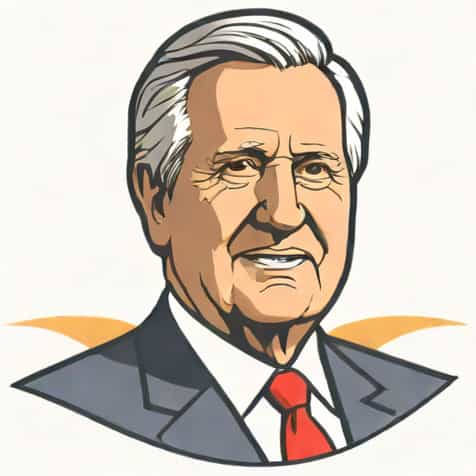
Jerry Falwell Sr. was one of the most influential religious and political figures in American history. As a pastor, televangelist, and founder of Liberty University, he played a significant role in shaping modern evangelical Christianity and conservative politics. His career spanned decades, filled with both admiration and controversy. Understanding what happened to Jerry Falwell Sr. involves looking at his life’s work, his impact on faith and politics, and the circumstances surrounding his death in 2007. His story reflects not only the rise of the Moral Majority but also the long-lasting effects of faith-based activism in the United States.
Early Life and Religious Beginnings
Jerry Falwell Sr. was born on August 11, 1933, in Lynchburg, Virginia. His upbringing was far from religious; his father, Carey Falwell, was a businessman and bootlegger during the Prohibition era, while his mother, Helen, was a devout Christian. It was his mother’s faith that eventually inspired Falwell to pursue a spiritual path. After attending Lynchburg College, he enrolled at Baptist Bible College in Missouri, where he began developing his strong oratory skills and deep commitment to evangelical principles.
In 1956, at the young age of 22, Falwell returned to his hometown to establish Thomas Road Baptist Church. The congregation started small, meeting in an old Donald Duck Bottling Company building, but under his leadership, it quickly grew to thousands of members. His dynamic preaching style and focus on traditional Christian values resonated with many Americans during a time of social change and moral uncertainty.
The Rise of the Moral Majority
One of the most defining moments in Jerry Falwell Sr.’s life came in 1979 when he founded the Moral Majority. This organization became the cornerstone of the modern religious right, a political movement that sought to influence government policies through conservative Christian principles. The Moral Majority advocated for issues such as opposition to abortion, the promotion of traditional family values, and the defense of religious freedom in public life.
Political Influence and Social Impact
Through the Moral Majority, Falwell mobilized millions of evangelicals to engage in politics, encouraging them to vote and support candidates who aligned with Christian values. His efforts were instrumental in helping Ronald Reagan win the presidency in 1980. Falwell’s message was clear Christians should not remain silent about moral decay in society. Instead, they should take active roles in shaping the nation’s laws and culture.
This merging of religion and politics was groundbreaking at the time and controversial to many. Critics accused Falwell of blurring the line between church and state, while supporters praised him for bringing faith into the public square. Regardless of viewpoint, his influence on American politics was undeniable and continues to be felt today.
Television Ministry and Liberty University
Alongside his church and political activism, Jerry Falwell Sr. was a pioneer in religious broadcasting. In 1956, he launched The Old-Time Gospel Hour, a television program that reached millions of viewers across the country. The show featured his sermons, gospel music, and messages about faith and morality. It became one of the most-watched Christian programs in the U.S. during the 1970s and 1980s.
In 1971, Falwell founded Liberty University in Lynchburg, Virginia. His vision was to create a world-class Christian university that combined academic excellence with spiritual development. Liberty began as a small Baptist college but grew rapidly under his leadership. Today, it remains one of the largest Christian universities in the world, continuing Falwell’s mission of training young people to impact society through Christian values.
Controversies and Public Criticism
Throughout his career, Jerry Falwell Sr. was no stranger to controversy. His outspoken nature and strong opinions often drew both support and condemnation. He frequently addressed hot-button social issues such as homosexuality, feminism, and secularism, sometimes in ways that provoked public backlash.
- Falwell was criticized for his comments linking certain national tragedies to moral decline, including his statement after the September 11 attacks, which suggested that cultural sins had invited divine judgment. He later apologized for the remarks.
- He also faced criticism for his opposition to gay rights and feminism, which many viewed as intolerant, though his supporters saw him as defending biblical truth.
- Falwell was sued several times, most famously by publisher Larry Flynt, after Falwell was parodied in Hustler magazine. The case reached the U.S. Supreme Court, which ruled in favor of Flynt, emphasizing the protection of free speech.
Despite these controversies, Falwell remained steadfast in his beliefs. His ability to rally support among conservative Christians helped solidify his legacy as one of the most powerful religious voices of the late 20th century.
Later Years and Continued Influence
As he entered his later years, Falwell continued to preach at Thomas Road Baptist Church and remained involved at Liberty University. Though the Moral Majority disbanded in 1989, its legacy persisted through other Christian conservative organizations and leaders inspired by his example. Falwell often said that his mission was not about political power but about restoring America’s moral foundation.
By the early 2000s, Falwell’s health began to decline. He suffered from heart problems and other health issues that occasionally forced him to reduce his workload. Still, he remained active in ministry and education until the very end, showing the same energy and conviction that had defined his career from the start.
The Death of Jerry Falwell Sr.
On May 15, 2007, Jerry Falwell Sr. was found unresponsive in his office at Liberty University. He was 73 years old. Despite immediate medical attention, he was pronounced dead later that day. The cause of death was determined to be cardiac arrhythmia, a condition related to heart disease.
His passing marked the end of an era for American evangelicalism. Thousands attended his funeral at Thomas Road Baptist Church, and tributes poured in from across the country. Supporters remembered him as a man of unwavering faith and purpose, while critics acknowledged his enormous influence on American culture and politics. His son, Jerry Falwell Jr., later took over leadership at Liberty University, continuing his father’s vision in education.
Legacy and Ongoing Impact
Jerry Falwell Sr.’s legacy remains complex but enduring. His efforts to combine faith and politics reshaped the American evangelical movement, giving conservative Christians a powerful voice in public affairs. The institutions he founded Thomas Road Baptist Church and Liberty University continue to thrive and influence millions around the world.
The Moral and Cultural Legacy
Beyond politics, Falwell’s message centered on personal faith, family values, and the authority of Scripture. He often spoke about the importance of spiritual revival in America and the need for believers to stand firm in their convictions. His impact can still be seen in modern evangelical activism, conservative political movements, and Christian education.
However, his legacy also remains controversial. Critics argue that his approach to social issues fostered division and intolerance, while supporters see him as a courageous defender of traditional morality in an increasingly secular society. Both perspectives highlight the profound influence he had on shaping national dialogue around faith, culture, and ethics.
To understand what happened to Jerry Falwell Sr. is to trace the journey of a man who dedicated his life to preaching, teaching, and political engagement. From founding one of America’s largest churches and universities to launching a national political movement, his influence extended far beyond the pulpit. Though he passed away in 2007, his ideas continue to resonate in religious and political discussions today.
Jerry Falwell Sr. left behind a complex legacy one marked by devotion to his faith, commitment to education, and an unshakable belief in America’s moral destiny. Whether admired or criticized, his life story remains an essential chapter in the history of American religion and culture, reminding us how deeply faith can shape both individuals and nations.