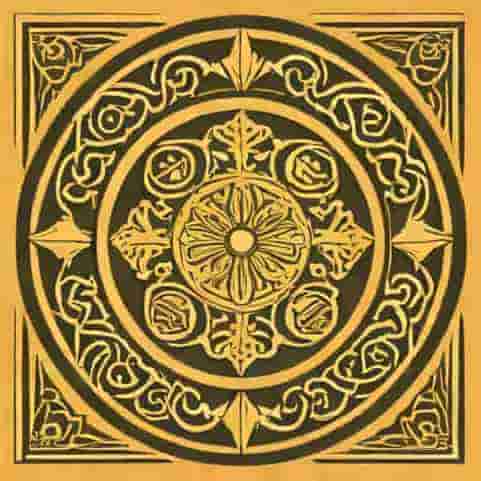
The symbolical language of ancient art and mythology offers a window into the minds, beliefs, and cultural values of civilizations long past. Across the world, from the frescoes of ancient Greece to the hieroglyphs of Egypt, and from Mesopotamian carvings to the mythic tales of India and Mesoamerica, symbols were carefully chosen to convey meanings that transcended the literal. These images and narratives often communicated religious, philosophical, or moral lessons, encapsulating complex ideas into visual forms that could be widely understood within a society. Ancient artists and storytellers understood that symbols had the power to evoke emotions, inspire devotion, and communicate abstract concepts without relying solely on words. By studying the symbolic language embedded in mythological stories, sculptures, paintings, and reliefs, modern observers can gain insight into how people of the past understood their world, their gods, and their own place in the universe. The interplay between art and mythology demonstrates a sophisticated system of communication, where visual and narrative codes combined to express cultural identity, human experience, and spiritual belief.
Understanding Symbolism in Ancient Art
Symbolism in ancient art was never arbitrary; each shape, color, or figure carried intentional meaning. For example, in Egyptian art, the ankh symbolized life and immortality, while the scarab beetle represented rebirth and protection. Colors were also loaded with significance gold often symbolized divinity and the eternal, while green represented fertility and growth. Artists used these symbols consistently across various media, from tomb paintings to temple reliefs, creating a visual language that could be read and interpreted by those familiar with the cultural codes.
Common Symbolic Motifs
- Animals, such as lions for strength or snakes for wisdom and danger
- Celestial symbols, including the sun and moon as sources of life and time
- Geometric shapes, like circles for eternity or triangles for divinity
- Plants, representing growth, death, and cycles of nature
- Weapons and armor, symbolizing power, protection, or martial prowess
These motifs often carried layered meanings, combining social, spiritual, and psychological dimensions. The repetition of these symbols reinforced their significance and ensured that viewers could immediately recognize the intended message.
Mythology as a Vehicle for Symbolic Communication
Mythological narratives were a natural complement to symbolic art, as myths conveyed cultural values and cosmological principles through storytelling. In Greek mythology, for example, the labyrinth symbolized the complex and often perilous journey of life, while the phoenix in Egyptian and later Greco-Roman culture represented renewal and immortality. These stories functioned as moral, spiritual, or educational tools, transmitting knowledge and guiding behavior through allegorical meaning.
Integration of Myth and Visual Art
Ancient artists frequently depicted mythological scenes to reinforce symbolic meaning. For example, Greek vase paintings often illustrated the labors of Heracles, highlighting themes of endurance, courage, and divine favor. Similarly, Hindu temple sculptures frequently depicted episodes from the Mahabharata or Ramayana, each figure and gesture symbolizing broader ethical or spiritual truths. This integration allowed myths to be experienced visually as well as narratively, making their lessons accessible to both literate and illiterate populations.
Regional Variations in Symbolical Language
While symbolic language is universal, its forms and interpretations vary greatly across cultures. In Mesopotamia, gods were often represented with hybrid human-animal features to signify their powers and domains. In Mesoamerican cultures, jaguars symbolized strength and the underworld, while serpents were linked to fertility and the earth. In Chinese art, dragons represented imperial authority and cosmic order. Each civilization developed a symbolic vocabulary uniquely suited to its worldview, cosmology, and social structure, yet the underlying purpose remained consistent to communicate complex ideas and shared beliefs through visual and narrative codes.
Cross-Cultural Symbolism
- The sun often symbolized divinity and life in many cultures, including Egypt, Mesopotamia, and the Aztecs
- Snakes could represent wisdom, danger, or transformation across Greek, Egyptian, and Indian myths
- Water frequently symbolized creation, fertility, or purification across cultures
- Birds, especially eagles or falcons, often indicated power, vision, or the divine
Symbolic Language as a Tool of Communication and Power
Symbols were not merely decorative; they functioned as tools for communication, education, and political authority. Rulers used symbolic art to legitimize their power, claiming divine favor or historical continuity. Temples, monuments, and palaces were decorated with images that reinforced social hierarchy, religious devotion, and cultural identity. By mastering symbolic language, societies could encode political, spiritual, and philosophical messages in a way that was immediately understandable and visually compelling.
Examples of Symbolic Power
- Pharaohs in Egypt depicted with gods to demonstrate divine authority
- Greek temples adorned with friezes portraying gods and heroes to reinforce civic ideals
- Mayan stelae featuring rulers and celestial symbols to assert legitimacy and cosmic order
- Roman triumphal arches decorated with scenes of conquest and divine sanction
Interpreting Ancient Symbols Today
Modern scholars approach the symbolic language of ancient art and mythology through archaeology, comparative mythology, and art history. By decoding visual motifs, gestures, and narrative structures, researchers uncover insights into ancient beliefs, societal values, and psychological patterns. Symbolism also aids in understanding the interaction between cultures, as shared symbols often indicate trade, influence, or shared cosmologies. However, interpretation requires caution, as meanings may shift over time and context. The study of symbols remains an evolving field, revealing new connections and insights as more artifacts are discovered and more texts are analyzed.
Methods of Study
- Archaeological analysis of artifacts, murals, and sculptures
- Comparative study of myths and artistic conventions across regions
- Contextual examination of historical, religious, and social backgrounds
- Iconography and semiotics to decode visual language and symbols
The Enduring Legacy of Symbolical Language
The symbolic language of ancient art and mythology continues to inspire modern culture, literature, and art. Contemporary artists and storytellers draw upon mythological symbols to explore universal themes such as life, death, morality, and the human condition. These symbols remain powerful because they tap into fundamental human experiences, providing continuity between past and present. By studying and appreciating the symbolic language of ancient civilizations, we gain not only a deeper understanding of history but also an appreciation for the universal methods humans use to communicate complex ideas and emotions.
The symbolical language of ancient art and mythology is a profound testament to the creativity, intelligence, and spiritual depth of early civilizations. Through careful use of motifs, colors, figures, and narratives, ancient artists and storytellers conveyed religious, ethical, and social messages that informed the lives of countless individuals. By combining visual art with mythological storytelling, they created an enduring system of communication that transcended time, literacy, and geography. Today, interpreting these symbols allows scholars and enthusiasts alike to understand the values, beliefs, and worldviews of civilizations long past. The study of symbolic language not only enriches our knowledge of history but also highlights the enduring power of art and myth to communicate, educate, and inspire across generations.