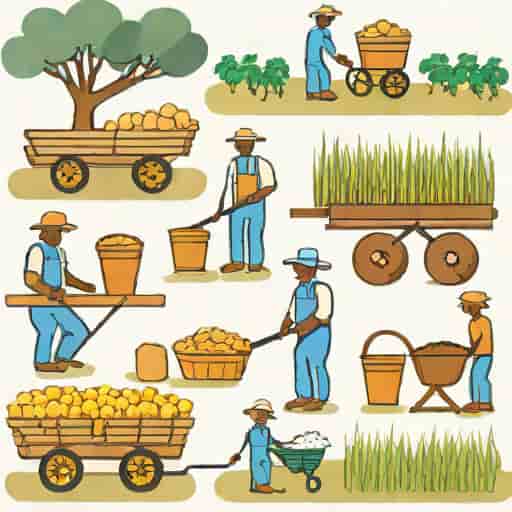
The system of sharecropping was a widespread agricultural practice in the United States, particularly in the South, following the Civil War. It emerged as a solution to the labor and land challenges that arose after the abolition of slavery. Sharecropping allowed landowners and tenant farmers to maintain agricultural production despite economic upheaval and the disruption of traditional labor systems. This system was complex and had significant social, economic, and political implications. Understanding how sharecropping worked provides insight into the struggles of both freed African Americans and poor white farmers, as well as the dynamics of Southern agriculture during the late 19th and early 20th centuries.
Origins of Sharecropping
After the Civil War, the Southern economy was in ruins, and many former slaves and poor white farmers did not own land. Landowners, on the other hand, still possessed large plantations but lacked the labor force to work them. Sharecropping developed as a compromise landowners would provide land, tools, and sometimes seed to tenant farmers, who would, in return, give a portion of their crops to the landowner as payment. This arrangement allowed both parties to survive economically in a period of uncertainty and transition.
The Basic Structure
In a typical sharecropping system, the landowner retained ownership of the land while the sharecropper worked it. The sharecropper usually received supplies, including seeds, equipment, and sometimes housing, on credit from the landowner or a local merchant. At harvest time, the crop produced was divided between the landowner and the sharecropper according to an agreed-upon percentage, which often ranged from one-third to one-half going to the landowner. This system tied the sharecropper’s success directly to the productivity of the land and the generosity-or exploitation-of the landowner.
Economic Dynamics of Sharecropping
Sharecropping functioned as both a means of production and a system of credit. Sharecroppers typically lacked cash, so the credit system provided the resources necessary to plant and harvest crops. However, this arrangement often led to debt. If the harvest failed due to poor weather, pests, or other issues, the sharecropper would owe more than they could repay. The cycle of debt and credit often trapped sharecroppers in a system of economic dependency, limiting social mobility and perpetuating poverty in rural communities.
The Role of Landowners
Landowners in the sharecropping system maintained control over key resources, including land, tools, and access to markets. They determined the terms of the agreements, set prices for supplies purchased on credit, and collected their share of the crop. In many cases, landowners used their economic power to enforce harsh terms, ensuring that sharecroppers remained indebted and reliant on them for survival. This imbalance in power reinforced social hierarchies and contributed to systemic inequality in Southern society.
Impact on Sharecroppers
For sharecroppers, the system was a mixed experience. On the one hand, it provided access to land and resources that many could not afford independently. On the other hand, sharecroppers often faced difficult working conditions, low earnings, and little personal freedom. The reliance on credit meant that any misfortune could lead to deeper debt, sometimes lasting multiple generations. Sharecroppers also had limited political and social power, which meant they had little recourse against unfair practices or exploitation by landowners.
Social and Cultural Effects
Sharecropping shaped rural Southern society in significant ways. It reinforced racial and class divisions, particularly as many African Americans were forced into sharecropping after emancipation. The system maintained the social order of the antebellum South, with former slaves remaining economically dependent on white landowners. In addition, sharecropping communities developed a unique culture, including strong kinship ties, shared labor practices, and community-based support systems. Despite economic hardships, these communities often fostered resilience and cultural continuity.
Comparison with Tenant Farming
While sharecropping involved sharing the crop as payment, tenant farming was slightly different. Tenant farmers typically rented land for cash and had more control over their crops and profits. They often owned their own tools and animals, giving them greater independence compared to sharecroppers. However, in practice, the distinction between the two systems was often blurred, and many tenant farmers faced similar economic challenges as sharecroppers. Understanding these distinctions helps illustrate the variety of labor arrangements in post-Civil War Southern agriculture.
Decline of Sharecropping
Sharecropping began to decline in the 20th century due to several factors. Mechanization of agriculture reduced the need for manual labor, while economic changes, including the Great Depression, forced many sharecroppers to leave the land. Additionally, government programs and civil rights initiatives gradually improved access to education, land ownership, and alternative employment opportunities. Despite its decline, the legacy of sharecropping continues to influence rural economies, racial dynamics, and land ownership patterns in the South.
Legacy and Historical Significance
The sharecropping system had lasting impacts on American society. Economically, it contributed to cycles of poverty and limited upward mobility for rural populations. Socially, it reinforced racial hierarchies and maintained patterns of segregation and inequality in the South. Politically, the system influenced labor laws, voting patterns, and civil rights movements. Understanding sharecropping is crucial for comprehending the broader historical context of post-Civil War America, including the struggles of African Americans and poor whites and the efforts to rebuild Southern agriculture.
Lessons Learned from Sharecropping
Studying sharecropping offers several lessons. It demonstrates the dangers of economic dependency and exploitative labor systems. It highlights the importance of equitable access to land, resources, and capital for sustainable economic development. It also underscores the resilience of communities in the face of systemic oppression and poverty. For historians, economists, and social scientists, sharecropping serves as a case study in the interplay between labor, land, and social hierarchy, as well as the long-term effects of structural inequality.
The system of sharecropping worked by allowing landowners to maintain production while providing landless laborers with access to land and resources in exchange for a share of the crops. It emerged as a post-Civil War solution to labor and economic challenges but often resulted in cycles of debt and dependency for sharecroppers. While it offered some opportunities, the system reinforced social and racial inequalities and had long-lasting economic and cultural effects. Understanding how sharecropping operated provides valuable insight into Southern history, labor systems, and the complex legacies of slavery and Reconstruction in the United States.