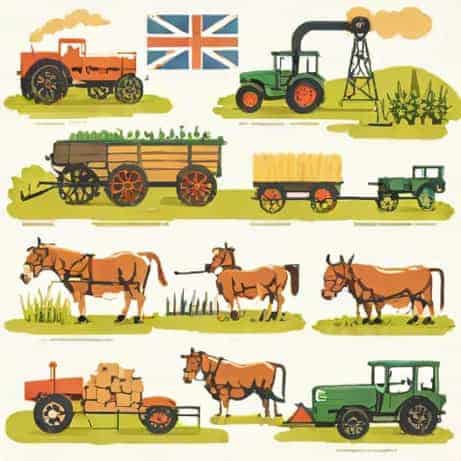
The agrarian revolution in Britain was a transformative period that reshaped the countryside, agriculture, and the lives of rural communities. This revolution did not occur overnight; it was the result of multiple interrelated factors that gradually improved agricultural productivity and efficiency. Changes in farming methods, land ownership, and technological innovation contributed to a profound shift in British agriculture, laying the foundation for the Industrial Revolution. Understanding these factors helps us appreciate how Britain moved from traditional subsistence farming to a more modern and productive agricultural system, which in turn supported population growth and urbanization.
Advances in Agricultural Techniques
One of the most significant factors that led to the agrarian revolution in Britain was the development and adoption of new agricultural techniques. Traditional farming methods relied on simple tools and basic crop rotation, which often limited productivity. Innovations in crop management and farming practices dramatically increased yields and efficiency.
Crop Rotation and Soil Fertility
The introduction of more advanced crop rotation systems played a key role. Instead of the old three-field system, British farmers began to use a four-field rotation method, which included wheat, barley, turnips, and clover. This system not only allowed the soil to recover nutrients but also provided food for livestock, which could be kept through the winter. Maintaining soil fertility was essential for increasing crop yields and sustaining the growing population.
Improved Tools and Equipment
Technological innovations in farm tools also contributed significantly. The invention of the seed drill by Jethro Tull, for example, allowed seeds to be planted in neat rows at consistent depths, improving germination rates and reducing seed wastage. Other tools, such as improved ploughs and threshing machines, reduced the labor required for farming while increasing productivity. These innovations made it possible for fewer workers to produce more food, which later freed up labor for industrial work.
Changes in Land Ownership
The agrarian revolution was closely linked to changes in land ownership and the consolidation of farmland. The enclosure movement, in particular, transformed the British countryside by replacing common land with privately owned plots. This shift had a major impact on agricultural productivity and efficiency.
The Enclosure Movement
Enclosures involved legally consolidating scattered strips of land into larger, fenced-off farms. Wealthy landowners invested in these enclosed farms and introduced new farming techniques, often leading to higher productivity. Although this process displaced many small farmers and rural workers, it allowed for more efficient farming and better management of land. Enclosure encouraged experimentation with crop rotation, selective breeding of livestock, and investment in new equipment.
Impact on Small Farmers
While enclosures improved efficiency, they also changed the social landscape of rural Britain. Small farmers and commoners who previously had access to communal land were forced to sell their land or move to cities in search of work. This migration provided labor for the growing industrial workforce, linking agricultural transformation to the broader economic changes of the period.
Selective Breeding of Livestock
Another important factor in the agrarian revolution was the systematic improvement of livestock through selective breeding. Farmers began to focus on breeding animals for size, strength, and productivity rather than simply keeping them for survival. This led to healthier, larger animals that produced more meat, milk, and wool.
- Cattle and sheep breeds were improved for better meat and wool quality.
- Livestock provided a reliable source of fertilizer for crops, further boosting agricultural productivity.
- Improved animals supported increased food supply, helping sustain a growing population.
Population Growth and Urban Demand
The population of Britain grew significantly during the 17th and 18th centuries. This growth created a higher demand for food, encouraging farmers to adopt more productive methods. Urbanization also played a role, as growing towns and cities required consistent and efficient food supply from rural areas. Farmers who could produce surplus crops found new markets and greater economic opportunities.
Link Between Agriculture and Industry
The increased food supply from more productive farms allowed more people to live in urban centers without facing food shortages. This surplus labor force became essential for the Industrial Revolution. In essence, advancements in agriculture and population growth were mutually reinforcing, with more efficient farming methods supporting larger urban populations that fueled industrial development.
Scientific and Intellectual Influences
The agrarian revolution in Britain was also influenced by scientific discoveries and intellectual developments. Farmers began to adopt more systematic approaches to farming, relying on observation, experimentation, and scientific reasoning. Agricultural societies emerged, where ideas about crop rotation, soil management, and livestock improvement were shared and promoted.
Role of Agricultural Societies
Organizations such as the Royal Society for the Encouragement of Arts, Manufactures, and Commerce encouraged innovation and the dissemination of agricultural knowledge. Farmers could learn about new techniques, exchange ideas, and implement practical improvements in their own fields. This culture of experimentation accelerated the adoption of effective farming methods across Britain.
Government Policies and Economic Factors
Economic conditions and government policies also contributed to the agrarian revolution. The government generally supported private property rights and enclosures, creating incentives for landowners to invest in improvements. Additionally, improvements in transportation, such as canals and roads, made it easier to move agricultural produce to markets, increasing profitability and encouraging innovation.
Market-Driven Agriculture
As Britain’s domestic and international markets expanded, farmers were motivated to produce crops more efficiently. Market demand encouraged experimentation with new crops, techniques, and livestock breeds. The profitability of agriculture became closely linked to innovation, driving further transformation in rural areas.
The agrarian revolution in Britain was the result of multiple interwoven factors, including advances in farming techniques, changes in land ownership, selective breeding of livestock, population growth, scientific developments, and supportive economic conditions. Each factor reinforced the others, creating a cycle of innovation, increased productivity, and social transformation. This revolution not only improved agricultural efficiency but also supported urbanization, labor migration, and eventually the Industrial Revolution. By examining these factors, we can understand how Britain transitioned from traditional subsistence farming to modern, productive agriculture that laid the foundation for economic and social change across the nation.