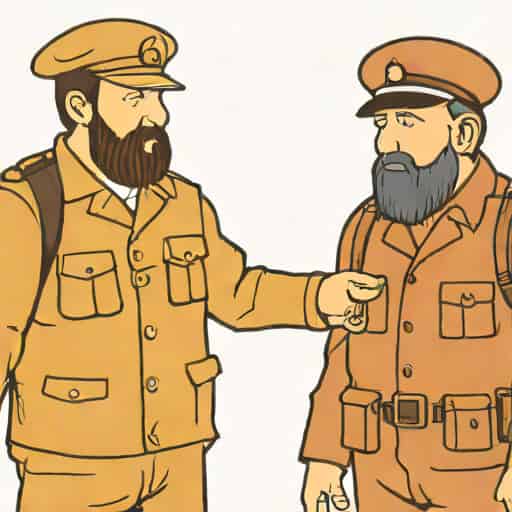
In his writings, Aleksandr Solzhenitsyn offers a vivid and often harrowing depiction of the experience of being arrested under a totalitarian regime. As a prominent Russian novelist and dissident, Solzhenitsyn draws on his own arrest and imprisonment to explore the psychological, emotional, and social impact of state oppression. Being arrested, in his accounts, is more than a legal or physical event-it represents a profound disruption of personal freedom, identity, and dignity. Through metaphor and detailed description, Solzhenitsyn compares the experience of arrest to several intense and disorienting circumstances, helping readers grasp the emotional weight and existential implications of living under constant surveillance and fear.
Arrest as a Sudden Loss of Freedom
One of Solzhenitsyn’s key comparisons relates to the abrupt loss of personal freedom. He portrays being arrested as akin to being thrust into a world where familiar rules no longer apply, and where one’s movements, decisions, and autonomy are stripped away. This sudden shift is often shocking and disorienting, creating a feeling of helplessness and vulnerability. For Solzhenitsyn, the arrest is not merely a legal act but a symbolic severing of the individual from the ordinary flow of life.
Feeling of Entrapment
Solzhenitsyn frequently compares the experience to being trapped in a confined space with no clear way out. The analogy evokes claustrophobia and helplessness, emphasizing the psychological strain of arrest. The individual feels monitored, restricted, and constantly under threat, creating a sense of anxiety and fear that permeates every aspect of existence. In this way, the arrest functions as both a physical and emotional imprisonment.
- Loss of autonomy Arrest removes the ability to make decisions freely.
- Isolation The arrested person is often cut off from social and familial support.
- Constant fear Uncertainty about the future and potential consequences generates intense anxiety.
Arrest as a Disruption of Identity
Beyond physical confinement, Solzhenitsyn illustrates how arrest challenges personal identity. Being accused and detained under a repressive regime forces the individual to confront the fragility of social standing, reputation, and self-conception. The arrested person may feel stripped of dignity, reduced to a label or charge, and disconnected from the roles that once defined them. This comparison underscores the psychological weight of arrest and the internal struggle to maintain a sense of self under oppressive circumstances.
Comparison to a Sudden Fall
Solzhenitsyn often likens the moment of arrest to falling from a secure position into an uncertain void. This metaphor conveys the shock and unpredictability of the experience. The individual is suddenly disoriented, unsure of what will happen next, and acutely aware of the vulnerability imposed by external authority. The comparison emphasizes the emotional turbulence and mental disarray that accompany the loss of control over one’s life.
Arrest as a Test of Endurance
In his reflections, Solzhenitsyn also compares arrest to an extreme trial or test of human endurance. The physical and psychological pressures of detention, interrogation, and uncertainty act as a form of stress that examines the limits of courage, resilience, and moral integrity. The arrested individual must navigate fear, maintain composure, and often conceal true feelings to survive the immediate and long-term consequences of state repression.
Physical and Mental Strain
The analogy to a grueling trial highlights both physical and emotional aspects of arrest. Solzhenitsyn describes sleepless nights, constant surveillance, and the threat of physical abuse, portraying arrest as a scenario that exhausts the body and mind simultaneously. This comparison helps readers understand that the impact of arrest extends far beyond legal or procedural dimensions, affecting the very core of human endurance and willpower.
- Interrogation The arrested person faces intense questioning designed to break resistance.
- Isolation Separation from social and emotional support magnifies stress.
- Uncertainty Not knowing the outcome or length of detention heightens psychological pressure.
Arrest as a Moral and Spiritual Challenge
Solzhenitsyn emphasizes that arrest is not only a legal and physical ordeal but also a moral and spiritual confrontation. It forces individuals to reflect on their values, beliefs, and the choices they make under duress. In many of his writings, the arrested person is compelled to reconcile fear, courage, and integrity, navigating situations that test ethical principles and personal convictions.
Comparison to a Crucible
He often compares arrest to being placed in a crucible-a situation that exposes the core of a person’s character under extreme conditions. This metaphor highlights the transformative potential of arrest, as individuals confront moral dilemmas, witness injustice, and are forced to make difficult decisions about complicity, resistance, or survival. The experience, while harrowing, can reveal strength, resilience, and deeper insight into human nature.
Impact on Relationships and Society
Solzhenitsyn also draws attention to how arrest affects social connections and broader societal relationships. Being arrested can create suspicion, fear, and tension among family, friends, and colleagues. It highlights the intrusive power of authoritarian systems, which disrupt normal social networks and generate widespread anxiety. The comparison to social alienation underscores the way arrest not only confines the individual physically but also isolates them socially and emotionally.
Strain on Family and Friends
The arrest of a loved one can place significant stress on family members, who may experience fear, uncertainty, and potential retaliation. Solzhenitsyn illustrates how arrest extends beyond the individual, affecting entire social circles and communities. This comparison reinforces the systemic nature of oppression and the broader psychological impact of repressive practices.
For Aleksandr Solzhenitsyn, being arrested is a multifaceted experience that transcends the mere act of detention. He compares it to loss of freedom, a sudden fall, a grueling trial, and a moral crucible, emphasizing both the physical and psychological dimensions of the ordeal. Through his vivid metaphors, Solzhenitsyn communicates the shock, vulnerability, and endurance required to navigate such circumstances. Arrest, in his view, is not only a legal or physical event but a profound challenge to identity, morality, and social connection. By exploring these comparisons, readers gain a deeper understanding of the human impact of political repression and the resilience required to survive and maintain dignity under extreme conditions. Solzhenitsyn’s reflections remind us that arrest in a totalitarian context is a profound disruption that tests the boundaries of courage, character, and human endurance, offering insights into the universal struggle for freedom, integrity, and self-preservation.