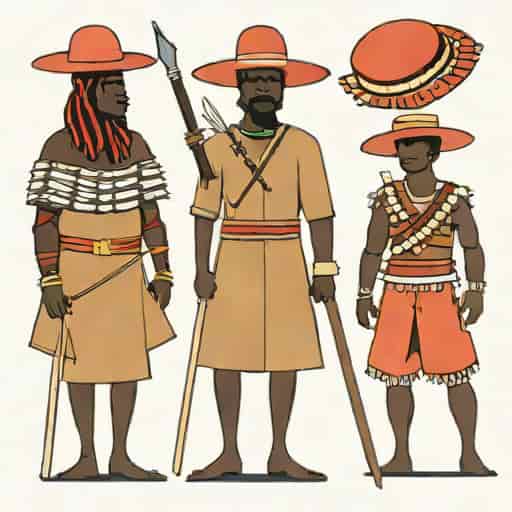
The story of the Herero tribe of Namibia is one where conflict, identity, and visual expression are deeply intertwined. Known for their striking traditional dress, the Herero people use costume not only as a form of cultural pride but also as a living reminder of a painful historical past. The phrase conflict and costume captures this connection, showing how clothing can carry memory, resistance, and survival. To understand the Herero today, it is necessary to look at both their history of conflict and the meaning behind their distinctive attire.
The Herero People and Their Homeland
The Herero are a Bantu-speaking ethnic group primarily found in central and eastern Namibia. Traditionally, they were pastoralists whose wealth and social structure revolved around cattle. Land, livestock, and kinship formed the foundation of Herero society.
Before colonial rule, the Herero lived relatively independently, managing their land through customary systems and maintaining strong cultural traditions.
Early Encounters and Rising Tensions
Conflict entered Herero history more intensely with the arrival of European colonial powers in the late nineteenth century. German colonial expansion into what was then German South West Africa disrupted traditional land ownership and economic systems.
As settlers claimed land and resources, tensions grew between the Herero and colonial authorities, setting the stage for violent confrontation.
Loss of Land and Autonomy
The seizure of grazing land threatened the Herero way of life. Cattle herding required wide territories, and restrictions imposed by colonial rule undermined economic stability and social cohesion.
These pressures contributed directly to organized resistance.
The Herero-German Conflict
The most devastating chapter in Herero history occurred in the early 1900s during the conflict with German colonial forces. What began as resistance escalated into extreme violence.
This conflict resulted in massive loss of life and is widely recognized as one of the earliest genocides of the twentieth century.
Impact on the Herero Population
The consequences were catastrophic. Large portions of the Herero population were killed, displaced, or forced into harsh conditions. Survivors carried physical and emotional scars that continue to shape collective memory.
This trauma became embedded in Herero identity and cultural expression.
Costume as Cultural Survival
In the aftermath of conflict, the Herero people found ways to preserve identity despite immense loss. One of the most visible forms of this preservation is their traditional costume, especially worn by Herero women.
The costume is not simply decorative. It is deeply symbolic, reflecting adaptation, remembrance, and resilience.
Origins of the Herero Traditional Dress
Herero women’s dress developed during the colonial period and was influenced by Victorian-era fashion introduced by missionaries and settlers. Over time, the Herero adapted these styles into something uniquely their own.
The result is a long, flowing dress with a full skirt and puffed sleeves, often paired with a distinctive horn-shaped headdress.
The Meaning of the Headdress
The headdress, shaped to resemble cattle horns, symbolizes the central role of cattle in Herero culture. It also represents wealth, continuity, and connection to ancestors.
Even after displacement and loss, this symbol reinforces cultural roots.
Costume as Memory of Conflict
While the Herero costume appears elegant and celebratory, it also carries layers of historical meaning. Wearing the dress can be an act of remembrance, acknowledging ancestors who suffered during the colonial conflict.
In this way, clothing becomes a quiet but powerful form of historical testimony.
Gender and Cultural Expression
Herero women play a central role in preserving tradition through costume. Their visibility in traditional dress during ceremonies and public events reinforces cultural continuity.
Men also participate in cultural remembrance, though women’s attire has become the most recognizable symbol of Herero identity.
Public Ceremonies and Commemoration
Traditional dress is especially prominent during commemorative events, such as annual remembrance ceremonies honoring Herero leaders and victims of past conflict.
- Community gatherings honoring ancestors
- Cultural festivals and heritage days
- Rituals marking important life events
During these occasions, costume, music, and ritual come together to reinforce collective memory.
Modern Identity and Tradition
Today, the Herero people live in a modern nation-state while maintaining strong cultural traditions. Many Herero balance contemporary lifestyles with ancestral practices.
The continued use of traditional costume demonstrates that identity is not frozen in the past but actively lived in the present.
Global Recognition and Misunderstanding
The striking appearance of Herero dress has attracted international attention, sometimes without full understanding of its meaning. To outsiders, the costume may seem purely aesthetic.
For the Herero, however, it represents dignity, endurance, and historical awareness.
Conflict Remembered Through Culture
Rather than forgetting their history, the Herero incorporate memory of conflict into cultural expression. Costume becomes a medium through which stories are passed down across generations.
This approach allows remembrance without relying solely on written records.
Education and Cultural Transmission
Elders play a key role in teaching younger generations about the meaning behind traditional dress and the history it represents. Through storytelling and participation in ceremonies, children learn why costume matters.
This ensures that memory survives even as society changes.
The Role of Costume in Healing
Cultural expression can be a form of healing. By honoring ancestors and asserting identity, the Herero people transform pain into strength.
Wearing traditional dress can be an act of pride and emotional connection.
Conflict, Costume, and Resilience
The relationship between conflict and costume among the Herero illustrates how culture adapts under pressure. Instead of disappearing, traditions evolved and took on new meaning.
This resilience speaks to the power of cultural expression in the face of historical injustice.
Why the Herero Story Matters
The story of the Herero tribe of Namibia reminds the world that clothing can carry history. Costume is not always about fashion; it can be a statement of survival and identity.
Understanding this context deepens respect for cultural diversity.
Conflict and costume are inseparable in the story of the Herero tribe of Namibia. The violence and loss experienced during colonial rule left lasting scars, but the Herero people responded with cultural strength rather than disappearance. Their traditional dress stands as a living symbol of memory, resilience, and identity. Through costume, the Herero continue to tell their story, honoring the past while asserting their place in the present. It is a powerful example of how culture can endure even after profound conflict.