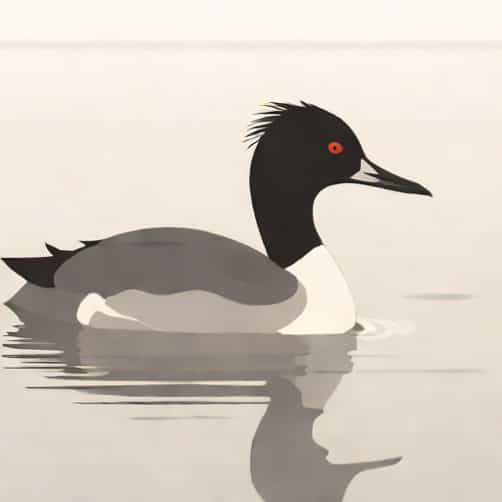
The black-necked grebe is one of the most striking and adaptable waterbirds found across Europe, Asia, and North America. Known for its elegant posture and agile swimming, this species undergoes an incredible transformation between seasons. During the breeding months, it sports a rich golden plumage around the eyes and a deep black neck, but when winter arrives, its appearance changes dramatically. The black-necked grebe’s winter plumage is far more subdued, characterized by shades of white, gray, and soft black tones. This seasonal change not only helps the bird blend into its environment but also reflects the fascinating adaptability that defines the species.
Appearance of the Black-Necked Grebe in Winter
In its winter plumage, the black-necked grebe (scientifically known asPodiceps nigricollis) looks quite different from its breeding-season counterpart. The vibrant contrasts of gold and black fade away, replaced by a sleek and understated coloration. The upperparts turn a soft grayish-black, while the underparts and cheeks become bright white. The black neck that gives the species its name becomes paler and less defined, often appearing gray or dusky rather than pure black.
One of the most distinctive features in winter is the grebe’s red eye, which remains vibrant year-round. Against the muted tones of its winter feathers, this red eye stands out beautifully, giving the bird a mysterious and captivating look. Its bill remains thin and pointed, perfect for catching small fish, insects, and crustaceans even in cold waters.
Seasonal Plumage Change Explained
The transformation between breeding and winter plumage in the black-necked grebe is a classic example of molting, a natural process that replaces old feathers with new ones. After the breeding season ends, usually in late summer, the grebe begins its post-breeding molt. During this period, it loses the ornate black and golden feathers of summer and grows a new, simpler set of plumage better suited for the winter months.
This change serves several purposes. The lighter coloration provides better camouflage against the pale tones of winter landscapes, especially when the bird moves to coastal or inland water bodies. It also reduces the maintenance required for more elaborate feathers, conserving energy during a time when food resources can be scarce. Molting also ensures that the bird has fresh, well-insulated feathers to protect it from cold temperatures.
Habitat During the Winter Season
During the breeding season, black-necked grebes prefer shallow lakes, marshes, and reed-covered ponds. However, when winter arrives, their habitat shifts dramatically. The species migrates to larger bodies of water such as coastal lagoons, estuaries, and inland reservoirs that do not freeze over.
In Europe, many black-necked grebes spend the winter along the Mediterranean coast or the Atlantic shores. In North America, they can be found in areas such as the southern United States and Mexico. During this time, their winter plumage helps them blend into the reflective surfaces of calm waters, offering both protection and an advantage when hunting underwater prey.
Behavior and Feeding in Winter
The black-necked grebe’s behavior in winter is notably different from its breeding season activities. While the breeding season is marked by territorial displays and vocal calls, the winter months are quieter. The birds often gather in flocks, sometimes numbering in the thousands, especially in rich feeding areas.
In its winter plumage, the black-necked grebe continues to dive skillfully for food. Its diet consists mainly of aquatic invertebrates, small crustaceans, and fish. One of its preferred food sources during the winter is brine shrimp, particularly in saline lakes. The grebe’s lightweight body and lobed feet allow it to maneuver easily underwater, while its pale feathers make it less visible to predators from below.
- Feeding MethodThe grebe dives beneath the surface, chasing small prey with quick movements of its feet.
- Social BehaviorIn winter, they are highly social and can be seen feeding together in synchronized movements.
- Resting HabitsWhen not feeding, they often rest in open water, floating quietly in groups.
Migration Patterns and Timing
The black-necked grebe is a strong migrator, traveling long distances between its breeding and wintering grounds. Migration usually begins in late summer or early autumn, shortly after the birds finish molting. By the time winter plumage is fully developed, the grebes have often arrived in warmer or more temperate regions.
Interestingly, this species has one of the most energy-intensive migration and molting cycles among birds. After breeding, black-necked grebes go through a flightless period, during which they molt all their flight feathers at once. During this time, they rely on rich food sources to rebuild energy reserves before continuing their journey southward. When they arrive at their winter destinations, their plumage has fully transformed into its pale, silvery winter state.
Adaptations for Winter Survival
Adapting to winter conditions requires more than just a change in appearance. The black-necked grebe’s body structure and behavior evolve seasonally to handle colder environments and different food availability. Its winter plumage not only provides camouflage but also acts as insulation. Each feather traps air close to the bird’s skin, maintaining warmth even when it dives into icy waters.
The grebe also adjusts its metabolism during winter. With lower ambient temperatures, maintaining body heat requires more energy, so the bird increases its feeding activity. The transition to saltwater or brackish habitats provides access to abundant crustaceans and small fish, ensuring a steady energy supply.
Differences Between Winter and Breeding Plumage
The contrast between the black-necked grebe’s breeding and winter plumage is one of the most dramatic in the bird world. During breeding season, the bird becomes a spectacle of color, with golden tufts spreading backward from its eyes and a deep black neck and head. This flamboyant appearance helps attract mates and establish dominance among rivals.
However, once the breeding season ends, the grebe sheds these bright feathers and takes on its understated winter colors. This seasonal transformation can be summarized as follows
- Head and NeckBlack during breeding season, turning grayish or dusky in winter.
- BodyDeep brown-black upperparts change to light gray or white.
- Feather TextureBreeding feathers are glossy and elongated, while winter feathers are shorter and softer.
- Eye ColorRemains red in both seasons, serving as a consistent identifying feature.
This remarkable shift allows the bird to balance survival and reproduction, showing how plumage changes are deeply tied to ecological demands.
Observation and Identification Tips
Spotting a black-necked grebe in its winter plumage requires careful observation. Birdwatchers should look for small, diving waterbirds with round bodies and thin, pointed bills. The bright red eyes are a key identifying feature, especially when the bird’s plumage is muted. Winter flocks are often seen resting on calm waters, occasionally diving for food or preening.
Because the winter coloration is less striking, it’s easy to confuse the black-necked grebe with similar species like the eared grebe or horned grebe. However, differences in bill shape, head pattern, and size can help confirm identification.
The black-necked grebe’s winter plumage tells a story of adaptation, survival, and transformation. From the golden and black brilliance of summer to the calm gray and white tones of winter, this bird showcases nature’s ability to change with the seasons. Its subtle winter appearance allows it to blend seamlessly into cold waters while maintaining its elegance and grace. Observing a black-necked grebe in winter offers a glimpse into the resilience and beauty of migratory birdscreatures perfectly tuned to the rhythms of the natural world.