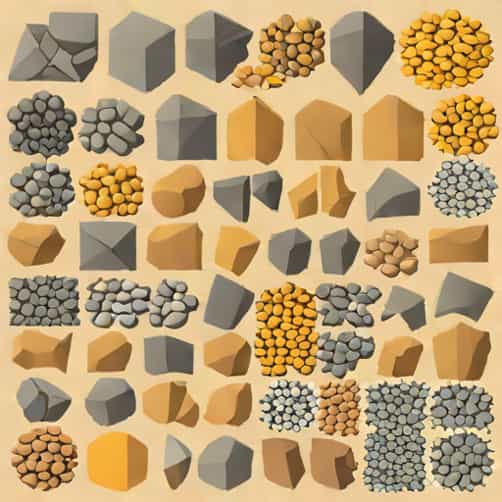
In construction and civil engineering, understanding the properties of materials is essential for achieving strength, durability, and cost efficiency. Among the various characteristics of construction materials, the bulk density of coarse aggregate is one of the most important factors in concrete mix design. It influences not only the concrete’s strength but also its workability, porosity, and overall weight. Coarse aggregate, typically composed of crushed stone or gravel, forms the backbone of concrete. Knowing its bulk density allows engineers to determine how much aggregate is required for a specific volume of concrete and helps in controlling the proportions of the mix for optimal performance.
What Is Bulk Density?
Bulk density is defined as the mass of aggregate required to fill a given container or volume. It includes the volume of the ptopics themselves and the volume of the voids (air spaces) between the ptopics. In simple terms, bulk density represents how densely packed the aggregate ptopics are. It is usually expressed in kilograms per cubic meter (kg/m³) or pounds per cubic foot (lb/ft³).
The bulk density of coarse aggregate depends on factors such as ptopic size, shape, surface texture, and the degree of compaction. Coarse aggregates with angular ptopics tend to have more voids and therefore lower bulk density, while rounded aggregates pack more efficiently and have higher bulk density. Understanding these variations is key to selecting the right aggregate for specific concrete applications.
Types of Bulk Density
When discussing bulk density of coarse aggregate, it is important to distinguish between two primary types loose bulk density and rodded (or compacted) bulk density. These two conditions reflect how the aggregate behaves in different states of packing and are essential for accurate concrete mix calculations.
Loose Bulk Density
Loose bulk density refers to the density of the aggregate when it is poured freely into a container without any compaction. The ptopics settle naturally under the influence of gravity, leaving more air voids between them. This value is generally lower and represents the condition of aggregate when handled or transported without vibration or pressure.
Rodded Bulk Density
Rodded or compacted bulk density is determined when the aggregate is compacted in a container using a tamping rod or similar tool. Compaction reduces the void spaces between ptopics, resulting in a higher density. This condition is more representative of the aggregate’s behavior in actual concrete mixtures, where compaction is applied during placement.
Why Bulk Density Matters in Construction
The bulk density of coarse aggregate plays a significant role in determining the characteristics and performance of concrete. Here are several key reasons why it is important in construction and material design
- Mix ProportioningBulk density helps in calculating the proportions of materials needed in a concrete mix. It allows for accurate estimation of the mass of aggregate required for a given volume of concrete.
- Concrete StrengthAggregates with higher bulk density often produce denser concrete with greater compressive strength, as there are fewer voids to weaken the structure.
- WorkabilityThe arrangement and compactness of aggregates influence the ease of mixing and placing concrete. Lower bulk density may lead to poor workability if not properly compensated in the mix design.
- EconomySince bulk density affects the weight of aggregate per unit volume, it also impacts transportation costs and the overall cost of concrete production.
- DurabilityA well-compacted concrete with optimal aggregate density tends to have lower permeability, which enhances durability and resistance to weathering.
Typical Values of Bulk Density for Coarse Aggregate
The bulk density of coarse aggregates generally falls within a specific range depending on the type and source of material. Common values for bulk density are as follows
- Loose bulk density 1200 – 1450 kg/m³
- Rodded bulk density 1500 – 1750 kg/m³
These values may vary based on aggregate type. For example, crushed stone typically has higher bulk density than gravel because its angular shape allows less air to fill the voids. On the other hand, lightweight aggregates such as expanded clay or pumice have significantly lower bulk densities, often below 1000 kg/m³, and are used for specialized lightweight concrete applications.
Factors Affecting Bulk Density of Coarse Aggregate
Several physical and environmental factors can influence the bulk density of coarse aggregate. Understanding these helps engineers and builders maintain consistency in concrete mix quality.
1. Ptopic Shape and Texture
Angular and rough-textured aggregates tend to have lower bulk density because they do not fit together as closely as rounded or smooth aggregates. Rounded ptopics, such as river gravel, can pack more efficiently, resulting in higher density.
2. Grading and Ptopic Size Distribution
A well-graded aggregate mix, containing a variety of ptopic sizes, will have fewer voids and therefore higher bulk density. Poorly graded or uniformly sized aggregates leave more air gaps, reducing density.
3. Moisture Content
The presence of moisture can affect bulk density. Damp aggregates tend to occupy slightly more volume due to surface water films, which prevent ptopics from settling closely. On the other hand, completely dry aggregates may have higher packing efficiency but can absorb water during mixing, altering the water-cement ratio.
4. Compaction Method
The amount of compaction applied during measurement significantly influences the bulk density. More compaction leads to reduced voids and increased density, while less compaction results in a looser packing structure.
5. Source and Type of Aggregate
Different rock types naturally have different densities. For example, basalt and granite aggregates are denser than limestone or sandstone. The origin and geological composition of the aggregate directly influence its weight per unit volume.
How to Determine Bulk Density
The bulk density of coarse aggregate is determined through a simple laboratory test using a standard cylindrical container and balance. The test is performed in both loose and rodded conditions to obtain comparative data. The general procedure is as follows
- Weigh the empty container (W1).
- Fill the container with the aggregate in the desired condition (loose or compacted).
- Level the surface and weigh the container with the aggregate (W2).
- Calculate the bulk density using the formula
Bulk Density = (W2 – W1) / Volume of container
This measurement provides a reliable value that can be used in concrete mix calculations and material analysis.
Applications of Bulk Density Data
Knowing the bulk density of coarse aggregate has practical implications in various stages of construction. It helps engineers design mixes that meet specific requirements for strength, workability, and durability. Bulk density data is also useful for storage and transportation planning, ensuring that aggregates are handled efficiently without excessive cost or material loss.
In structural engineering, the weight of concrete plays a significant role in load calculations. By understanding the bulk density of aggregates, engineers can estimate the dead load of concrete structures more accurately. This information is also critical in quality control, ensuring that aggregate batches maintain consistent density and performance characteristics.
The bulk density of coarse aggregate is a fundamental property that affects nearly every aspect of concrete production. From determining the correct mix proportions to influencing strength, durability, and economy, bulk density provides essential insight into how aggregates behave in construction materials. By understanding the factors that influence it—such as ptopic shape, grading, moisture, and compaction—engineers can design concrete that meets performance standards efficiently. Regular testing and monitoring of bulk density ensure that concrete remains reliable, strong, and durable across a wide range of applications. In short, mastering the concept of bulk density is a key step toward producing high-quality, long-lasting concrete structures.