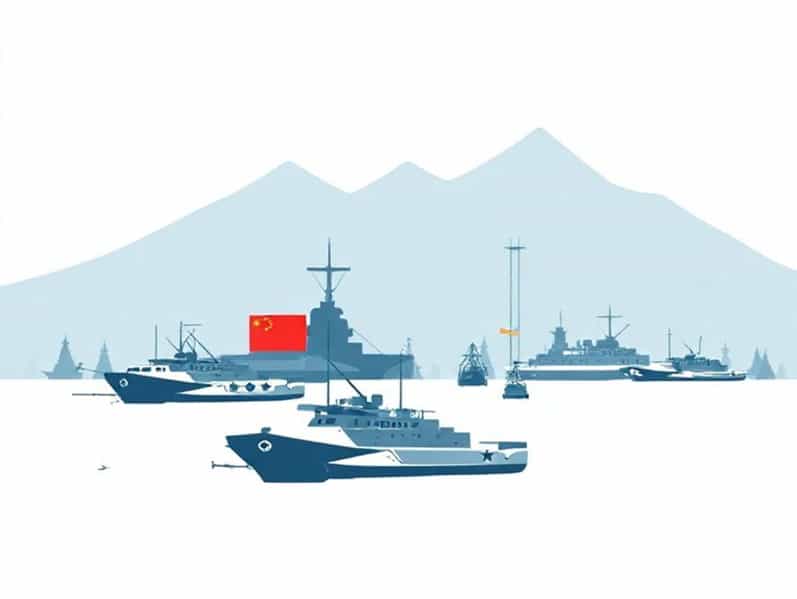
The Arctic has long been a region of strategic importance due to its vast natural resources, shipping routes, and geopolitical significance. In recent years, the region has seen increased attention from major powers, particularly China and Russia, as they enhance their military presence and capabilities. This buildup is influenced by a combination of climate change, which has made the Arctic more navigable, and the desire to secure access to valuable energy reserves, including oil, natural gas, and minerals. The Arctic’s strategic relevance extends beyond regional considerations, impacting global security dynamics and prompting responses from NATO countries, the United States, and other Arctic stakeholders.
Drivers Behind the Arctic Military Buildup
Several factors motivate the military expansion of China and Russia in the Arctic. First, climate change has reduced sea ice coverage, opening new shipping lanes such as the Northern Sea Route. This provides a faster maritime passage between Europe and Asia, which has significant economic implications. Second, the Arctic region holds substantial untapped natural resources, including hydrocarbons and rare earth minerals. Access to these resources requires both exploration and security, prompting military investment. Third, Russia and China seek to assert their influence in the Arctic to counterbalance the presence of the United States, NATO allies, and Arctic Council member states.
Russia’s Arctic Military Expansion
Russia has a long-standing interest in the Arctic due to its geographic proximity and economic reliance on the region. The Russian military has focused on modernizing its Arctic forces, enhancing its naval, air, and ground capabilities. Key elements of Russia’s strategy include
- Icebreaker FleetRussia maintains the largest fleet of nuclear-powered and conventional icebreakers to ensure year-round navigation along the Northern Sea Route.
- Arctic BasesModernized military bases and airfields across the Russian Arctic support rapid deployment and surveillance operations.
- Missile SystemsDeployment of advanced missile systems, including coastal defense and long-range anti-ship missiles, to secure key maritime areas.
- Air and Naval ExercisesRegular joint military exercises in Arctic conditions test readiness and demonstrate Russia’s operational capabilities.
Russia views these measures as essential for national security and as a demonstration of sovereignty over its Arctic territories, particularly in the context of competing claims and resource disputes.
China’s Arctic Strategy
China, although not an Arctic state, has increasingly projected itself as a near-Arctic power, emphasizing scientific research, commercial interests, and strategic positioning. Its military and naval presence is more limited than Russia’s but growing steadily. Key aspects of China’s Arctic approach include
- Scientific Research and ObservationChina operates Arctic research stations to gather data on climate, sea ice, and natural resources.
- Shipping and LogisticsChinese shipping companies are investing in ice-class vessels capable of navigating the Northern Sea Route, ensuring future commercial access.
- Strategic PartnershipsChina has strengthened cooperation with Russia on Arctic infrastructure, energy development, and military logistics.
- Military ModernizationWhile China does not maintain permanent bases in the Arctic, its naval and air forces conduct exercises in high-latitude environments, demonstrating capability for Arctic operations.
China’s military engagement in the Arctic is often framed as part of a broader strategy to secure trade routes and safeguard its economic interests while remaining compliant with international law.
Geopolitical Implications
The Arctic military buildup by China and Russia has far-reaching geopolitical consequences. It heightens tensions among Arctic and non-Arctic powers and challenges traditional security arrangements. The strategic positioning of military assets in the Arctic could impact global shipping lanes, influence energy markets, and alter the balance of power in the region. Furthermore, the presence of advanced surveillance and missile systems complicates freedom of navigation and raises concerns about potential militarization of the Arctic.
Impact on NATO and the United States
NATO countries and the United States are closely monitoring the Arctic buildup. Key responses include
- Enhanced Arctic patrols and exercises by U.S. and NATO naval forces.
- Investment in infrastructure and logistics to improve readiness for high-latitude operations.
- Collaboration with Arctic Council members to address security and environmental challenges.
The increased presence of China and Russia has prompted a reassessment of defense priorities, highlighting the Arctic as a region of strategic vulnerability and opportunity.
Environmental and Economic Considerations
The military buildup in the Arctic also intersects with environmental and economic concerns. Increased naval activity and construction of bases may disrupt fragile ecosystems, threaten wildlife, and contribute to pollution. At the same time, securing shipping routes and energy resources could provide significant economic benefits. Balancing strategic interests with environmental protection remains a critical challenge for all stakeholders.
Future Prospects
Looking ahead, the Arctic will likely remain a focal point of military and geopolitical competition. Russia is expected to continue its aggressive Arctic expansion, while China may increase its presence through naval exercises, partnerships, and strategic investments. Technological advancements, including satellite surveillance, ice-class vessels, and long-range missiles, will shape the operational landscape. Diplomatic efforts, international treaties, and Arctic Council regulations will play crucial roles in mitigating conflict and ensuring sustainable development in the region.
Potential Scenarios
- Increased MilitarizationThe Arctic could witness further militarization as Russia and China deploy more assets, potentially leading to standoffs or conflicts over resources and territorial claims.
- Cooperation and Joint DevelopmentCollaborative projects on energy extraction, environmental protection, and scientific research could reduce tensions and foster shared interests.
- Technological DominanceNations with superior Arctic navigation, surveillance, and defense technologies may gain strategic advantages in both military and commercial domains.
The Arctic is increasingly becoming a theater of strategic importance, as evidenced by the military buildup by China and Russia. Climate change, resource potential, and global trade routes have elevated the stakes, prompting both nations to enhance their presence and capabilities in the region. Russia’s extensive Arctic military infrastructure and China’s growing scientific and logistical investments demonstrate a convergence of economic and security interests. The geopolitical implications are significant, affecting NATO strategy, U.S. defense posture, and the stability of international shipping lanes. As the Arctic becomes more accessible, balancing military, economic, and environmental priorities will be critical for regional and global security. Understanding these developments is essential for policymakers, businesses, and analysts tracking the evolution of strategic competition in one of the world’s most challenging and resource-rich environments.