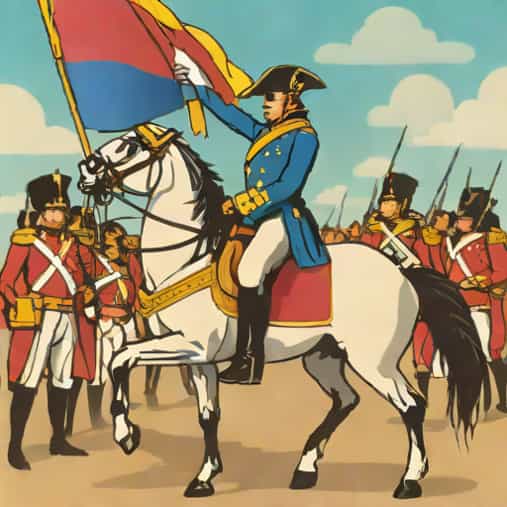
The Battle of Austerlitz, often called the Battle of the Three Emperors, was one of Napoleon Bonaparte’s most celebrated military victories, occurring on December 2, 1805. Fought near the town of Austerlitz in the Austrian Empire, this battle saw Napoleon’s French forces face the combined armies of Russia and Austria. It is widely regarded as a masterpiece of military strategy and tactics, demonstrating Napoleon’s skill in deception, maneuver, and battlefield psychology. The question of whether Napoleon won the Battle of Austerlitz is clear, but understanding how he achieved victory and why this battle remains historically significant provides deeper insight into Napoleonic warfare and European history.
The Context of the Battle
The Battle of Austerlitz took place during the War of the Third Coalition, when Britain, Russia, Austria, and other European powers sought to curb Napoleon’s growing influence in Europe. Following his coronation as Emperor of the French in 1804, Napoleon had consolidated power and expanded French influence across the continent. The coalition aimed to challenge French dominance, and Austria and Russia planned a coordinated attack. Napoleon, aware of his enemy’s strategy, used intelligence, misdirection, and careful planning to create a battlefield advantage that would become legendary in military history.
Forces and Commanders
Napoleon commanded approximately 73,000 French troops, facing a combined allied force of roughly 85,000 Austrian and Russian soldiers. Despite being outnumbered, the French army benefited from superior training, cohesion, and leadership. Key French generals, such as Marshal Louis Davout and Marshal Jean Lannes, played vital roles in executing Napoleon’s tactical plan. The allied forces, under Tsar Alexander I of Russia and Emperor Francis II of Austria, were less coordinated, which Napoleon exploited to create confusion and vulnerabilities in their lines.
Napoleon’s Strategy and Tactics
The victory at Austerlitz is often cited as a perfect example of Napoleon’s strategic genius. He deliberately weakened his right flank, luring the Allies into attacking what appeared to be a vulnerable position. This feigned weakness drew the allied forces into a trap, allowing Napoleon to concentrate his forces against the center, a move known as the central assault. The French army executed a combination of infantry, cavalry, and artillery maneuvers to divide and overwhelm the enemy, demonstrating mastery of timing, terrain, and battlefield coordination.
Key Phases of the Battle
- Morning EngagementInitial skirmishes allowed Napoleon to assess enemy movements and maintain the illusion of weakness.
- Allied AdvanceThe Austro-Russian forces attacked the French right flank, overextending themselves and creating gaps in their formation.
- French CounterattackNapoleon launched a decisive assault on the center of the allied line, splitting their forces and causing disarray.
- Cavalry ExploitationFrench cavalry exploited the breaches in the allied lines, encircling segments of the enemy army and cutting off retreat paths.
- Afternoon ConsolidationBy late afternoon, the French had secured the battlefield, capturing many prisoners and forcing the allies to retreat.
Outcome and Casualties
Napoleon’s victory at Austerlitz was decisive. French casualties numbered around 9,000, while the combined Russian and Austrian forces suffered approximately 36,000 casualties, including killed, wounded, and captured soldiers. The allies lost hundreds of artillery pieces and experienced a devastating blow to their morale. The victory allowed Napoleon to assert French dominance in Central Europe and forced Austria to sign the Treaty of Pressburg, ceding territory and paying reparations. This triumph solidified Napoleon’s reputation as one of history’s greatest military commanders.
Why Napoleon Won
Several factors contributed to Napoleon’s success at Austerlitz
- Superior StrategyNapoleon’s use of deception, feints, and concentrated attacks demonstrated advanced planning and understanding of enemy psychology.
- Better CoordinationThe French army’s training and communication allowed for flexible responses and rapid deployment during the battle.
- Exploitation of TerrainNapoleon utilized the Pratzen Heights and other key geographical features to gain tactical advantage.
- Allied MiscalculationsThe Russians and Austrians misjudged French strength and overextended their lines, creating vulnerabilities.
- Leadership and MoraleFrench troops were motivated and disciplined, inspired by Napoleon’s leadership and confidence.
Historical Significance
The Battle of Austerlitz is remembered not only as a major French victory but also as a turning point in European military history. It demonstrated the effectiveness of Napoleonic tactics, emphasizing speed, maneuver, and the integration of multiple arms of the military. Austerlitz also had significant political consequences, weakening the Third Coalition and allowing France to dominate continental Europe for several years. The battle became a model for military academies worldwide, with Napoleon’s strategies studied and emulated by future commanders.
Legacy of the Battle
Napoleon’s success at Austerlitz enhanced his political power and personal legend. He often cited the battle as an example of his tactical brilliance and ability to inspire his troops. For historians, the battle illustrates the shift from rigid 18th-century linear warfare to more dynamic and flexible operational approaches. Austerlitz remains a case study in planning, deception, and execution, highlighting how careful strategy and decisive action can overcome numerical disadvantages. It also reinforced Napoleon’s image as a near-mythical figure in European history, blending military skill with political acumen.
Napoleon did win the Battle of Austerlitz, achieving one of the most famous and decisive victories of his career. Through careful planning, tactical ingenuity, and effective leadership, Napoleon was able to defeat a larger allied army, demonstrating the strengths of the French military under his command. The battle not only secured French dominance in Europe but also became an enduring symbol of strategic brilliance. Understanding the reasons behind Napoleon’s victory at Austerlitz, the battlefield tactics, and the historical consequences offers valuable insight into the evolution of military strategy and the legacy of one of history’s greatest commanders.