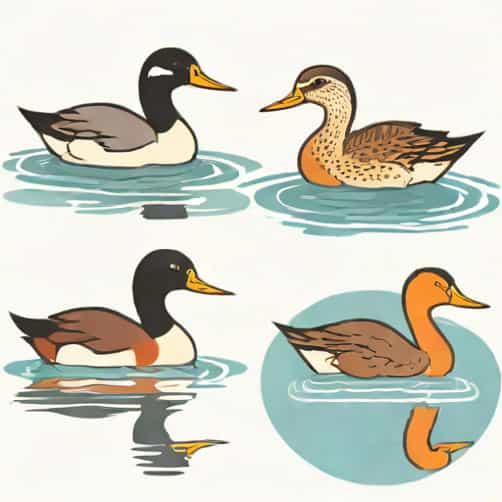
At first glance, grebes and ducks might seem almost identical to the casual observer. Both are waterbirds, both swim gracefully across lakes and ponds, and both are often seen diving beneath the surface for food. However, when you take a closer look, you begin to notice significant differences between a grebe and a duck-in their anatomy, behavior, nesting habits, and even in how they move through the water. Understanding the difference between grebe and duck not only helps with bird identification but also deepens appreciation for the diversity of aquatic birds in nature.
Physical Differences Between Grebe and Duck
One of the most noticeable differences between a grebe and a duck is their body structure. Ducks belong to the family Anatidae, while grebes are part of the family Podicipedidae. Although both are adapted for aquatic life, their bodies have evolved in distinct ways to suit their lifestyles.
Body Shape and Size
Ducks generally have broader, more robust bodies. Their build is suited for floating effortlessly on water and for taking off into flight quickly when startled. Grebes, on the other hand, have more elongated and slender bodies, designed to dive deep and maneuver efficiently underwater. Their streamlined form helps them glide smoothly while chasing fish or insects beneath the surface.
Most grebes are smaller than typical ducks, though there are exceptions. For example, the Great Crested Grebe can appear larger than some duck species. Still, their proportions-narrow bodies, long necks, and sharp features-set them apart.
Feet and Legs
Their feet are one of the clearest distinctions. Ducks have webbed feet, which means each toe is connected by a continuous membrane that helps them paddle on the water. Grebes, in contrast, have lobed toes. Each toe on a grebe’s foot has its own flap of skin, giving it a scalloped appearance. This unique adaptation provides better propulsion during diving and allows for agile movement underwater.
Additionally, grebes’ legs are positioned far back on their bodies, which makes walking on land awkward and clumsy. Ducks have more centrally placed legs, allowing them to waddle comfortably both on land and water.
Feeding Habits and Diet
Another major difference between grebes and ducks lies in their feeding behavior and diet. Both are omnivorous, but they specialize in different types of food and use distinct techniques to obtain it.
How Ducks Feed
Ducks use a feeding method known as dabbling or diving, depending on the species. Dabbling ducks, such as mallards, feed by tipping their heads underwater while keeping their tails up. They mostly eat plant material, seeds, and small invertebrates found near the surface. Diving ducks, like scaups or pochards, go underwater to catch aquatic insects and fish, though they do not dive as deeply or as gracefully as grebes.
How Grebes Feed
Grebes are expert divers. They dive fully underwater, often for several seconds at a time, and chase fish or aquatic insects with astonishing speed and precision. Their diet primarily consists of small fish, crustaceans, and insects. They can control their buoyancy by compressing their feathers to adjust how deep they sink, a skill ducks lack.
While ducks rely heavily on surface foraging, grebes spend much of their feeding time below the surface, using their lobed feet to power through the water like miniature submarines.
Plumage and Feather Structure
Both ducks and grebes have waterproof feathers, but grebes possess a more complex system of feather maintenance. They produce an oily secretion from their preen glands and distribute it carefully to keep their feathers dense and water-resistant. Interestingly, grebes also eat some of their own feathers-a behavior that may help protect their stomachs from sharp fish bones.
Ducks, on the other hand, often display more colorful plumage, especially males. Many duck species show striking sexual dimorphism, where males have bright colors to attract mates, while females have duller tones for camouflage. Grebes tend to have subtler coloration, relying more on elaborate courtship displays than on vivid plumage.
Nesting and Breeding Differences
Breeding behavior reveals more contrasts between grebes and ducks. While both nest near water, their methods and parental care styles differ significantly.
Grebe Nesting Behavior
Grebes build floating nests anchored to reeds or vegetation in calm waters. Both male and female contribute to constructing the nest using aquatic plants. Their courtship rituals are elaborate and synchronized, often involving mutual head-shaking, diving displays, and even the exchange of plant material as gifts. Once the eggs are laid, both parents share incubation duties.
Grebe chicks are known for riding on their parents’ backs shortly after hatching, staying safe and warm as they learn to swim. This adorable behavior is one of the grebe’s most distinctive characteristics.
Duck Nesting Behavior
Ducks usually build nests on land, hidden among vegetation near water sources. Female ducks typically handle most of the nesting and incubation work alone. Their ducklings are precocial, meaning they can walk, swim, and feed themselves within hours of hatching. While mother ducks are protective, they do not usually carry their young like grebes do.
Flight and Mobility
Another difference between grebes and ducks is how they move on land and in the air. Ducks are versatile flyers and can take off directly from the water or land with powerful wingbeats. Their strong wings make them capable of long migrations and rapid takeoffs when threatened.
Grebes, however, are not as strong in flight. Their wings are relatively small for their body size, and some species, like the flightless grebes of South America, cannot fly at all. Even flying grebes often need a long, running start across the water’s surface before they can lift off. On land, their awkwardly positioned legs make walking difficult, so they spend nearly all their lives in the water.
Habitat Preferences
Both grebes and ducks can be found in freshwater lakes, ponds, and marshes, but their preferences vary slightly. Ducks are more adaptable and can thrive in both freshwater and saltwater environments. They are commonly found in rivers, estuaries, and even coastal lagoons.
Grebes, in contrast, prefer calm freshwater lakes or ponds with abundant vegetation. They need dense aquatic plants for nesting and protection, as well as clear waters for diving. While some grebe species migrate seasonally, others remain in the same area year-round, provided the water doesn’t freeze over.
Key Differences Summarized
- FeetDucks have webbed feet; grebes have lobed toes.
- Leg placementDucks’ legs are centered for walking; grebes’ legs are set far back for diving.
- DietDucks dabble or dive for food; grebes dive deeply to catch fish.
- NestingDucks nest on land; grebes build floating nests.
- FlightDucks are strong fliers; grebes are weak or flightless.
- BehaviorGrebes carry chicks on their backs; ducks do not.
Appreciating Their Differences
Although they share the same watery world, grebes and ducks represent two very different evolutionary paths. The difference between grebe and duck lies not just in how they look but in how they live, feed, and move. Ducks are adaptable and social, thriving in varied environments, while grebes are specialized divers, perfectly engineered for life beneath the surface. Observing them side by side reveals the rich diversity of bird life that inhabits our lakes and wetlands. Understanding these differences reminds us that even in familiar surroundings, nature holds endless details waiting to be discovered.