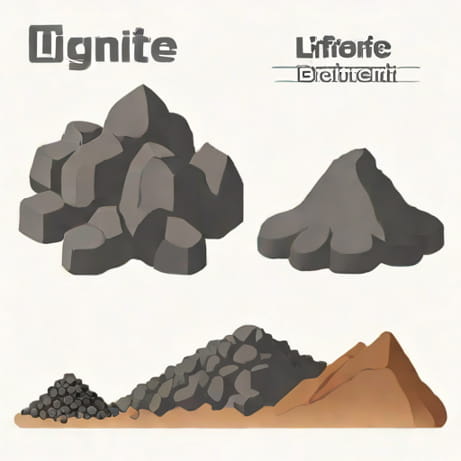
Coal is one of the most important fossil fuels used worldwide for electricity generation, industrial processes, and heating. It is classified into different types based on carbon content, energy value, and the degree of metamorphism it has undergone. Among the most common types of coal are lignite, bituminous, and anthracite. Understanding the differences between these types of coal is essential for energy production, environmental considerations, and industrial applications. Each type has unique characteristics, uses, and limitations, which makes them suitable for different purposes. This topic provides a detailed comparison of lignite, bituminous, and anthracite coal, highlighting their properties, formation, advantages, and disadvantages.
Formation of Coal Types
Coal is formed from the remains of plants that accumulated in swampy environments millions of years ago. Over time, heat, pressure, and geological processes transformed these plant remains into peat and eventually into coal through a process called coalification. The degree of coalification determines whether coal is classified as lignite, bituminous, or anthracite. The longer and more intense the coalification process, the higher the carbon content and energy value of the coal.
Lignite Formation
Lignite, often called brown coal, is the lowest rank of coal. It is formed from peat that has undergone mild geological pressure and heat over a relatively short geological period. Lignite has a low carbon content, high moisture, and low energy density. Its formation is considered an early stage in the coalification process.
Bituminous Coal Formation
Bituminous coal is a middle-rank coal that has undergone higher pressure and heat than lignite. It has a higher carbon content, lower moisture, and higher calorific value compared to lignite. Bituminous coal is widely used in electricity generation and industrial processes due to its efficiency and energy output.
Anthracite Formation
Anthracite is the highest rank of coal, formed under extreme pressure and heat over millions of years. It has the highest carbon content, low moisture, and the highest energy density among the three types. Anthracite burns cleaner than lignite and bituminous coal, producing more heat and fewer impurities.
Physical Characteristics
The physical appearance and properties of coal vary significantly depending on the type. These characteristics influence their handling, storage, and usage.
Lignite
- Color Brown to dark brown.
- Texture Soft and crumbly.
- Moisture Content High, often up to 60%.
- Carbon Content Low, approximately 25-35%.
- Energy Value Low, around 10-20 MJ/kg.
Bituminous Coal
- Color Black with a shiny or dull surface.
- Texture Harder than lignite, compact.
- Moisture Content Moderate, typically 2-15%.
- Carbon Content Medium, approximately 45-85%.
- Energy Value Medium to high, around 24-35 MJ/kg.
Anthracite
- Color Jet black with a metallic luster.
- Texture Hard, dense, and brittle.
- Moisture Content Very low, less than 5%.
- Carbon Content Very high, 86-97%.
- Energy Value Very high, approximately 30-33 MJ/kg.
Chemical Composition
The chemical composition of coal primarily determines its combustion efficiency, heat output, and emission characteristics.
Lignite
Lignite has a relatively low carbon content, high hydrogen, oxygen, and moisture levels. It also contains volatile compounds that can lead to smoky combustion. Its low calorific value limits its use for long-distance energy transport and industrial applications.
Bituminous Coal
Bituminous coal has a higher carbon content and lower moisture content than lignite, making it more energy-efficient. It contains volatile matter that allows it to ignite easily, which is advantageous for electricity generation and steel manufacturing. Bituminous coal also has a moderate sulfur content, which can contribute to sulfur dioxide emissions during combustion.
Anthracite
Anthracite has the highest carbon content and the lowest levels of volatile compounds, moisture, and impurities. This makes it an excellent fuel for high-efficiency heating and industrial applications where clean combustion is desired. Its high fixed carbon content results in a slower, longer-lasting burn, producing intense heat with minimal smoke.
Uses and Applications
The uses of coal depend largely on its type, carbon content, and calorific value. Each type serves distinct purposes in energy production, industrial processes, and domestic heating.
Lignite Applications
- Primarily used in electricity generation at power plants near the mining sites due to its low energy density.
- Occasionally used in low-temperature industrial processes.
- Can be converted to synthetic natural gas or liquid fuels through chemical processes.
Bituminous Coal Applications
- Extensively used in thermal power plants for electricity generation.
- Used in the steel industry for coke production, an essential ingredient in steel-making.
- Applicable in cement manufacturing and other industrial processes.
- Some high-quality bituminous coal is used for domestic heating in certain regions.
Anthracite Applications
- Primarily used for residential and commercial heating due to clean combustion.
- Used in metallurgical processes requiring high-temperature heat.
- Employed in water filtration systems as a filter medium.
- Preferred in applications where minimal smoke and pollutants are desired.
Advantages and Disadvantages
Each type of coal has its advantages and limitations, which influence its selection for specific uses.
Lignite
- Advantages Abundant, easy to mine, and inexpensive.
- Disadvantages Low calorific value, high moisture, and produces more smoke and emissions.
Bituminous Coal
- Advantages High energy content, versatile for electricity and industrial use.
- Disadvantages Produces sulfur and other emissions; requires careful handling and storage.
Anthracite
- Advantages Highest energy content, clean combustion, long-lasting burn.
- Disadvantages Less abundant, harder to ignite, more expensive.
Understanding the differences between lignite, bituminous, and anthracite coal is essential for energy planning, industrial applications, and environmental management. Lignite, with its high moisture and low carbon content, is suitable for local electricity generation. Bituminous coal, with medium carbon content and higher calorific value, is versatile for power plants and steel production. Anthracite, the highest rank of coal, is valued for its clean, efficient combustion and industrial applications requiring intense heat. Choosing the right type of coal depends on factors such as energy needs, environmental considerations, and cost efficiency. Each type plays a critical role in meeting the global demand for energy and industrial processes, highlighting the importance of coal classification in modern energy management.