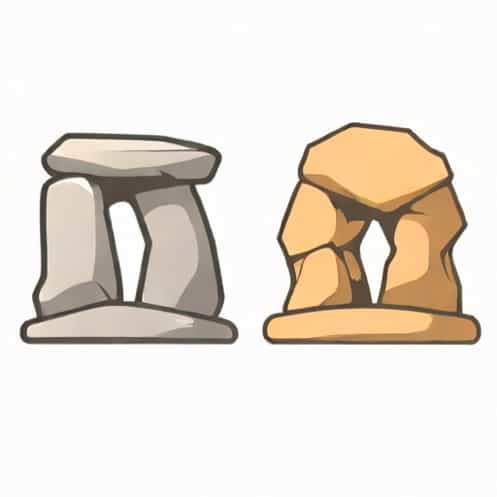
Throughout human history, stone tools and monuments have played a crucial role in understanding the evolution of societies and technologies. Among these, microliths and megaliths stand out as significant markers of prehistoric culture. While both involve stone, their size, function, and cultural significance differ greatly. Microliths are small, finely crafted stone tools used primarily in hunting and daily activities, whereas megaliths are large stone structures that served ceremonial, religious, or communal purposes. Understanding the difference between microlith and megalith provides insights into human ingenuity, social organization, and the development of technology across different historical periods.
Understanding Microliths
Microliths are small, often blade-like stone tools typically less than 5 centimeters in length. They were primarily produced during the Mesolithic period, although some regions continued using them into the Neolithic. These tiny tools were often part of composite tools, meaning they were set into wood, bone, or antler handles to create spears, arrows, sickles, and knives. Their small size allowed for efficient production, ease of transport, and adaptability in various tasks.
Characteristics of Microliths
- Small and finely crafted, usually under 5 centimeters in length
- Made from flint, chert, or other easily workable stones
- Used in combination with other materials to form composite tools
- Produced using techniques such as flaking and pressure retouch
Microliths reflect advanced craftsmanship for their time, demonstrating the ability of prehistoric humans to manipulate materials precisely for practical purposes. They also indicate the development of hunting strategies and agricultural tools, supporting the survival and advancement of early communities.
Understanding Megaliths
Megaliths, in contrast, are large stone structures or monuments created during the Neolithic and Bronze Age periods. The term megalith literally means large stone, and these structures were typically erected without the use of mortar. Megaliths served ceremonial, religious, and commemorative purposes, often marking graves, sacred sites, or communal spaces. Famous examples include Stonehenge in England, the dolmens of Korea, and the menhirs of Brittany, France. Their construction required coordinated labor, suggesting the presence of organized societies with social hierarchies.
Characteristics of Megaliths
- Large, heavy stones often weighing several tons
- Used for ceremonial, religious, or funerary purposes
- Construction required organized labor and planning
- Found in various forms, including dolmens, menhirs, and stone circles
Megaliths are significant not just as architectural achievements, but also as cultural symbols. They reflect the spiritual beliefs, communal efforts, and social structures of prehistoric communities. The effort required to quarry, transport, and erect these stones highlights the importance placed on rituals and memorials in early human society.
Key Differences Between Microliths and Megaliths
Although both microliths and megaliths involve stones, they are fundamentally different in their purpose, size, and cultural context. Recognizing these differences is essential for understanding prehistoric human development.
Size and Physical Characteristics
Microliths are small, often portable tools, whereas megaliths are enormous stones forming permanent structures. Microliths were designed for practicality and efficiency in everyday tasks, while megaliths were designed for long-lasting symbolic or ceremonial purposes.
Function and Use
Microliths were functional tools used in hunting, cutting, and crafting. They enhanced survival and productivity. Megaliths, on the other hand, had symbolic, ritualistic, or commemorative functions. They often represented spiritual beliefs, community identity, or memorialization of important events or individuals.
Technological and Labor Requirements
Creating microliths required skilled craftsmanship but minimal labor compared to megaliths. A single individual could manufacture multiple microliths efficiently. Megalith construction demanded organized labor, engineering knowledge, and careful planning, reflecting complex social coordination.
Cultural and Historical Significance
Microliths provide insights into daily life, survival strategies, and technological innovation. Megaliths reveal information about social organization, religious practices, and communal values. Together, they offer a comprehensive understanding of how prehistoric humans interacted with their environment and with each other.
Examples and Regional Variations
Microlith Examples
- Small flint blades found in European Mesolithic sites
- Geometric microliths from Indian Mesolithic cultures
- Composite arrowheads in African prehistoric sites
Megalith Examples
- Stonehenge in England, a ceremonial stone circle
- Dolmens of Korea, used as burial chambers
- Menhirs in Brittany, France, standing stones with ritual significance
Regional variations reflect the adaptation of human societies to their local environments, available materials, and cultural beliefs. Microliths show technological adaptation for survival, while megaliths demonstrate community collaboration for spiritual and social purposes.
The difference between microlith and megalith lies in their size, function, construction, and cultural significance. Microliths are small, functional tools used in daily activities such as hunting and crafting, while megaliths are large stone structures serving ceremonial, religious, or commemorative purposes. Both types of stone artifacts provide valuable insights into the technological capabilities, social organization, and cultural practices of prehistoric humans. Studying microliths and megaliths together allows us to understand how early societies balanced practical survival with symbolic and communal needs, offering a comprehensive view of human development through stone technologies and monuments.