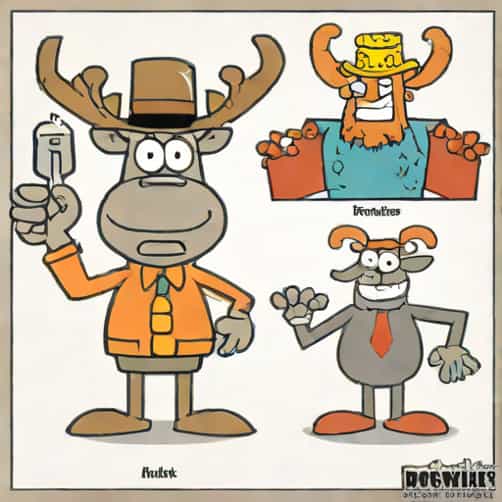
The television show The Adventures of Rocky and Bullwinkle and Friends is one of the most beloved animated series in American pop culture history. First airing in 1959, the show captured audiences with its witty humor, clever writing, and unique blend of satire. Each of the episodes of Rocky and Bullwinkle featured not only the adventures of the flying squirrel and the moose but also a variety of smaller segments that gave the series a distinctive format. Even decades later, fans continue to revisit these episodes for their humor and timeless political and social commentary.
Overview of the Show’s Structure
The episodes of Rocky and Bullwinkle were not traditional in format. Rather than a single continuous storyline, each episode consisted of several short segments. These included the main Rocky and Bullwinkle story, as well as recurring mini-shows like Fractured Fairy Tales, Peabody’s Improbable History, Aesop and Son, and Dudley Do-Right. Each segment contributed to the show’s mix of satire, parody, and wordplay, making it enjoyable for both children and adults.
Main Storyline The Adventures of Rocky and Bullwinkle
At the heart of every episode was the continuing story of Rocket J. Squirrel (Rocky) and Bullwinkle J. Moose. These two lovable characters often found themselves in humorous and exaggerated situations, frequently involving their arch-enemies Boris Badenov and Natasha Fatale. The storylines were serialized, meaning they would continue across multiple episodes, keeping viewers coming back each week to see what happened next. Their adventures often included elements of political satire and social commentary, cleverly disguised within the antics of talking animals.
Popular Segments within the Episodes
One reason why the episodes of Rocky and Bullwinkle remain so iconic is the inclusion of multiple mini-segments. Each one had its own unique characters, humor, and message.
- Fractured Fairy TalesThese were comedic retellings of classic fairy tales with unexpected twists. Familiar stories like Cinderella or Sleeping Beauty were reimagined with modern humor and ironic endings.
- Peabody’s Improbable HistoryThis segment featured the brilliant dog Mr. Peabody and his boy Sherman as they used their WABAC Machine to travel through time and experience historical events-usually correcting some humorous historical inaccuracy along the way.
- Dudley Do-RightThis part of the show parodied old melodramas, following a dim-witted yet brave Canadian Mountie named Dudley Do-Right as he constantly tried (and often failed) to rescue Nell Fenwick from the villainous Snidely Whiplash.
- Aesop and SonThese were modern interpretations of Aesop’s Fables, often ending with a humorous or ironic moral that poked fun at modern society.
Famous Episode Arcs
Rocky and Bullwinkle’s adventures were typically broken into multi-episode arcs, allowing the humor and plot to develop over time. Some of the most memorable storylines included
- Jet Fuel Formula– The very first storyline of the series, in which Bullwinkle accidentally discovers a formula that can power rockets. This draws the attention of spies Boris and Natasha, who try to steal it for their country, Pottsylvania.
- Metal-Munching Mice– In this arc, Rocky and Bullwinkle encounter robotic mice that threaten to eat the world’s television antennas, causing chaos across the globe.
- Upsidaisium– Bullwinkle discovers a mountain that floats because it contains a rare anti-gravity metal called Upsidaisium. Once again, Boris and Natasha try to seize it for their evil purposes.
- Banana Formula– A story in which a secret formula involving bananas becomes the center of international intrigue.
- Moosylvania– One of the later storylines, where Bullwinkle tries to make his home island of Moosylvania into an official U.S. state, only to get caught in another absurd series of misadventures.
Satire and Social Commentary in the Episodes
What truly made the episodes of Rocky and Bullwinkle stand out was their intelligent humor. Though the show was animated and marketed to children, much of its comedy was aimed at adults. Through clever wordplay and parody, the series often poked fun at Cold War politics, mass media, and bureaucracy. The characters of Boris and Natasha, for example, were thinly veiled caricatures of Cold War-era spies, while Fearless Leader represented the kind of authoritarianism that was common in political satire of the time.
The humor was also self-aware. The narrator frequently broke the fourth wall, commenting directly on the absurdity of the story or addressing the audience. This meta-humor set Rocky and Bullwinkle apart from other cartoons of the 1960s and made it a precursor to later satirical animations like The Simpsons and Futurama.
Production and Voice Cast
The episodes of Rocky and Bullwinkle were created by Jay Ward and Alex Anderson, with scripts written by some of the most talented comedy writers of the era. June Foray provided the voice of Rocky and Natasha, while Bill Scott voiced Bullwinkle and Fearless Leader. Paul Frees and William Conrad also lent their voices to multiple characters, adding to the show’s rich and memorable soundscape. Despite the show’s limited animation style, the clever writing and strong voice performances kept it engaging and funny.
Broadcast History
The show originally aired from 1959 to 1964, first as Rocky and His Friends and later as The Bullwinkle Show. Over time, the episodes were syndicated and shown repeatedly on television, introducing new generations to the witty duo. Even today, the show’s influence continues through streaming platforms, where old fans can revisit the series and new audiences can discover its charm.
Legacy of Rocky and Bullwinkle Episodes
Decades after its first airing, The Adventures of Rocky and Bullwinkle and Friends remains a landmark in animation history. The show’s mix of serialized storytelling, sharp humor, and memorable characters paved the way for future animated comedies. The episodes continue to be analyzed for their satirical edge and their ability to balance childlike fun with mature wit.
In addition to influencing television, the show also led to a variety of spin-offs, merchandise, and even a feature film adaptation. Its timeless humor ensures that it remains relevant, even as animation technology and styles evolve. Fans often revisit their favorite episodes not just for nostalgia, but for the kind of clever wordplay and social insight that feels surprisingly modern.
Why the Episodes Still Matter Today
In an age of fast-paced digital entertainment, the episodes of Rocky and Bullwinkle remind audiences that storytelling and humor don’t need flashy visuals to make an impact. The show’s success lies in its ability to combine entertainment with subtle critique. Its blend of political satire, literary parody, and absurd humor remains unmatched in the world of animation.
Whether you’re watching for the first time or reliving the adventures of your childhood, the episodes of Rocky and Bullwinkle continue to offer a refreshing mix of clever writing and heartfelt charm. The legacy of Rocky the flying squirrel and Bullwinkle the moose endures, ensuring that their timeless adventures will keep audiences laughing for generations to come.