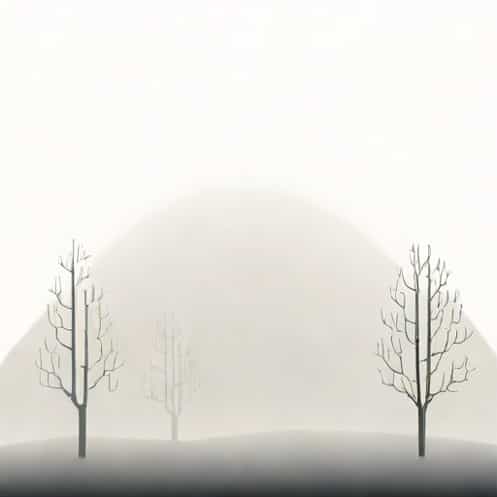
Fog is a common weather phenomenon that can drastically affect visibility and our perception of the environment. It consists of tiny water droplets suspended in the air near the ground, creating a thick, misty appearance. Many people wonder whether fog is transparent or translucent because it partially obstructs light and affects how clearly we can see objects through it. Understanding the optical properties of fog is not only important for scientific curiosity but also for practical purposes such as driving, aviation, and outdoor activities. By exploring the nature of fog, we can better comprehend how light interacts with suspended water droplets and why visibility varies in different fog conditions.
Definition of Fog
Fog forms when air near the ground cools to its dew point, causing water vapor to condense into tiny liquid droplets. These droplets are so small that they remain suspended in the air, creating a cloud at ground level. Fog can occur in a variety of conditions, including after rainfall, during high humidity, or when warm air meets cooler surfaces. The density and thickness of fog can vary widely, influencing its visual effects and the perception of transparency or translucency.
Transparent vs. Translucent
To determine whether fog is transparent or translucent, it is important to understand these two optical terms. A transparent material allows light to pass through clearly, so objects on the other side can be seen without distortion. Glass and clear water are examples of transparent materials. Translucent materials, on the other hand, allow light to pass through but scatter it, causing objects behind them to appear blurred or indistinct. Frosted glass and wax paper are common examples of translucent materials. Fog interacts with light in a way that makes it more aligned with one of these categories depending on its density.
The Optical Properties of Fog
Fog consists of countless tiny water droplets, each capable of scattering light. This scattering effect diffuses sunlight or artificial light, reducing clarity and sharpness. When light passes through a dense fog, the scattering causes objects to appear hazy, making the fog seem translucent. On days when fog is lighter, fewer droplets are present, and light can pass through more easily, giving the impression of partial transparency. Therefore, the perceived transparency or translucency of fog depends on its thickness and the size of the droplets.
Factors Affecting Fog’s Appearance
- DensityDense fog contains a higher concentration of droplets, increasing light scattering and making it appear more translucent.
- Droplet SizeLarger droplets scatter more light, creating a thicker, more opaque effect, whereas smaller droplets allow more light to pass, enhancing transparency.
- Lighting ConditionsFog can appear different under sunlight, streetlights, or moonlight. Bright light can penetrate thinner fog, making it seem more transparent, while dim light highlights scattering effects.
- DistanceObjects viewed through a short distance of fog may be clearer, giving a transparent impression, while long distances increase blurriness and translucency.
Practical Implications of Fog’s Optical Properties
Understanding whether fog is transparent or translucent has practical applications in everyday life. For drivers, dense fog reduces visibility, making roads appear hazy and making it difficult to see other vehicles or obstacles. Aviation is particularly sensitive to fog conditions, as pilots must navigate through areas where light scattering can obscure runways or other aircraft. Photographers and filmmakers also consider fog’s translucency to create atmospheric effects in their work, manipulating lighting to achieve desired visual outcomes.
Scientific Measurement of Fog
Meteorologists measure fog visibility using tools such as transmissometers or visibility sensors, which quantify how far light can travel through the fog before being scattered. These measurements help categorize fog density and its effects on transparency. For example, when visibility is reduced to less than one kilometer, fog is considered dense and predominantly translucent. When visibility exceeds several kilometers, fog is lighter, and transparency is more apparent. These distinctions are crucial for safety, weather forecasting, and research purposes.
Comparisons with Other Phenomena
Fog is often compared to clouds, smoke, and mist because all involve suspended ptopics or droplets that interact with light. Clouds, which are usually higher in the atmosphere, also scatter light and are generally considered translucent. Mist, which is lighter than fog, allows more light to pass through and can sometimes appear closer to transparent. Smoke contains solid ptopics and scatters light differently, often appearing more opaque. These comparisons help illustrate the spectrum between transparency and translucency in natural and environmental phenomena.
Everyday Observations
Everyday experiences help people understand fog’s visual properties. On a light foggy morning, one may still see distant trees or buildings, giving the impression of transparency. As the fog thickens, objects become increasingly blurred, demonstrating translucency. Streetlights in urban areas often reveal fog’s scattering effect at night, creating a glowing halo around the light source. These observations highlight how the human eye perceives fog differently under varying conditions and how environmental factors affect its optical behavior.
Fog is primarily translucent due to the scattering of light by tiny water droplets suspended in the air, although under very light conditions it may appear partially transparent. Its density, droplet size, lighting conditions, and distance all influence how we perceive it. Understanding the optical properties of fog has practical significance for safety, navigation, photography, and scientific research. By studying how fog interacts with light, we gain deeper insight into natural atmospheric phenomena and the complex ways in which visibility and perception are affected in our everyday environment.