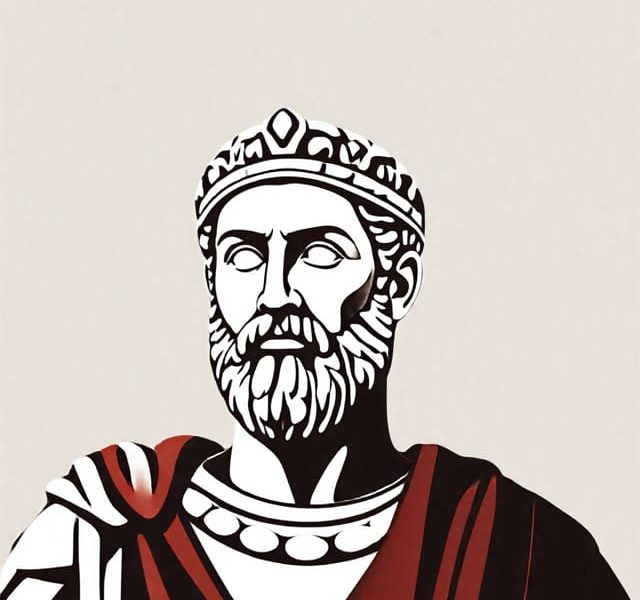
Gaius Julius Caesar Augustus Germanicus, more widely known by his nickname Caligula, is one of the most infamous Roman emperors in history. His reign, though brief, was marked by extraordinary extravagance, cruelty, and controversy. The legacy of Caligula has intrigued historians and scholars for centuries, as accounts of his behavior range from eccentric to outright insane. As the third emperor of Rome, Caligula’s name has become synonymous with tyranny and excess, yet beneath the scandal lies a complex story shaped by politics, trauma, and power.
Early Life and Family Background
A Lineage of Power
Caligula was born on August 31, 12 CE, in Antium, into one of Rome’s most prominent families. His father, Germanicus, was a beloved Roman general and the adopted son of Emperor Tiberius. His mother, Agrippina the Elder, was the granddaughter of Augustus, Rome’s first emperor. This connection made Caligula a direct descendant of the Julio-Claudian dynasty, Rome’s most powerful ruling family.
The Origin of Caligula
His nickname Caligula means little boots in Latin, derived from the miniature military boots (caligae) he wore as a child while accompanying his father on campaigns. Roman soldiers affectionately gave him the nickname, though he reportedly disliked it as an adult.
Rise to Power
A Childhood Marked by Tragedy
Caligula’s early life was plagued by political intrigue and loss. His father died under mysterious circumstances when Caligula was only seven, leading to suspicion that Emperor Tiberius was involved. His mother and two of his brothers were later arrested and died under Tiberius’s regime, leaving Caligula as one of the few surviving members of his immediate family.
Adoption by Tiberius
Despite the family tragedy, Caligula was brought to live with Emperor Tiberius on the island of Capri. There, he reportedly learned the inner workings of imperial politics, carefully concealing any ambitions or emotions. When Tiberius died in 37 CE, Caligula, then 24, became emperor with the support of the Praetorian Guard.
The First Months as Emperor
Popular Beginnings
Caligula’s initial months as emperor were met with enthusiasm. He granted bonuses to soldiers, ended politically motivated trials, and recalled exiles. Romans hoped his rule would be a return to the glory days of Augustus. He was praised for being generous, charming, and accessible to the people.
Sudden Illness and Change
After only a few months in power, Caligula fell gravely ill. Though he recovered, many ancient sources claim that his personality changed drastically after the illness. He became increasingly paranoid, erratic, and obsessed with absolute power. Some historians suggest that a brain condition may have been responsible for the dramatic behavioral shift.
Controversial Acts and Tyranny
Abuse of Power
Caligula soon turned to acts of cruelty and extravagance. He is said to have executed senators and nobles without trial, seized property, and declared himself a living god. His desire for worship reached the point where he ordered temples built in his honor and demanded that statues of deities be replaced with his likeness.
Strained Relationship with the Senate
Caligula’s relationship with the Roman Senate was marked by hostility. He viewed the senators with suspicion and contempt, often humiliating them publicly. He made decisions without consulting them and even threatened to appoint his horse, Incitatus, as consul either as a mockery of the institution or a display of his unchecked authority.
Public Spectacles and Construction Projects
Lavish Spending
Caligula drained the imperial treasury with extravagant games, feasts, and construction projects. He built luxurious palaces, floating barges, and even a temporary floating bridge across the Bay of Baiae so he could ride across it in a chariot wearing Alexander the Great’s armor.
Notable Structures
Despite his excesses, Caligula initiated several building projects, including aqueducts and temples. Some of these, like the Aqua Claudia and Anio Novus aqueducts, were completed by later emperors and played a vital role in Roman infrastructure.
Foreign Policy and Military Campaigns
Invasion Plans and Eccentric Deeds
Caligula’s approach to military affairs was erratic. He planned campaigns against Britain and Germany but achieved little. One infamous episode describes him ordering his soldiers to collect seashells as spoils of war from a supposed battle against Neptune, the god of the sea. Though this story may be exaggerated, it contributed to his image as unhinged.
Relations with the Provinces
Caligula’s rule extended over the provinces of the Roman Empire, but his erratic behavior caused confusion and fear among local governors and client kings. He deposed some rulers and installed others based on favoritism, further destabilizing Roman control in some areas.
Assassination and Aftermath
The Plot to Kill the Emperor
By 41 CE, Caligula had alienated almost every faction of Roman society the Senate, the army, and even members of his own Praetorian Guard. A group of officers, led by Cassius Chaerea, organized his assassination. Caligula was stabbed to death in a palace corridor, and his wife and daughter were also murdered to prevent a dynasty from forming.
Succession and Legacy
After his death, Caligula’s uncle Claudius was declared emperor. The Roman Senate briefly considered restoring the Republic but failed. Caligula’s reign left a powerful legacy of tyranny that shaped how later emperors were viewed. Despite attempts by Claudius to erase Caligula’s memory, his story endured in the writings of Suetonius, Cassius Dio, and other ancient historians.
Historical Interpretations
Madness or Malice?
The question of whether Caligula was truly insane or merely cruel remains debated. Ancient sources often portrayed him as a madman, but modern scholars consider the possibility that these accounts were exaggerated or politically motivated. His reign lasted just four years, making it difficult to separate fact from rumor.
Legacy in Culture
Caligula has become a symbol of corrupt power in popular culture. He appears in literature, film, and television as a cautionary tale of what happens when authority goes unchecked. Though the real Caligula may have been more complex than the caricature, his story continues to fascinate and provoke discussion.
Gaius Julius Caesar Augustus Germanicus, or Caligula, remains one of the most enigmatic figures in Roman history. His rise from a beloved youth to a reviled tyrant is a story of trauma, power, and unchecked ambition. Whether remembered for madness or misrule, his reign serves as a powerful reminder of how absolute power can corrupt absolutely. As historians continue to explore ancient sources, the full picture of Caligula’s life and rule may never be entirely clear but his impact on the Roman Empire, and on history itself, is undeniable.