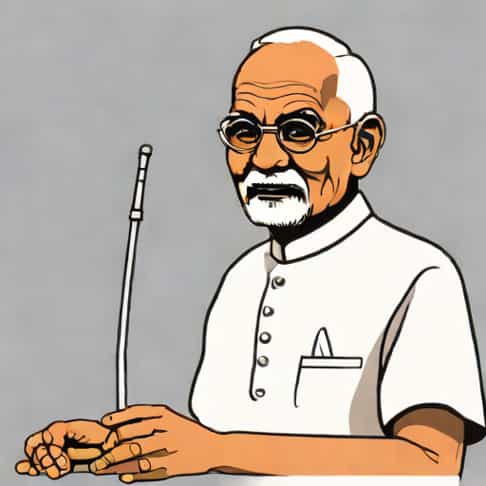
Nitish Kumar is often described as a Gandhian statesman of Bihar, a label that reflects both his political style and his personal philosophy. In a political landscape frequently marked by sharp rhetoric and personality-driven leadership, Nitish Kumar has built a reputation for simplicity, discipline, and a focus on governance. His long public life, marked by multiple terms as Chief Minister of Bihar, has made him one of the most influential regional leaders in modern Indian politics. Understanding his Gandhian image requires looking beyond slogans and examining his values, decisions, and approach to public service.
Early Life and Political Foundations
Nitish Kumar was born in Bihar and grew up in an environment shaped by social movements and political debates. From an early age, he was exposed to ideas of social justice, equality, and ethical leadership. These ideas would later become central to his public identity.
His political journey began during a time when student movements and grassroots activism played a significant role in shaping national discourse. Influenced by leaders who emphasized moral politics, Nitish Kumar developed a strong belief in clean governance and institutional integrity.
The Gandhian Influence on His Politics
When people refer to Nitish Kumar as a Gandhian statesman of Bihar, they are pointing to more than symbolic gestures. Gandhian principles such as simplicity, non-aggression, discipline, and service to the poor are often associated with his political conduct.
Simplicity in Personal Life
Nitish Kumar is known for maintaining a modest lifestyle despite holding high office for many years. He has avoided displays of wealth and personal luxury, reinforcing an image of a leader focused on service rather than self-promotion.
This personal simplicity has helped strengthen his credibility among ordinary citizens, especially in a state where poverty and inequality have historically been major challenges.
Ethics and Governance
A core Gandhian idea is that means are as important as ends. Nitish Kumar has frequently emphasized transparent administration, rule of law, and institutional accountability. His governance model has focused on reducing corruption and improving public systems rather than relying solely on populist rhetoric.
Rebuilding Bihar’s Image
When Nitish Kumar assumed leadership in Bihar, the state faced serious issues related to infrastructure, law and order, and public trust. Bihar was often portrayed as a symbol of underdevelopment and administrative failure.
As a Gandhian statesman of Bihar, Nitish Kumar focused on restoring dignity and confidence through steady reforms. He prioritized governance basics, believing that long-term development requires strong foundations.
Focus on Law and Order
One of his early priorities was improving law and order. By strengthening policing and administrative discipline, his government sought to create an environment where citizens felt safer and businesses felt more confident investing in the state.
This emphasis reflected Gandhian thought, where social harmony and justice are essential for progress.
Infrastructure and Public Services
Nitish Kumar placed strong emphasis on roads, schools, healthcare facilities, and electricity. Rather than pursuing dramatic announcements, his approach focused on consistent implementation.
Improving basic services helped change everyday life for millions of people, especially in rural areas.
Social Reform and Inclusive Development
Another reason Nitish Kumar is often called a Gandhian statesman of Bihar is his focus on social reform. He has repeatedly spoken about the importance of dignity, equality, and empowerment.
Women’s Empowerment
His policies have included measures aimed at increasing women’s participation in public life. From local governance to education, initiatives were designed to expand opportunities for women and girls.
This focus aligns with Gandhian values that emphasize social upliftment as a collective responsibility.
Education and Youth
Nitish Kumar has also highlighted education as a tool for long-term transformation. Investments in schools and scholarships aimed to create opportunities for future generations.
By focusing on education rather than short-term gains, his leadership reflected patience and belief in gradual change.
Political Pragmatism and Moral Debate
While Nitish Kumar is admired for his Gandhian image, his political career has also been marked by strategic decisions and shifting alliances. These choices have sometimes sparked debate about how Gandhian principles apply in practical politics.
Supporters argue that flexibility is necessary to protect governance goals, while critics question whether frequent political realignments dilute moral consistency.
Leadership Style and Communication
Unlike many contemporary leaders, Nitish Kumar is not known for flamboyant speeches or aggressive campaigning. His communication style is measured and policy-oriented.
This understated approach reinforces his image as a Gandhian statesman of Bihar, someone who believes leadership should be calm, reasoned, and focused on results.
Public Perception and Legacy
Public opinion about Nitish Kumar varies across regions and social groups. Many credit him with improving governance and restoring order, while others criticize the pace of economic growth or political decisions.
However, even critics often acknowledge his administrative discipline and personal integrity, qualities that are increasingly rare in politics.
Gandhian Values in Modern Indian Politics
The relevance of Gandhian values in today’s political environment is frequently debated. Nitish Kumar’s career offers an example of how these principles can be adapted to modern governance.
Rather than symbolic acts, his Gandhian approach emphasizes everyday administration, ethical decision-making, and respect for institutions.
Challenges and Future Outlook
As Bihar continues to face challenges related to employment, migration, and economic growth, the expectations from its leadership remain high. The question for many observers is how Gandhian principles can guide solutions in an increasingly complex world.
Nitish Kumar’s future role, whether as a governing leader or a political elder, will likely continue to influence debates about ethics and governance in India.
The description of Nitish Kumar as a Gandhian statesman of Bihar captures both his ideals and his administrative approach. Through simplicity, emphasis on governance, and commitment to social reform, he has shaped Bihar’s political narrative over several decades. While his career includes controversy and political complexity, his focus on ethical leadership and institutional strength stands out. In a time when politics often prioritizes spectacle over substance, Nitish Kumar’s Gandhian influence offers a model of leadership rooted in responsibility, restraint, and long-term vision.