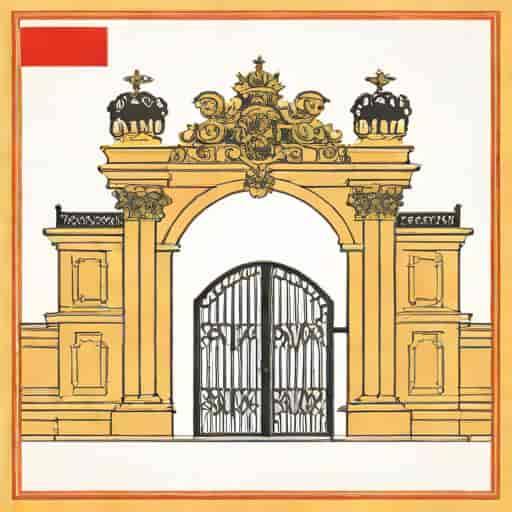
The Gate of Brandenburg, commonly known as the Brandenburg Gate, is one of the most iconic landmarks in Germany and a symbol of the city of Berlin. Its neoclassical design, rich history, and cultural significance make it a must-visit destination for tourists and an important symbol for locals. Built in the late 18th century, the Brandenburg Gate has witnessed numerous historical events, from royal ceremonies to political movements and public celebrations. Its location in the heart of Berlin, along with its impressive architectural features, reflects both the historical grandeur and the modern identity of Germany. Exploring the Gate of Brandenburg offers insight into European history, architecture, and the role of national symbols in shaping collective memory.
History of the Gate of Brandenburg
The Brandenburg Gate was commissioned by King Frederick William II of Prussia and completed in 1791. Designed by Carl Gotthard Langhans, the gate was inspired by the Propylaea, the entrance to the Acropolis in Athens, reflecting neoclassical ideals of symmetry, proportion, and grandeur. Initially, the gate served as a city entrance, marking the boundary of Berlin and symbolizing peace. Its original function as a ceremonial gateway gave way to broader symbolic roles as German history unfolded over the centuries.
Napoleonic Era and the Quadriga
One of the most notable features of the Brandenburg Gate is the Quadriga, a chariot drawn by four horses, designed by Johann Gottfried Schadow. Originally intended as a symbol of peace, the Quadriga was taken to Paris by Napoleon in 1806 after his victory over Prussia. It was returned to Berlin in 1814 following Napoleon’s defeat, and the symbol was reinterpreted as a representation of victory. The Quadriga remains a central element of the gate, embodying resilience, triumph, and historical continuity.
19th and Early 20th Century
Throughout the 19th century, the Brandenburg Gate became a focal point for public gatherings and state ceremonies. It was part of Berlin’s grand boulevard, Unter den Linden, and witnessed numerous political events, parades, and celebrations. The gate continued to stand as a symbol of German unity and national pride during periods of political change, including the unification of Germany in 1871. Its cultural importance grew as Berlin developed into a major European capital.
The Gate During the Cold War
Following World War II, Berlin was divided into East and West sectors, with the Brandenburg Gate located just inside East Berlin. The construction of the Berlin Wall in 1961 turned the gate into a symbol of division, as it was inaccessible to the public and surrounded by border fortifications. During this period, the gate represented the separation of East and West Germany and became a potent symbol in Cold War imagery. Despite its restricted access, the Brandenburg Gate remained a site of political significance, often featured in international news and protest movements.
Symbol of Reunification
When the Berlin Wall fell in 1989, the Brandenburg Gate emerged as a global symbol of reunification and peace. Thousands of people gathered at the gate to celebrate the end of decades of division, and it became a site for public celebrations, concerts, and political events. Today, the gate represents unity, freedom, and the resilience of Berlin, attracting millions of visitors each year who come to witness its historical and cultural significance firsthand.
Architectural Features of the Brandenburg Gate
The Brandenburg Gate stands approximately 26 meters high and features twelve Doric columns, six on each side, forming five passageways. The central passageway, historically reserved for royalty, is flanked by smaller passages for other traffic. The neoclassical design emphasizes symmetry, proportion, and the grandeur typical of late 18th-century architecture. The Quadriga atop the gate adds dynamic visual interest and historical symbolism, making the structure immediately recognizable.
Materials and Design
The gate was constructed primarily of sandstone, giving it a warm, natural appearance that contrasts with the modern buildings surrounding it. Its Doric columns reflect classical Greek architectural influence, while sculptural details, including reliefs and statues, contribute to its decorative and symbolic value. Restoration efforts over the years have preserved the gate’s original aesthetic while reinforcing its structural integrity for contemporary urban use.
Visiting the Brandenburg Gate
The Brandenburg Gate is located at Pariser Platz, a central square in Berlin, making it easily accessible by public transportation and foot traffic. Visitors can walk through the gate, explore its surroundings, and learn about its historical significance through guided tours or informational plaques. The area is lively with cultural events, street performances, and nearby attractions such as the Reichstag building and Berlin’s Tiergarten park. Photographs of the gate are popular among tourists, and the Quadriga provides an impressive focal point for pictures at any time of day.
Events and Celebrations
The Brandenburg Gate frequently hosts public events, including New Year’s celebrations, political rallies, concerts, and national commemorations. Its open plaza allows large crowds to gather, and its central location makes it ideal for city-wide festivities. Events at the gate continue to reinforce its role as a symbol of Berlin’s cultural and historical identity, connecting past and present in meaningful ways.
Cultural Significance
Beyond its architectural beauty, the Brandenburg Gate holds profound cultural significance. It represents peace, resilience, and unity throughout Germany’s turbulent history. For locals, the gate is a symbol of Berlin’s survival and transformation, while for international visitors, it embodies the complex narratives of European history. The Brandenburg Gate has inspired art, literature, and film, further cementing its status as an enduring cultural icon.
Symbolism and Legacy
The gate’s enduring symbolism lies in its ability to represent multiple facets of German history peace, conflict, division, and reunification. Its neoclassical style conveys timeless elegance, while the Quadriga emphasizes victory and triumph over adversity. By serving as a site for public expression, ceremonies, and cultural gatherings, the Brandenburg Gate continues to influence both local and international perceptions of Berlin and Germany as a whole.
The Gate of Brandenburg, or Brandenburg Gate, is much more than an architectural landmark. It is a historical witness, a symbol of resilience, and a cultural icon that tells the story of Berlin and Germany through centuries of change. From its neoclassical design to its symbolic Quadriga, the gate captures the imagination of historians, tourists, and citizens alike. Whether standing as a reminder of past divisions, a site of celebration, or a masterpiece of design, the Brandenburg Gate remains central to Berlin’s identity. Visiting the gate allows people to connect with history, appreciate architectural beauty, and engage with a symbol that continues to inspire unity, freedom, and cultural pride across generations.