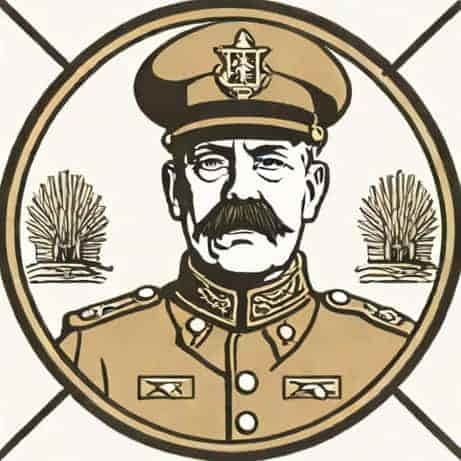
The American Expeditionary Force (AEF) played a pivotal role in World War I, marking the first major deployment of United States troops to the European front. Commanded by a single general, the AEF was instrumental in strengthening Allied forces and ultimately contributing to the end of the conflict. The general of the American Expeditionary Force is one of the most notable figures in U.S. military history, recognized for leadership, strategic planning, and coordination of American forces in a complex multinational theater. Understanding his contributions provides insight into the challenges faced by the United States during its entry into World War I and highlights the impact of American military leadership on the outcome of the war.
Introduction to the American Expeditionary Force
The American Expeditionary Force was created in response to the United States entering World War I in April 1917. Its primary purpose was to support the Allied powers, particularly France and Britain, against the Central Powers led by Germany. The AEF consisted of volunteers and conscripted soldiers who underwent rapid training before being deployed to Europe. The force was tasked with integrating into an ongoing conflict while maintaining the identity and effectiveness of American military units. The general in charge of the AEF faced the dual challenge of leading inexperienced troops and coordinating with seasoned Allied commanders.
The General in Command
General John J. Pershing was appointed as the commander of the American Expeditionary Force in 1917. Known as Black Jack due to his earlier service with the U.S. Army and strict discipline, Pershing was a career military officer with extensive experience in frontier campaigns and conflicts in the Philippines and Mexico. His leadership style emphasized strict training, organization, and maintaining the independence of American forces. Pershing believed that the AEF should operate as a cohesive and self-sufficient unit rather than being dispersed as replacements for Allied units, which distinguished his approach from other commanders at the time.
Pershing’s Leadership Style
General Pershing’s leadership of the AEF combined strategic vision with meticulous attention to training and discipline. He understood that the United States was sending relatively inexperienced troops into a highly advanced European battlefield dominated by trench warfare, artillery, and chemical weapons. Pershing insisted on rigorous training in combat tactics, marksmanship, and coordination with artillery and support units. This preparation allowed American soldiers to perform effectively in major offensives and contributed to their reputation as disciplined and reliable troops.
Key Principles of Pershing’s Command
- IndependencePershing emphasized that the AEF should fight as an independent American force, preserving national pride and operational cohesion.
- DisciplineHe enforced strict discipline to ensure order and efficiency, essential for inexperienced soldiers facing the complexities of modern warfare.
- TrainingExtensive pre-deployment training ensured that soldiers were familiar with modern weapons, battlefield tactics, and coordination with Allied units.
- CoordinationPershing worked closely with French and British commanders to integrate American forces into larger operations while maintaining strategic autonomy.
Challenges Faced by the AEF
The American Expeditionary Force faced numerous challenges upon arriving in Europe. Soldiers had to adjust to the scale and intensity of World War I combat, which included entrenched positions, machine guns, artillery bombardments, and gas attacks. Pershing also had to navigate logistical challenges, such as transporting thousands of troops, supplying adequate equipment, and coordinating movements across the Western Front. Additionally, integrating American forces with the Allied command structure required diplomatic skill and careful planning to avoid conflicts over strategy and deployment.
Major Campaigns
Under Pershing’s leadership, the AEF participated in several key campaigns that contributed significantly to the Allied victory
- Château-ThierryThe AEF played a critical role in halting the German advance in the summer of 1918.
- Belleau WoodAmerican forces displayed exceptional courage and tactical skill, earning a reputation for tenacity.
- Meuse-Argonne OffensiveThe largest American-led offensive of World War I, involving over a million U.S. troops, which contributed to breaking German defenses and hastening the end of the war.
Pershing’s Relationship with Allied Commanders
General Pershing maintained a professional but firm relationship with Allied leaders, including French General Ferdinand Foch and British commanders. Pershing’s insistence on operating independently sometimes led to tension, as Allied commanders initially preferred to integrate American troops into their existing units. However, Pershing’s approach ultimately proved successful, allowing the AEF to function effectively while contributing to coordinated Allied offensives. His diplomacy and strategic vision ensured that American forces were both respected and effective on the battlefield.
Legacy of the General of the AEF
General Pershing’s legacy extends beyond battlefield accomplishments. He became a symbol of American military leadership and national pride during World War I. His focus on discipline, training, and independence influenced the development of the modern U.S. Army and set a standard for future military operations. Pershing’s ability to lead a newly mobilized force in a foreign and complex theater demonstrated the importance of strong leadership in achieving military objectives.
Recognition and Honors
For his service during World War I, General Pershing received numerous awards and honors. He was promoted to General of the Armies, the highest possible rank in the United States Army, and received international recognition for his contributions to the Allied war effort. Monuments, memorials, and historical studies continue to commemorate his role as the commander of the AEF and highlight the impact of his leadership on the outcome of World War I.
Educational and Historical Impact
Pershing’s leadership of the AEF is studied in military academies and history courses as a model of effective command, logistical planning, and coalition warfare. His approach demonstrates the importance of balancing national pride, operational independence, and collaboration with allies in complex military operations. Historians often cite Pershing’s decisions as pivotal to the success of American forces and the eventual Allied victory in 1918.
The general of the American Expeditionary Force in World War I, General John J. Pershing, was a critical figure in U.S. military history. His leadership, strategic insight, and emphasis on discipline and training allowed the AEF to succeed in a challenging and unfamiliar European theater. Pershing’s insistence on maintaining an independent American force, while coordinating effectively with Allied commanders, ensured that U.S. troops played a decisive role in key battles and campaigns. His legacy continues to influence military leadership, education, and the historical understanding of World War I, highlighting the importance of preparation, courage, and effective command in shaping the course of history.