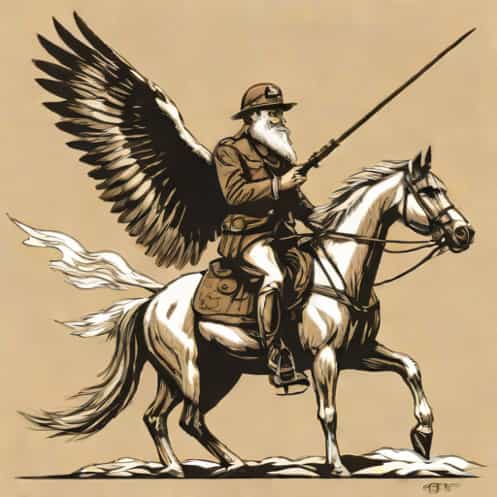
Harry Turtledove’s Southern Victory series is a monumental work in the genre of alternate history, captivating readers with its intricate exploration of a world where the Confederacy won the American Civil War. The series spans multiple novels and decades, imagining a 20th century shaped by a divided United States and a persistent struggle between North and South. Through detailed political, military, and social developments, Turtledove creates a universe that is both plausible and compelling, inviting readers to reconsider history and the profound consequences of pivotal events. This series is widely regarded as one of the most ambitious alternate history projects ever undertaken.
Overview of the Southern Victory Series
The Southern Victory series, also known as the Timeline-191 series, is set in an alternate timeline where the Confederate States of America successfully secede from the Union during the Civil War. Unlike historical reality, where the North ultimately triumphed, this divergence leads to a profoundly different 20th century. The series spans roughly 50 years of fictional history, covering both World Wars, political upheavals, and the technological evolution of warfare. Turtledove’s meticulous attention to detail allows readers to see how a Confederate victory would have influenced global and domestic developments, including diplomacy, economics, and culture.
Books in the Series
The series is composed of multiple novels, each contributing to a cohesive alternate history narrative
- The Great Wartrilogy exploring the alternate World War I scenario, focusing on both the European front and conflicts between the USA and CSA.
- American Empiretrilogy examining the political and social dynamics of the interwar period, including technological progress and foreign relations.
- Settling Accountstrilogy detailing the alternate World War II scenario, the ultimate confrontation between the USA and CSA, and the consequences for the global balance of power.
Each trilogy builds on the last, carefully integrating historical plausibility with imaginative divergence, creating a comprehensive alternate history timeline.
Historical Divergence and Its Implications
The central divergence point in the Southern Victory series is the Confederate victory at the Battle of Gettysburg. This event fundamentally alters the trajectory of the United States, leading to a lasting division between the North and South. The series explores the political, social, and economic ramifications of this divergence, highlighting the challenges of a nation permanently divided.
Political Landscape
In Turtledove’s universe, the United States and the Confederate States operate as two distinct nations, each with its own government, military, and economic system. The CSA maintains a society structured around slavery for a longer period, which has profound consequences on social development and international relations. Meanwhile, the USA focuses on industrialization and technological innovation, often positioning itself as a rival superpower. The political tension between the two nations mirrors historical rivalries but is intensified by the fact that the Confederacy remains a significant and enduring political entity.
Military Conflicts
The Southern Victory series is known for its detailed depiction of military campaigns. Turtledove, himself a historian, blends authentic military strategy with creative divergence, crafting battles and campaigns that feel real within the context of the alternate timeline. The series covers the alternate World Wars, where the USA and CSA are direct adversaries, and includes portrayals of technology, tactics, and leadership that are informed by both real history and the author’s imaginative extrapolation. Readers gain insight into how historical conflicts might have unfolded differently with this fundamental divergence.
Societal and Cultural Dimensions
Turtledove does not limit his storytelling to politics and warfare; the Southern Victory series also explores social and cultural developments. The prolonged existence of the Confederacy impacts everything from race relations to cultural identity. In the North, industrial and technological progress is accompanied by social reform movements, while the South grapples with maintaining traditional hierarchies amid global change. Turtledove’s characters navigate these complex social landscapes, offering readers a nuanced view of alternate societies shaped by historical divergence.
Economic and Technological Development
Another key aspect of the series is the exploration of alternate economic and technological trajectories. The Confederacy’s reliance on agriculture and delayed industrialization contrasts sharply with the North’s rapid technological advancements. This divergence affects the arms race, infrastructure development, and even space exploration in the later parts of the series. By exploring how economics and technology evolve differently under alternate historical conditions, Turtledove provides a detailed and plausible vision of a world that could have been.
Characters and Narrative Style
Turtledove’s narrative weaves together multiple perspectives, from political leaders and military commanders to ordinary citizens caught in the sweep of history. This approach provides depth and humanizes the consequences of historical divergence. Characters are often morally complex, reflecting the ambiguities of war, politics, and society. The author’s background as a historian ensures that even fictional characters are grounded in realistic motivations, social norms, and historical plausibility.
Humanizing Alternate History
By focusing on characters’ personal struggles, Turtledove allows readers to connect emotionally with the alternate history scenario. Soldiers face the brutality of war, families experience societal upheaval, and leaders navigate diplomatic and military crises. These narrative elements make the alternate history more than a speculative exercise; they create a vivid, immersive world where history’s what ifs have tangible, human consequences.
Impact and Reception
The Southern Victory series has been widely praised for its historical accuracy, depth of research, and imaginative storytelling. Critics and readers alike appreciate Turtledove’s ability to merge historical plausibility with creative divergence, producing a compelling alternate universe. The series has influenced other alternate history writers and has contributed to popular interest in the genre. Its extensive world-building, rich character development, and exploration of long-term consequences make it a benchmark for alternate history fiction.
Academic and Literary Influence
Beyond popular readership, the series has been discussed in academic settings, particularly in courses on history, literature, and political science. Scholars analyze the series for its insights into historical causality, alternate political structures, and the impact of social divergence. Turtledove’s work is often cited as an example of how fiction can provide a lens to examine history, human behavior, and societal evolution.
Harry Turtledove’s Southern Victory series stands as a remarkable achievement in alternate history literature, offering readers a richly detailed and plausible world where the Confederacy won the Civil War. Through meticulous research, compelling characters, and intricate plotting, the series examines the political, social, economic, and military consequences of a divided United States. It invites readers to reflect on history, consider the impact of critical decisions, and explore the complex interplay between power, morality, and human agency. The series continues to captivate both casual readers and scholars, demonstrating the enduring appeal of alternate history and the imaginative possibilities it unlocks. Turtledove’s work reminds us that the past is not only a story of what happened but also a canvas for imagining what might have been, offering profound lessons on the nature of history, society, and human choice.