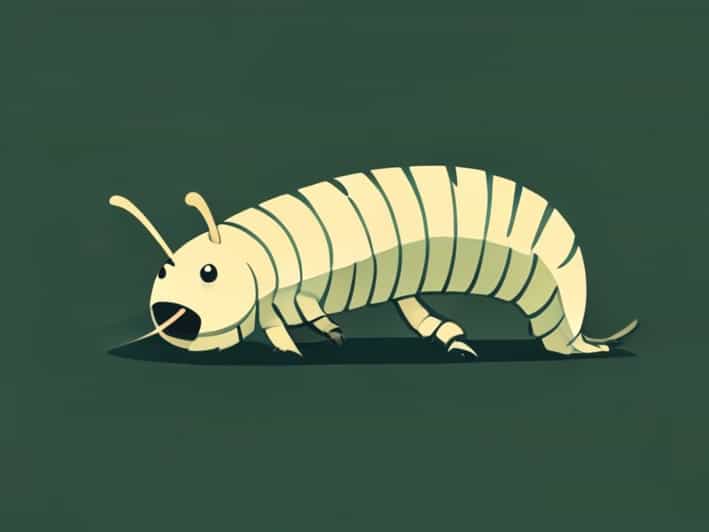
The Amazonian giant centipede, known scientifically asScolopendra gigantea, is one of the largest and most fascinating arthropods in the world. Found primarily in the rainforests of South America, this centipede has attracted attention from scientists and nature enthusiasts alike because of its impressive size, predatory behavior, and ability to hunt animals much larger than itself. Understanding how big the Amazonian giant centipede can grow helps provide insight into its ecological role, its impact on local biodiversity, and the way it has adapted to life in the Amazon rainforest. This species is not only remarkable for its physical dimensions but also for its predatory capabilities, feeding habits, and survival strategies in one of the planet’s most diverse ecosystems.
Average Size of the Amazonian Giant Centipede
The Amazonian giant centipede is renowned for its exceptional length compared to most other centipede species. Adults typically reach lengths of around 20 to 30 centimeters, which is roughly 8 to 12 inches. Some exceptional individuals have been documented to grow up to 35 centimeters, making them true giants among arthropods. In addition to its length, this centipede has a body that is relatively wide and flattened, allowing it to move quickly through leaf litter, under logs, and along the forest floor. Its size is not just for show; it is a functional adaptation that helps the centipede subdue and consume prey efficiently.
Segment Count and Body Structure
The body of the Amazonian giant centipede is divided into multiple segments, each bearing a pair of legs. Typically, adults have between 21 to 23 pairs of legs, totaling 42 to 46 legs. This large number of legs contributes to the centipede’s agility and speed, enabling it to capture prey much faster than one might expect given its length. Its body is covered with a hard exoskeleton, which provides protection from predators and environmental hazards while allowing flexibility for hunting and navigating tight spaces in the rainforest environment.
Comparison to Other Centipede Species
To appreciate how big the Amazonian giant centipede is, it is useful to compare it to other centipedes. Most common centipedes, such as house centipedes, only reach lengths of about 2 to 3 centimeters. Even larger species like the North American Scolopendra polymorpha rarely exceed 15 centimeters. In contrast, the Amazonian giant centipede consistently surpasses these sizes, making it the largest centipede species in the Americas and one of the largest in the world. Its size not only intimidates potential predators but also allows it to prey on animals that would be impossible for smaller centipedes to subdue.
Weight and Mass
In addition to length, the Amazonian giant centipede is relatively heavy for an arthropod of its size. Adult specimens can weigh between 50 to 100 grams, depending on their length and health. This weight, combined with their muscular body, allows them to overpower prey with a combination of speed, constriction, and venomous bites. Despite their weight, they are surprisingly agile and can climb trees, navigate rocky terrain, and squeeze into narrow crevices while hunting or avoiding predators.
Predatory Behavior and Feeding Habits
The Amazonian giant centipede’s large size is directly linked to its role as a top invertebrate predator in its habitat. Its diet includes insects, spiders, small amphibians, reptiles, birds, and even mammals such as bats. Using its long legs and venomous forcipules, the centipede can immobilize prey quickly. Its large size allows it to tackle relatively large animals, making it an effective predator that influences the populations of other creatures in its ecosystem. Understanding its size is essential to comprehending its hunting strategy, as smaller centipedes would not be able to subdue the same range of prey.
Venom and Hunting Strategy
The Amazonian giant centipede injects venom through specialized claws near its head called forcipules. This venom can immobilize prey rapidly, allowing the centipede to consume animals much larger than what would normally be expected for its body size. While the venom is not lethal to humans in most cases, a bite can cause significant pain, swelling, and discomfort. The size of the centipede enables it to deliver a more powerful bite and maintain control over struggling prey, making its physical dimensions crucial to its survival.
Habitat and Ecological Role
The Amazonian giant centipede inhabits tropical and subtropical forests, primarily within the Amazon Basin. Its size allows it to be an effective predator in this dense and competitive environment, where numerous species compete for resources. By preying on a variety of animals, it helps control the population of smaller organisms and contributes to the balance of its ecosystem. Its presence as a large predator also affects the behavior of other species, many of which have adapted strategies to avoid becoming prey. The centipede’s size, therefore, is not just a physical attribute but an ecological advantage that helps maintain biodiversity in the rainforest.
Behavior and Adaptations
Besides its impressive size, the Amazonian giant centipede has other adaptations that enhance its predatory efficiency. Its coloration provides camouflage among the leaf litter and forest floor, while its flattened body allows it to hide under logs, rocks, and fallen debris. Its long antennae serve as sensory organs to detect prey and navigate in low-light conditions, common in dense rainforest habitats. The combination of size, speed, and sensory perception makes it a formidable invertebrate predator.
Human Interaction and Caution
Although the Amazonian giant centipede is not typically aggressive toward humans, its size and venom make it a species to respect. Encounters with humans can lead to defensive bites, and people are advised to handle it with extreme care or avoid direct contact. Its size makes it highly visible and potentially alarming, but it is not inherently dangerous if left undisturbed. Understanding the size of the Amazonian giant centipede helps people appreciate its ecological importance while recognizing the need for caution during human-wildlife interactions.
Captivity and Research
Due to its impressive size and fascinating behavior, the Amazonian giant centipede is sometimes kept in research facilities or educational exhibits. Scientists study its predatory behavior, venom composition, and physiology, which are all linked to its large size. Maintaining them in captivity requires enclosures that can accommodate their length and provide enough space for natural movement. Observing them in captivity also highlights how remarkable their size is relative to other centipedes and why they are considered one of the largest invertebrate predators in the world.
The Amazonian giant centipede is an extraordinary arthropod, remarkable not only for its length, which can reach up to 35 centimeters, but also for its strength, agility, and predatory capabilities. Its large size allows it to hunt a diverse array of prey, thrive in dense rainforest environments, and play a key role in maintaining ecological balance. While its venom and size can pose risks to humans, it is primarily a fascinating and essential part of its ecosystem. Understanding the size of the Amazonian giant centipede provides insight into its lifestyle, survival strategies, and ecological significance, making it one of the most impressive arthropods in the world.