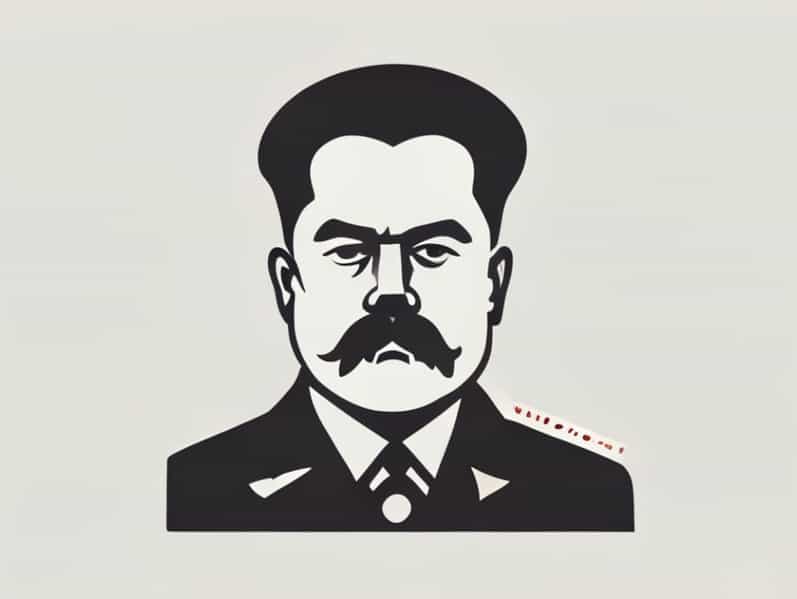
Joseph Stalin, one of the most controversial figures of the twentieth century, served as the leader of the Soviet Union from the mid-1920s until his death in 1953. His tenure transformed the Soviet state through rapid industrialization, collectivization of agriculture, and the consolidation of a totalitarian regime. Stalin’s leadership profoundly affected the lives of millions, shaping the political, economic, and social landscape of the USSR and influencing global geopolitics. While praised for turning the Soviet Union into a world power, his rule is also marked by widespread repression, purges, and human suffering. Understanding Stalin’s rise to power, policies, and legacy provides insight into one of history’s most significant and polarizing leaders.
Early Life and Rise to Power
Joseph Stalin was born Ioseb Besarionis dze Jughashvili on December 18, 1878, in Gori, Georgia, then part of the Russian Empire. He came from a modest background and experienced hardship early in life, including the death of his father and struggles with poverty. Stalin attended religious schools and briefly trained as a priest, but he became involved in revolutionary activities, joining the Bolshevik movement in the early 1900s. His early revolutionary work included organizing strikes, distributing propaganda, and evading Tsarist authorities.
Position in the Bolshevik Party
After the 1917 Russian Revolution, Stalin gradually rose within the Bolshevik Party. Initially serving in administrative and organizational roles, he became General Secretary of the Communist Party in 1922. This position, although initially seen as bureaucratic, allowed him to consolidate power by appointing allies and controlling party membership. Following the death of Vladimir Lenin in 1924, Stalin outmaneuvered rivals such as Leon Trotsky to become the unchallenged leader of the Soviet Union by the late 1920s.
Policies and Governance
Stalin’s leadership style was authoritarian, emphasizing strict control over the state and party. He implemented a series of policies that transformed the Soviet Union economically, socially, and politically. While these policies strengthened the state and military, they often came at a tremendous human cost.
Economic Transformation
Stalin’s economic policies focused on rapid industrialization and the collectivization of agriculture. Through the Five-Year Plans, the Soviet Union pursued massive industrial projects aimed at increasing production, particularly in heavy industry, mining, and infrastructure. Collectivization sought to consolidate small farms into large, state-controlled enterprises, intended to increase agricultural efficiency and supply food for urban populations. While industrial output grew significantly, collectivization caused widespread famine, particularly in Ukraine, resulting in millions of deaths.
Political Repression
Stalin maintained power through an extensive system of surveillance, purges, and state terror. The Great Purge of the 1930s targeted perceived enemies within the Communist Party, the military, and society at large. Show trials, executions, and imprisonments in labor camps became common methods of suppressing dissent. Political repression ensured loyalty to Stalin and eliminated opposition, but it also fostered fear and insecurity among the population.
Propaganda and Personality Cult
Under Stalin, propaganda became a key tool in consolidating authority. State-controlled media glorified his achievements and portrayed him as the father of the nation. Education, art, and literature were aligned with party ideology, reinforcing his image as a strong, wise, and infallible leader. The personality cult surrounding Stalin played a significant role in maintaining support and deterring criticism, both domestically and internationally.
Stalin and World War II
Stalin’s role during World War II was pivotal in shaping the outcome of the conflict. Initially, he signed the Molotov-Ribbentrop Pact with Nazi Germany in 1939, ensuring temporary non-aggression. However, after Germany invaded the Soviet Union in 1941, Stalin led the USSR in a brutal and costly war effort that ultimately contributed to the defeat of Nazi forces. His strategies emphasized total mobilization of resources, strict discipline, and harsh penalties for retreat or failure. Despite heavy casualties, the Soviet Union emerged as a superpower by the end of the war.
Military and Strategic Decisions
- Centralized command and direct oversight of military operations.
- Implementation of scorched-earth tactics during retreats to deny resources to invading forces.
- Coordination with Allied powers, including the United States and the United Kingdom, while maintaining Soviet strategic interests.
- Post-war expansion of Soviet influence in Eastern Europe, establishing a buffer zone and spreading socialist governance.
Legacy of Stalin’s Leadership
Joseph Stalin’s leadership left a profound and complex legacy. On one hand, he transformed the Soviet Union into a major industrial and military power capable of defending itself against foreign threats. On the other hand, his policies caused immense suffering, loss of life, and a climate of fear. Historians continue to debate whether his achievements in modernization and victory during World War II can outweigh the human cost of his authoritarian rule.
Positive Contributions
- Rapid industrialization that enabled the USSR to compete globally.
- Strengthening of the Soviet military, which played a key role in defeating Nazi Germany.
- Expansion of education, healthcare, and social services within the Soviet Union.
Negative Impacts
- Mass purges, executions, and imprisonment of millions under state terror.
- Famine and forced collectivization leading to widespread suffering, particularly in Ukraine and rural areas.
- Suppression of political dissent and creation of a totalitarian regime with limited personal freedoms.
Historical Debate and Modern Perspective
Scholars and historians continue to analyze Stalin’s leadership, weighing his accomplishments against the human cost. Some view him as a strategic and effective leader who modernized the Soviet Union and secured victory in World War II. Others emphasize the brutality, repression, and ethical consequences of his policies. Understanding Stalin requires recognizing the duality of his rule a combination of visionary statecraft and oppressive authoritarianism that shaped the course of twentieth-century history.
Joseph Stalin, leader of the Soviet Union, remains one of history’s most influential and controversial figures. His rule transformed the USSR into a major world power through industrialization, collectivization, and strategic wartime leadership. At the same time, his governance relied on strict authoritarian control, widespread purges, and a climate of fear that caused immense human suffering. Examining Stalin’s rise to power, policies, and legacy highlights both the achievements and the profound costs of his leadership, providing a critical understanding of the complexities of totalitarian rule in the modern era.