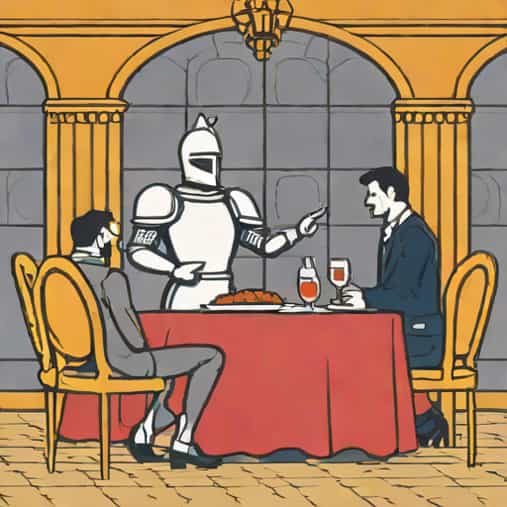
The idea of a knight failing to tip waitstaff at a banquet may sound humorous at first, but it opens the door to a broader discussion about manners, social expectations, and respect across different eras. Whether imagined in a medieval setting or adapted to a modern interpretation, this scenario highlights how acts of generosity and courtesy shape reputation. In stories, legends, and even contemporary commentary, a small action like tipping can reflect larger values such as honor, gratitude, and awareness of others’ labor.
The Social Role of Knights at Banquets
In traditional tales, knights were not only warriors but also public figures expected to embody ideals of courtesy and honor. Banquets were important social events where reputations were built or damaged. A knight attending such a gathering was observed closely, not just for bravery but for behavior.
Failing to tip waitstaff at a banquet, even in a fictional or symbolic sense, would stand out as a breach of expected conduct. Servants and attendants played a crucial role in these feasts, ensuring food, drink, and comfort for guests.
Understanding Tipping as a Sign of Respect
Tipping, whether medieval or modern, symbolizes recognition of service. In historical settings, this might not have been called a tip, but gifts, coins, or favors often served a similar purpose.
A knight who failed to tip waitstaff at a banquet could be seen as overlooking the effort of those who made the event possible. This oversight would reflect poorly on the knight’s character.
Why Acknowledging Service Matters
-
It shows appreciation for hard work
-
It reinforces social bonds
-
It reflects awareness of shared effort
The Banquet as a Test of Character
In many stories, banquets serve as more than celebrations. They are tests of manners, humility, and generosity. How a knight treats those of lower status often reveals more than battlefield achievements.
A knight who fails to tip waitstaff at a banquet may unintentionally reveal arrogance or carelessness, traits that conflict with ideals of chivalry.
Chivalry Beyond the Battlefield
Chivalry is often associated with combat and loyalty, but its roots lie in everyday conduct. Courtesy, kindness, and generosity were essential components of the chivalric code.
Ignoring waitstaff undermines these values. Even a brave knight could lose respect if perceived as ungrateful or dismissive.
Modern Interpretations of the Scenario
In a modern retelling, the phrase knight fails to tip waitstaff at banquet can act as satire. It draws attention to how status does not excuse poor behavior.
Today, tipping is a clear social expectation in many cultures. Failing to do so often sparks debate about entitlement and responsibility.
Public Perception and Reputation
Reputation spreads quickly in both medieval courts and modern social circles. Word of a knight’s failure to tip waitstaff at a banquet would likely circulate among servants and nobles alike.
Such stories could damage alliances, friendships, and future invitations.
Consequences of Poor Etiquette
-
Loss of respect among peers
-
Negative word-of-mouth
-
Questioning of moral integrity
The Perspective of the Waitstaff
Waitstaff at a banquet worked long hours under demanding conditions. Their role was essential, yet often invisible.
A knight failing to tip waitstaff would be felt as a personal slight, reinforcing social hierarchies and feelings of undervaluation.
Power Dynamics at Play
The scenario highlights power imbalance. Knights held authority and privilege, while servants depended on their goodwill.
Failing to tip reinforces inequality, suggesting that power excuses neglect of basic courtesy.
Lessons in Humility
Stories often use moments like these to teach humility. A knight’s greatness is measured not only by victories but by everyday kindness.
Recognizing service through tipping reflects awareness that no one stands alone.
Symbolism in Literature and Storytelling
Writers may use the image of a knight failing to tip waitstaff at a banquet as a symbolic act. It can signal a flaw that foreshadows larger moral failures.
Small acts often hint at deeper character issues.
Cultural Expectations Around Gratitude
Different cultures have varied traditions of showing gratitude. In medieval contexts, generosity was often displayed publicly.
A lack of acknowledgment would break social norms and invite criticism.
Comparing Past and Present Values
While tipping practices differ across time, the underlying principle remains consistent respect for labor.
The knight’s failure resonates today because it mirrors modern debates about service work and dignity.
Why This Scenario Resonates
The idea sticks because it is relatable. Many people have witnessed or experienced moments where those with status overlook those serving them.
The knight becomes a mirror reflecting broader social behavior.
Responsibility of Leadership
Knights were leaders by example. Their actions set standards for others.
Failing to tip waitstaff sends a message that gratitude is optional, weakening communal values.
Restoring Honor After the Mistake
Stories often allow redemption. A knight who recognizes the error and makes amends can restore honor.
An apology or belated gesture of thanks can transform perception.
The Role of Observers
Banquets were public spaces. Others would notice the knight’s behavior, interpreting it according to their own values.
This collective judgment reinforces social norms.
Ethics of Wealth and Generosity
Having wealth or status brings ethical responsibility. Generosity is often expected from those with abundance.
Failing to tip contradicts this expectation.
A Small Act with Big Meaning
Though tipping seems minor, it carries symbolic weight. It acknowledges humanity and effort.
The knight’s failure magnifies because of the contrast between power and neglect.
Modern Lessons from an Old Image
The scenario encourages reflection on how we treat service workers today. Status does not negate responsibility.
Respect remains a universal value.
What the Knight’s Failure Reveals
The image of a knight failing to tip waitstaff at a banquet serves as a reminder that honor is measured in small actions as much as grand gestures. Whether viewed through a medieval lens or a modern one, the message is clear courtesy and gratitude define character.
By examining this scenario, readers are invited to consider their own behavior and the values they uphold. True nobility, in any era, lies in recognizing and respecting the contributions of others.