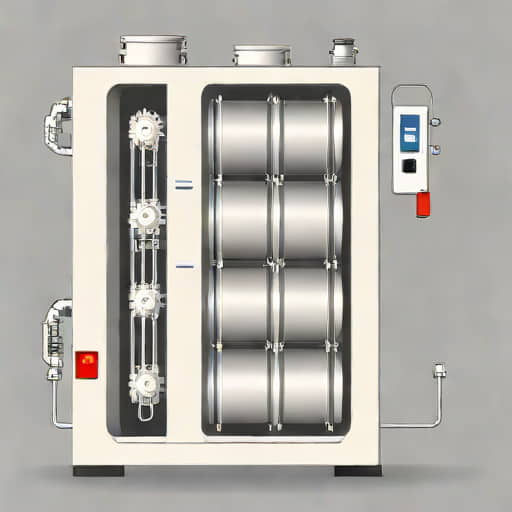
Investors and market watchers are often curious when a specialized engineering company decides to enter the public market, and that is why interest grows around the topic of the KRN Heat Exchanger and Refrigeration Limited IPO. An initial public offering from a company in the heat exchanger, refrigeration, and industrial cooling sector can reveal how manufacturing demand, infrastructure growth, and energy efficiency trends influence long-term business potential. This topic explains the background of the company, the nature of its products and services, the strategic reasons behind launching an IPO, and the factors investors usually consider when evaluating opportunities in an industrial engineering listing. The goal is to offer clear, easy-to-understand insights that help readers better interpret how an IPO like this fits into the broader industrial and investment landscape.
Company Background and Industry Context
KRN Heat Exchanger and Refrigeration Limited operates in a technical yet essential field that supports many different industries. Heat exchangers and refrigeration systems are used in power plants, food processing facilities, petrochemical operations, HVAC systems, and manufacturing plants. These components help regulate temperature, protect machinery, conserve energy, and ensure consistent product quality. Because of this, companies in this sector often work closely with industrial clients and engineering contractors.
The growth of modern infrastructure, urban development, and energy-efficient technology has increased demand for reliable thermal management systems. A company like KRN Heat Exchanger and Refrigeration Limited may specialize in designing, fabricating, and servicing equipment such as shell-and-tube heat exchangers, condensers, evaporators, chillers, and industrial refrigeration installations. Its expertise, track record, and client relationships contribute to its standing in a competitive engineering marketplace.
Why Industrial Engineering Businesses Matter
- They support energy efficiency and process optimization.
- They contribute to sustainability through better thermal control.
- They serve critical sectors such as manufacturing and food logistics.
- They create skilled employment and technical innovation.
By understanding the industry foundation, readers can better appreciate why the KRN Heat Exchanger and Refrigeration Limited IPO may attract attention from institutional and retail investors.
Reasons Companies Launch an IPO
An initial public offering is usually more than a milestone; it is a strategic decision. When a company like KRN Heat Exchanger and Refrigeration Limited decides to list its shares on the market, it is often pursuing goals linked to expansion, brand visibility, and capital strength. The funds raised through the IPO may be used to upgrade manufacturing capacity, purchase new machinery, expand engineering facilities, or develop new product lines focused on advanced cooling technology.
Going public can also improve the company’s credibility among suppliers, customers, and financial partners. With increased transparency and governance requirements, publicly listed companies often gain stronger market positioning and long-term growth potential.
Common Objectives Behind an IPO
- Raising capital for business expansion and technology upgrades
- Reducing existing debt and strengthening financial stability
- Enhancing brand recognition and corporate reputation
- Providing liquidity and valuation for early shareholders
These motivations help shape the narrative of the KRN Heat Exchanger and Refrigeration Limited IPO and influence how investors analyze its prospects.
Business Model and Revenue Sources
To understand how an IPO candidate performs, it is useful to look at its business model. A company in the heat exchanger and refrigeration sector typically earns revenue through equipment manufacturing, project installations, servicing contracts, and custom engineering solutions. Long-term service agreements may provide recurring income, while large industrial projects can contribute significant revenue spikes.
KRN Heat Exchanger and Refrigeration Limited may work across multiple customer segments, such as commercial refrigeration, industrial cooling, and energy system integration. Diversification across sectors can help reduce risk during market fluctuations, and engineering innovation often plays a key role in maintaining competitiveness.
Possible Strengths of the Business
- Experienced engineering teams and technical expertise
- Established relationships with industrial clients
- Diverse product applications across multiple industries
- Focus on efficiency and performance-based design
These strengths are important elements that investors evaluate when reviewing the fundamentals of the IPO.
Market Opportunities and Growth Drivers
The potential success of KRN Heat Exchanger and Refrigeration Limited is closely linked to global and regional economic trends. Demand for reliable refrigeration and thermal systems grows with industrial modernization, cold-chain logistics expansion, and stricter energy efficiency standards. Sectors such as pharmaceuticals, food storage, frozen goods transportation, and chemical production rely on advanced cooling technology to maintain safety and quality.
Emerging markets often experience strong infrastructure growth, which can benefit engineering firms offering industrial cooling and heat transfer solutions. Additionally, companies that adopt innovation, automation, and environmentally responsible designs may position themselves well for future contracts and international opportunities.
Key Growth Factors
- Rising industrial production and infrastructure investment
- Growing demand for cold storage and food supply chains
- Focus on sustainability and energy-efficient technology
- Expansion of chemical, power, and manufacturing sectors
These drivers highlight why a company in this field may see an IPO as a logical step toward scaling its operations.
Risks and Considerations for Investors
Like any industrial IPO, the KRN Heat Exchanger and Refrigeration Limited listing also comes with risks. Engineering companies can face fluctuations in raw material costs, changes in industrial spending cycles, project delays, and competition from domestic or international manufacturers. Investors usually need to review financial statements, profit margins, order books, and operational capacity before forming conclusions.
External economic conditions, such as interest rates, commodity prices, and policy changes, can also influence business performance in sectors linked to construction and heavy industry.
Common Risk Factors
- Dependence on large-scale industrial projects
- Competitive pricing pressure in engineering markets
- Supply chain challenges and cost volatility
- Technological shifts requiring continuous investment
Understanding both strengths and risks allows readers to form a balanced view rather than relying only on promotional narratives.
What the IPO Could Mean for the Company’s Future
If managed effectively, the KRN Heat Exchanger and Refrigeration Limited IPO may support modernization, workforce development, and research initiatives. Public capital could help the company introduce advanced fabrication techniques, expand into new regions, or strengthen after-sales service networks. A well-executed growth plan can improve operational efficiency and long-term earnings potential.
At the same time, public listing introduces greater scrutiny and accountability, which may encourage stronger governance practices and strategic planning. The company’s ability to adapt, innovate, and respond to industrial demand trends will play an essential role in determining its long-term performance after the IPO.
The story of the KRN Heat Exchanger and Refrigeration Limited IPO reflects the intersection of industrial engineering, market opportunity, and strategic business growth. By understanding the company’s industry role, business strengths, expansion goals, and associated risks, readers gain a clearer picture of how such an offering fits within the broader investment and manufacturing ecosystem. As industries continue to rely on efficient heat transfer and refrigeration technology, companies in this sector remain important contributors to economic development, technological progress, and sustainable industrial operations.