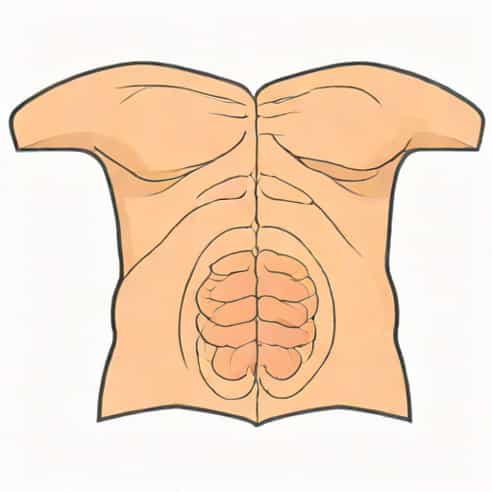
The abdominal wall is a complex structure composed of multiple layers that provide protection, support, and flexibility to the internal organs. For medical students, healthcare professionals, and anatomy enthusiasts, remembering the sequence of these layers can be challenging due to the number of tissues involved. Mnemonics serve as a helpful tool to recall these layers quickly and accurately, which is particularly important during surgical procedures, clinical examinations, and anatomy assessments. Understanding the layers of the abdominal wall also helps in diagnosing hernias, planning incisions, and comprehending the organization of abdominal muscles and fascia.
Overview of the Abdominal Wall Layers
The abdominal wall is traditionally divided into several layers, starting from the skin on the outside and moving inward toward the peritoneum. Each layer has a distinct structure and function. The main layers include the skin, superficial fascia, muscles with their associated fascia, and the transversalis fascia, culminating with the peritoneum. Awareness of these layers is essential for procedures such as abdominal surgery, liposuction, and hernia repair.
Basic Sequence of Layers
The standard layers of the anterior abdominal wall can be listed in order from superficial to deep
- Skin
- Superficial fascia (Camper’s fascia and Scarpa’s fascia)
- External oblique muscle and its fascia
- Internal oblique muscle and its fascia
- Transversus abdominis muscle and its fascia
- Transversalis fascia
- Extraperitoneal fat
- Parietal peritoneum
This sequence can seem long and difficult to memorize, which is why mnemonics are widely used in anatomy education.
Mnemonic Techniques for Abdominal Wall Layers
Mnemonics are memory aids that link complex information to simple, easy-to-remember phrases or words. They are particularly useful in medical education, where detailed anatomical knowledge is essential. For the layers of the abdominal wall, mnemonics typically use the first letter of each layer to form a phrase or sentence that is easier to recall during exams or clinical practice.
Common Mnemonics
Several mnemonics exist to remember the layers of the abdominal wall, each tailored for different levels of detail. Some of the widely used examples include
- Skin, Superficial fascia, External oblique, Internal oblique, Transversus abdominis, Transversalis fascia, Extraperitoneal fat, PeritoneumMnemonicSome Students Eat Icecream, Then Take Extra Practice
- For muscles and fascia onlyExternal oblique, Internal oblique, Transversus abdominis MnemonicEager Individuals Train
- Camper’s and Scarpa’s fascia distinctionCamper’s (fatty), Scarpa’s (membranous) MnemonicFat Scarvesto remember that Camper’s is fatty and Scarpa’s is membranous
These mnemonics are useful not only for recalling the sequence but also for visualizing the structure during dissection or imaging interpretation. They help in associating layers with their function, such as superficial fascia being more fatty, while deeper fascia provides structural support.
Function and Clinical Significance of Each Layer
Understanding the function of each layer enhances the usefulness of mnemonics. Each layer contributes uniquely to abdominal wall stability, protection, and surgical relevance.
Skin and Superficial Fascia
The skin is the outermost layer, providing protection against environmental damage and pathogens. Beneath the skin, the superficial fascia has two parts Camper’s fascia, which is fatty and stores energy, and Scarpa’s fascia, which is membranous and provides support. These layers are important in surgical incisions and wound healing.
Muscles and Their Fascia
The external oblique, internal oblique, and transversus abdominis muscles form the muscular layer of the abdominal wall. Their associated fascia envelops each muscle, providing tensile strength and allowing coordinated movement. These muscles are critical for trunk movement, posture, and increasing intra-abdominal pressure, which is important for functions such as coughing, defecation, and childbirth.
Transversalis Fascia and Extraperitoneal Fat
The transversalis fascia lies beneath the muscular layers and forms a strong, supportive membrane. The extraperitoneal fat lies just inside this fascia and provides cushioning for the internal organs. Recognizing these layers is vital for surgeons performing hernia repairs or abdominal surgeries, as misidentifying layers can lead to complications.
Parietal Peritoneum
The parietal peritoneum is the innermost layer, lining the abdominal cavity and covering internal organs. It provides a smooth surface for organ movement and is involved in fluid secretion. Surgical procedures must navigate through all superficial layers carefully to reach the peritoneum without causing damage.
Tips for Memorizing the Layers
While mnemonics are helpful, combining them with visualization and repetition improves retention. Some effective strategies include
- Using flashcards with layer names on one side and functions on the other
- Drawing cross-sectional diagrams of the abdominal wall while labeling each layer
- Practicing the mnemonic repeatedly during anatomy study sessions
- Associating each layer with a clinical scenario, such as hernia sites or surgical incisions
- Grouping layers by function, like superficial, muscular, and deep layers, to simplify recall
Benefits of Using Mnemonics
Mnemonics simplify complex anatomical information, making it easier to recall under exam pressure or in clinical practice. They enhance learning efficiency, reduce memorization errors, and help students retain knowledge long-term. For the abdominal wall, mnemonics provide a structured framework that makes the sequence of layers more accessible, supporting both theoretical understanding and practical application.
Learning the layers of the abdominal wall can be challenging due to the number of tissues involved, but mnemonics provide a practical and effective solution. By combining memorization tools with visualization, repetition, and clinical context, students and healthcare professionals can accurately recall the sequence of skin, fascia, muscles, transversalis fascia, extraperitoneal fat, and peritoneum. Understanding these layers is crucial for surgery, imaging interpretation, and anatomical knowledge. Using mnemonics not only eases the learning process but also reinforces the functional and clinical significance of each layer, enhancing both education and patient care.